

Key Takeaways
Option A
Whole Foods
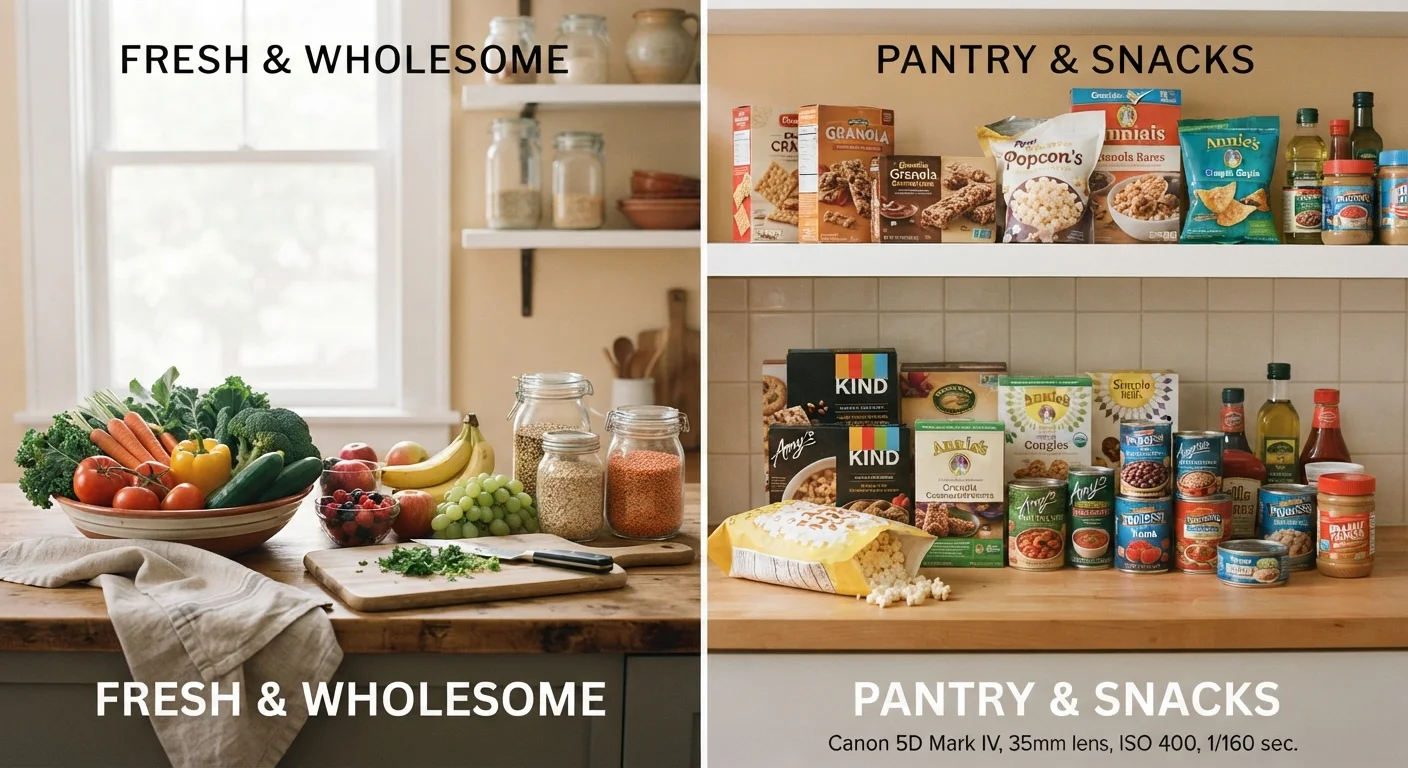
Foods in their natural, minimally altered state.
Best for: People looking to maximize nutrient density and minimize added ingredients in their diet.
Option B
Processed Foods
Foods that have been altered from their original form in some way.
Best for: Convenient, shelf-stable options - though the degree of processing matters enormously for health.
If you want to maximize nutrient density with every meal
Whole Foods
Whole foods deliver the most fiber, vitamins, and minerals with the fewest additives, making them the most nutritionally complete choice.
If you need convenience and shelf stability on a tight schedule
Processed Foods
Minimally processed options like canned legumes, frozen vegetables, or plain oats can be genuinely nutritious and far more practical for busy routines.
If you're building a sustainable everyday eating pattern
Whole Foods
A diet anchored in whole foods, with room for lightly processed items, is both realistic and well-supported by nutritional research.
If budget and access are your primary concerns
Processed Foods
Strategically chosen minimally processed foods - frozen produce, dried grains, canned fish - stretch your budget without abandoning nutrition.
What Do These Terms Actually Mean?
The phrase "whole foods" sounds reassuring, and "processed foods" sounds alarming - but neither label tells the full story on its own. Understanding what they actually mean can take a lot of pressure off your everyday food choices.
Whole foods are foods that remain close to their natural state. Think fresh apples, dried lentils, brown rice, or a plain chicken breast. They haven't had ingredients added or significant nutrients removed. They tend to be rich in fiber, vitamins, and minerals precisely because they haven't been stripped down.
Processed foods cover an enormous range. Technically, any food that has been washed, cut, cooked, frozen, canned, fermented, or milled has been "processed." That means frozen spinach, plain yogurt, and rolled oats all qualify - and yet these are among the most nutritious foods you can eat. The word alone doesn't tell you whether something is good or bad for you.
Nutrition researchers often use a more useful classification system called NOVA, which groups foods into four categories based on the degree and purpose of processing - from unprocessed or minimally processed foods all the way to ultra-processed products. That last category - ultra-processed - is where most health concerns are concentrated.
The Real Spectrum: From Minimal to Ultra-Processed
Thinking in terms of a spectrum, rather than a binary, makes food decisions much easier. Here's how the NOVA framework broadly breaks things down:
- Minimally processed: Fresh or frozen vegetables, plain meat and fish, eggs, dried legumes, plain nuts, milk. These have been cleaned, packaged, or preserved but are nutritionally close to their original form.
- Processed culinary ingredients: Olive oil, flour, salt, butter, vinegar. These are derived from whole foods and used in cooking - not typically eaten alone.
- Processed foods: Canned beans, cheese, cured meats, simple breads. These have added salt, sugar, or preservatives but are still recognizable as food. Many are fine in moderation.
- Ultra-processed foods: Packaged snacks, sweetened breakfast cereals, flavored chips, many fast-food items, and sodas. These are engineered for palatability and shelf life using ingredients rarely found in a home kitchen - emulsifiers, artificial flavors, hydrogenated fats, high-fructose corn syrup.
Research consistently links high consumption of ultra-processed foods to increased risk of several chronic health conditions. But lightly or minimally processed foods don't carry the same concerns. Understanding where a food falls on this spectrum is far more informative than just asking whether it's "processed."
| Criterion | Whole Foods | Ultra-Processed Foods |
|---|---|---|
| Ingredient list | One or very few recognizable ingredients | Long list, many unfamiliar additives |
| Fiber content | Generally high | Typically low |
| Micronutrient density | Naturally rich in vitamins and minerals | Often poor; sometimes fortified artificially |
| Added sugar and sodium | Minimal to none | Frequently high |
| Shelf life | Short to moderate | Extended, often very long |
| Preparation required | Usually requires cooking or prep | Ready-to-eat or minimal prep |
| Cost | Variable; staples can be affordable | Often low per serving; varies widely |
What Whole Foods Offer - and Where Processed Foods Fall Short
Whole foods earn their reputation for good reason. They provide nutrients in forms your body recognizes and uses efficiently. The fiber in an apple, for example, slows digestion and helps you feel full longer - but that fiber is largely absent from apple-flavored snack products.
Fiber itself is one of the biggest gaps in many modern diets. Most Americans fall well short of general dietary fiber guidelines, and ultra-processed foods are a big part of why - they're typically low in fiber and high in rapidly digested carbohydrates. Fiber supports digestive health, helps regulate blood sugar, and feeds beneficial gut bacteria.
Whole foods also tend to contain a broader range of micronutrients (vitamins and minerals) and phytonutrients - naturally occurring plant compounds that appear to support health in various ways, though research in this area is still evolving. Ultra-processed foods are often nutritionally thin, even when they've been fortified with added vitamins.
That said, no food is magic, and no single food will make or break your health. What matters most is the overall pattern of what you eat over time, not any individual item. See our guide to why bodies respond differently to food for more on why a one-size-fits-all view of nutrition often misses the mark.
Not All Processing Is Equal
Pasteurized milk, plain frozen peas, and canned tomatoes are all technically "processed" - but they remain nutritionally strong options. The NOVA classification system is a helpful lens, but it's not universally adopted in clinical nutrition settings. The key question to ask is: how far has this food been altered from its original state, and what has been added or removed in that process?
Practical Steps for Everyday Eating
You don't need to overhaul your pantry overnight. Small, consistent shifts toward more whole and minimally processed foods can make a meaningful difference over time. Here are some grounded, beginner-friendly starting points:
- Read ingredient lists, not just labels. A short list of recognizable ingredients is usually a good sign. If a product contains items you'd never use in your own kitchen, that's a useful signal it's more heavily processed.
- Embrace frozen and canned options. Frozen vegetables are flash-frozen at peak ripeness and retain most of their nutrients. Canned beans and fish (watch the sodium content) are affordable, minimally processed, and nutritionally solid. These are not compromises - they're practical tools.
- Build meals around whole-food anchors. A grain, a protein source, and a vegetable forms the backbone of most balanced meals. You can find nutritious protein sources from both animal and plant foods to suit your preferences.
- Shift gradually. Swapping one ultra-processed snack a day for a piece of fruit or a handful of plain nuts is a realistic, sustainable change - not a radical diet overhaul.
If budget is a concern, whole foods don't have to mean expensive. Our grocery shopping on a budget guide walks through practical strategies for eating well without overspending.
This article is for general informational and educational purposes only and is not a substitute for professional medical or dietary advice. Please consult a registered dietitian or qualified healthcare provider for guidance tailored to your individual needs.