

Key Takeaways
Our Verdict
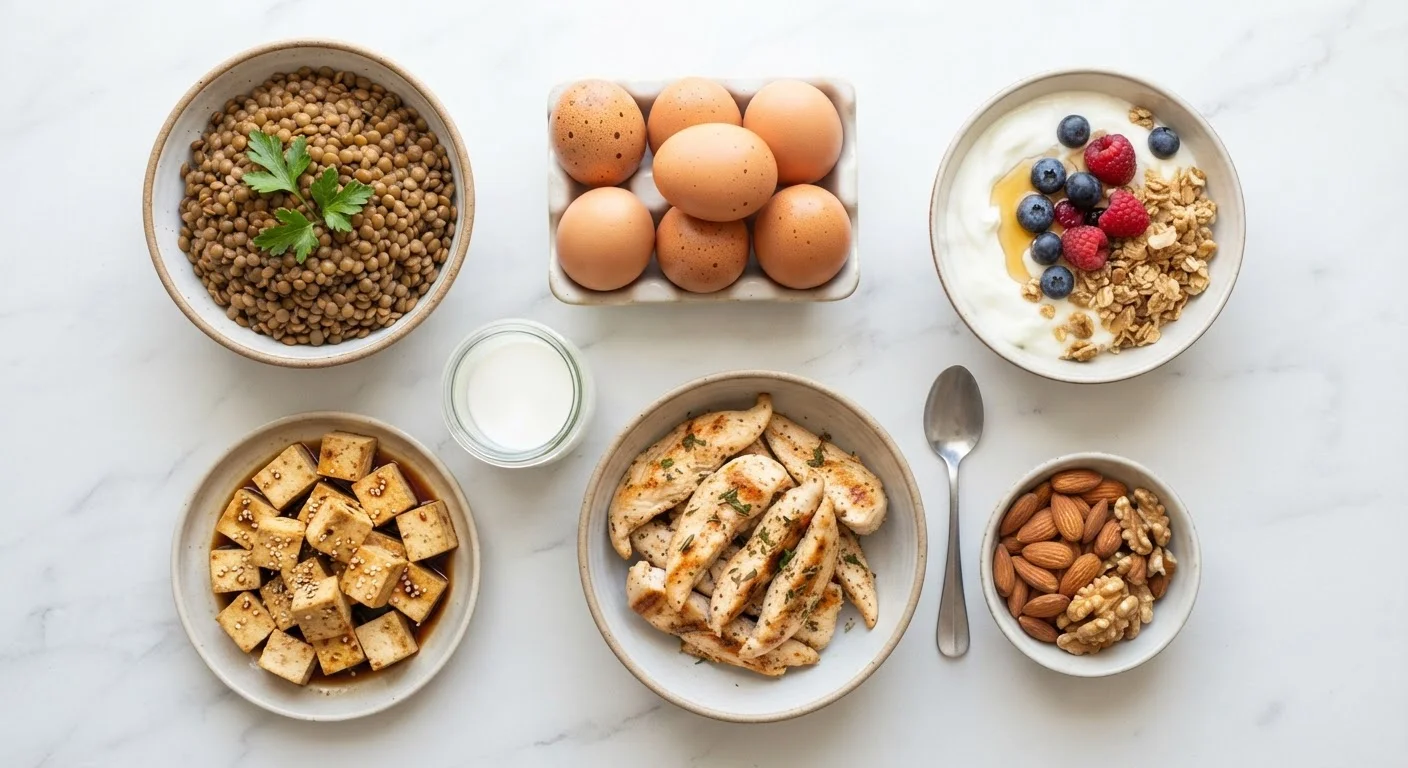
There is no single 'best' protein source - the right choice depends on your dietary preferences, health goals, and how your body responds to different foods. Animal sources offer complete amino acid profiles and high bioavailability, while plant sources deliver added fiber and can be just as effective when varied. A mixed or thoughtfully planned plant-based approach can both meet your protein needs.
| Best for | Recommended |
|---|---|
| Readers who eat animal products and want simplicity | Eggs, Greek yogurt, or lean poultry |
| Plant-based eaters focused on protein completeness | Combining legumes with grains (e.g., rice and beans) |
| Those seeking versatile, budget-friendly options | Lentils, canned beans, or tofu |
| People who want a middle-ground approach | Greek yogurt or eggs alongside plant proteins |
What Makes a Protein 'Good'?
Protein is made up of building blocks called amino acids. Your body uses these to repair muscle, support the immune system, and carry out thousands of daily functions. Nine of these amino acids are called essential - meaning your body can't make them on its own and must get them from food.
When evaluating a protein source, two things matter most: completeness (does it contain all nine essential amino acids?) and bioavailability (how efficiently can your body actually absorb and use it?). Animal proteins tend to score high on both. Plant proteins often excel in other areas - like fiber content - but may require a bit more planning to cover all amino acids.
Worth remembering: most people in the US already get enough total protein. The real question is usually about variety and balance rather than quantity alone.
Animal Proteins: Complete but Not the Only Option
Foods like eggs, chicken, fish, beef, and dairy products are complete proteins - they contain all nine essential amino acids in proportions the body can readily use. They also generally have high bioavailability scores.
- Eggs are often cited in nutrition science as a reference point for protein quality. They're versatile, affordable, and contain additional nutrients like choline and vitamin D.
- Greek yogurt packs a significant protein punch per serving and delivers calcium and probiotics alongside.
- Fish and lean poultry provide protein with relatively lower saturated fat compared to some red meats.
- Red meat offers iron and B12, but nutrition guidance generally suggests moderate intake as part of a balanced diet.
Animal proteins work well for many people, but they're not a requirement. As noted in our article on how your body reacts differently to the same food, digestion and absorption vary from person to person - what works well for one individual may not suit another.
| Eggs | Greek Yogurt | Chicken Breast | Lentils | Tofu | Almonds | |
|---|---|---|---|---|---|---|
| Complete protein? | Yes | Yes | Yes | No (low methionine) | Yes (soy) | No |
| Approx. protein per serving | 6g per egg | 15-20g per cup | 25-30g per 3 oz | 18g per cup cooked | 8-10g per 3 oz | 6g per oz |
| Bioavailability | Very high | High | High | Moderate | Moderate-high | Moderate |
| Fiber content | None | None | None | High | Low | Moderate |
| Budget-friendliness | High | Moderate | Moderate | Very high | High | Moderate |
| Best for | Versatility | Snacking/breakfast | Meal prep | Plant-based diets | Plant-based diets | Snacking |
Plant Proteins: Powerful When Planned
Legumes (beans, lentils, chickpeas), tofu, tempeh, edamame, nuts, seeds, and whole grains all contribute meaningful protein. Most are considered incomplete individually - they're lower in one or more essential amino acids - but this doesn't make them inferior choices.
The key insight from nutrition research is that you don't need to combine proteins at every single meal. Eating a variety of plant proteins across the day naturally fills in the gaps.
Easy Plant Protein Pairing Idea
You don't need to overthink combinations. Simply eating rice and beans, hummus on whole-grain pita, or peanut butter on whole-wheat bread across the day naturally provides a full range of essential amino acids. Variety over time is what counts - not precise pairing at every meal.
- Lentils and chickpeas are among the most protein-dense plant foods and are also rich in fiber, iron, and folate.
- Tofu and tempeh (both made from soy) are standout plant proteins because soy is one of the few plant sources considered a complete protein.
- Nuts and seeds add protein alongside healthy fats but are calorie-dense, so portions matter.
Plant-based eating also often means getting more fiber, which supports digestive health. For a broader look at food quality, see our piece on whole foods vs. processed foods.
How to Choose What Works for You
Rather than declaring a winner, consider a few practical questions:
- What do you already enjoy eating? The most nutritious protein source is the one you'll actually eat consistently.
- Are there any dietary restrictions? Lactose intolerance, shellfish allergies, or ethical choices around animal products all shape the best personal path forward.
- What fits your budget and schedule? Canned beans, eggs, and tofu are among the most affordable protein sources available.
If you're managing a specific health condition, are pregnant, or have concerns about meeting nutritional needs on a restricted diet, speaking with a registered dietitian is a wise step. General nutrition information - like this article - can't account for your individual circumstances.
This article is for general informational purposes only and is not a substitute for personalized nutrition or medical advice. Please consult a qualified healthcare professional for guidance tailored to your health needs.