

Key Takeaways
Individual Food Response
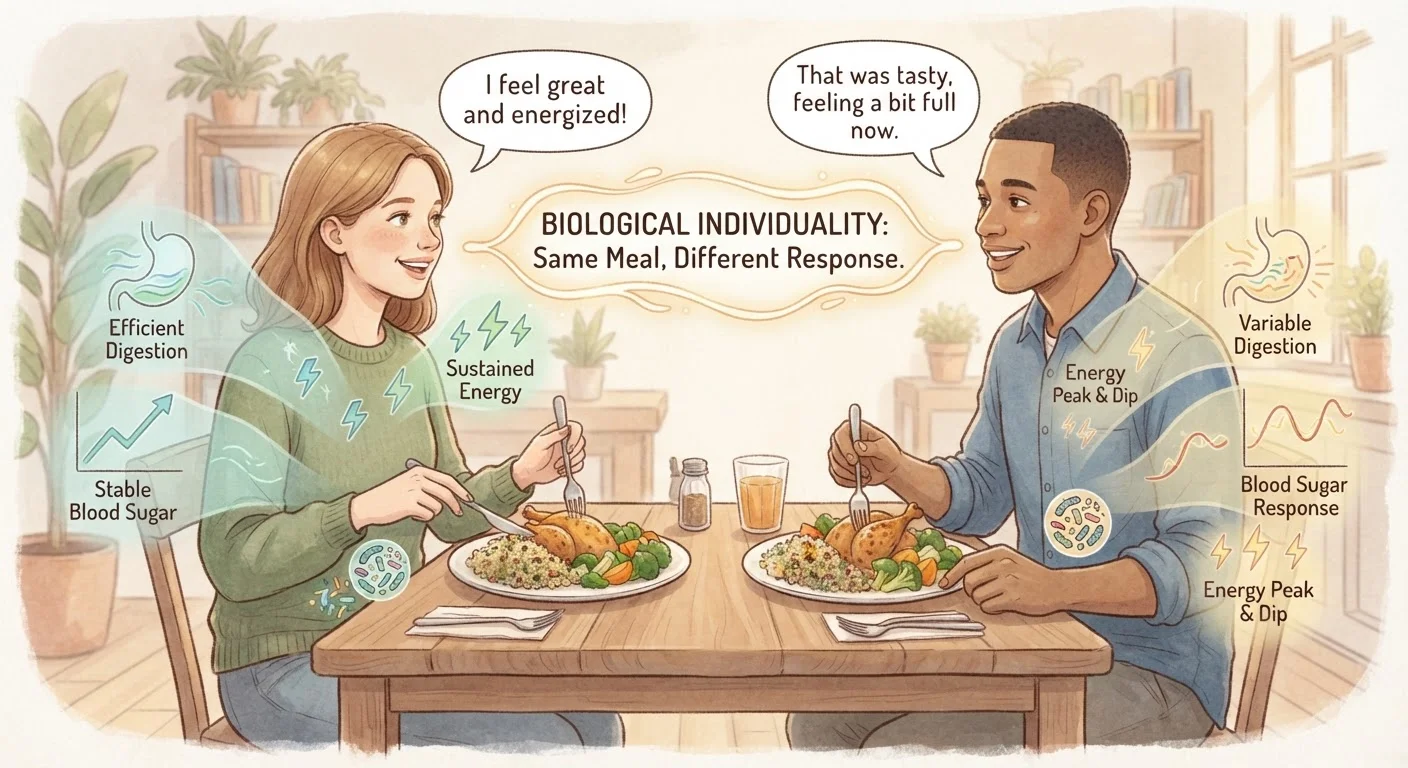
Individual food response refers to the way each person's body uniquely processes, absorbs, and reacts to the same food or nutrient. Factors like your genes, gut bacteria, age, and health history all influence these reactions. This is why two people can eat the same meal and feel - or metabolize it - very differently.
Researchers studying this field often use the term 'inter-individual variability in dietary response,' which encompasses differences in glycemic response, lipid metabolism, and micronutrient absorption across people.
The Same Salad, Two Very Different Outcomes
You and a friend finish the same lunch. An hour later, they feel energized while you feel sluggish and bloated. It's tempting to assume one of you ate it wrong - but the real explanation is far more interesting than that.
Human bodies are not identical machines. While the basic steps of digestion are the same for everyone, countless variables quietly shape how each of us processes food at a cellular level. Understanding those variables can take a lot of pressure off - and help you make sense of why generic nutrition advice sometimes feels like it was written for someone else entirely.
This is also why persistent nutrition myths can be so misleading: they assume a universal response that simply doesn't exist.
Your Genes Set Some of the Rules
Genetics influence nutrition more than most people realize. Specific gene variants can determine how well your body produces certain digestive enzymes, how quickly you break down caffeine, and even how your cells handle dietary fats.
A well-known example is lactase - the enzyme that digests lactose, the sugar in dairy. Some adults naturally produce less of it as they age, leading to discomfort after consuming milk products. Whether you produce enough lactase is largely genetic. Similarly, some people carry gene variants that affect how their bodies absorb folate (a B vitamin) or respond to dietary cholesterol.
None of this means you're stuck with a fixed fate. It simply means your genetic blueprint is one layer of a complex picture - and it's one reason understanding food quality broadly still matters even when individual responses vary.
~37 trillion
Microbial cells in the human gut
Estimates from microbiome researchers suggest the gut harbors roughly as many microbial cells as there are human cells in the body, underscoring how central the microbiome is to overall health.
10x
Variation in post-meal blood sugar between individuals
A landmark study published in Cell (Zeevi et al., 2015) found that blood sugar responses to identical meals varied by up to tenfold between different people, driven largely by microbiome differences.
~65%
Adults with reduced lactase activity globally
Research suggests that a majority of the world's adult population produces less lactase after childhood, though rates vary significantly by ancestry and geographic region.
Your Gut Bacteria Are Doing a Lot of the Work
Inside your digestive tract lives a vast community of microorganisms - collectively called the gut microbiome. These trillions of bacteria, fungi, and other microbes help break down food, produce certain vitamins, and influence how much energy you extract from what you eat.
Here's where individual variation gets striking: no two people have exactly the same microbiome. Your microbial community is shaped by how you were born, what you ate as an infant, your environment, your past use of antibiotics, and your current diet. Research has shown that people with different microbiomes can have measurably different blood sugar responses after eating the exact same foods.
This is one reason dietary fiber matters so much - it feeds beneficial gut bacteria and helps maintain a more diverse, resilient microbiome over time.
Lifestyle Shapes the Response Too
Even setting genetics and gut bacteria aside, your day-to-day habits quietly alter how your body handles food. Poor sleep, for instance, can impair insulin sensitivity - meaning your body has a harder time managing blood sugar after meals. Chronic stress raises certain hormones that affect fat storage and appetite regulation.
Physical activity is another key variable. Regular movement improves how efficiently your muscles use glucose (blood sugar) from food. Two people eating the same carbohydrate-rich meal may have very different blood sugar patterns if one exercises regularly and the other doesn't.
It's also worth knowing that eating patterns - not just food choices - affect outcomes. Meal timing, eating speed, and even stress levels at mealtime can influence digestion and nutrient absorption.
Keep a Simple Food and How-You-Feel Log
You don't need a complicated app or dietary protocol. Try jotting down what you ate and how you felt an hour or two afterward - energy level, digestion, mood - for a week or two. Patterns often emerge that are far more useful than any generic nutrition chart. Share those observations with a dietitian if you want personalized guidance.
What This Means for How You Approach Eating
Understanding individual food response isn't a reason to abandon nutrition principles altogether. Broad evidence still supports eating a variety of whole, minimally processed foods, getting adequate protein from varied sources, and staying well hydrated. These patterns benefit most people regardless of genetic variation.
What it does mean is that you can let go of guilt when a diet that worked brilliantly for a friend or family member doesn't work the same way for you. Pay attention to how your own body feels after different meals. Notice patterns without judgment. And if you have persistent, concerning symptoms around eating, a registered dietitian or your primary care provider is the right person to help you investigate further.
Your body's responses are data - not failures.
This article is for general informational and educational purposes only and is not a substitute for professional medical or dietary advice. Always consult a qualified healthcare provider or registered dietitian for guidance specific to your health needs.