

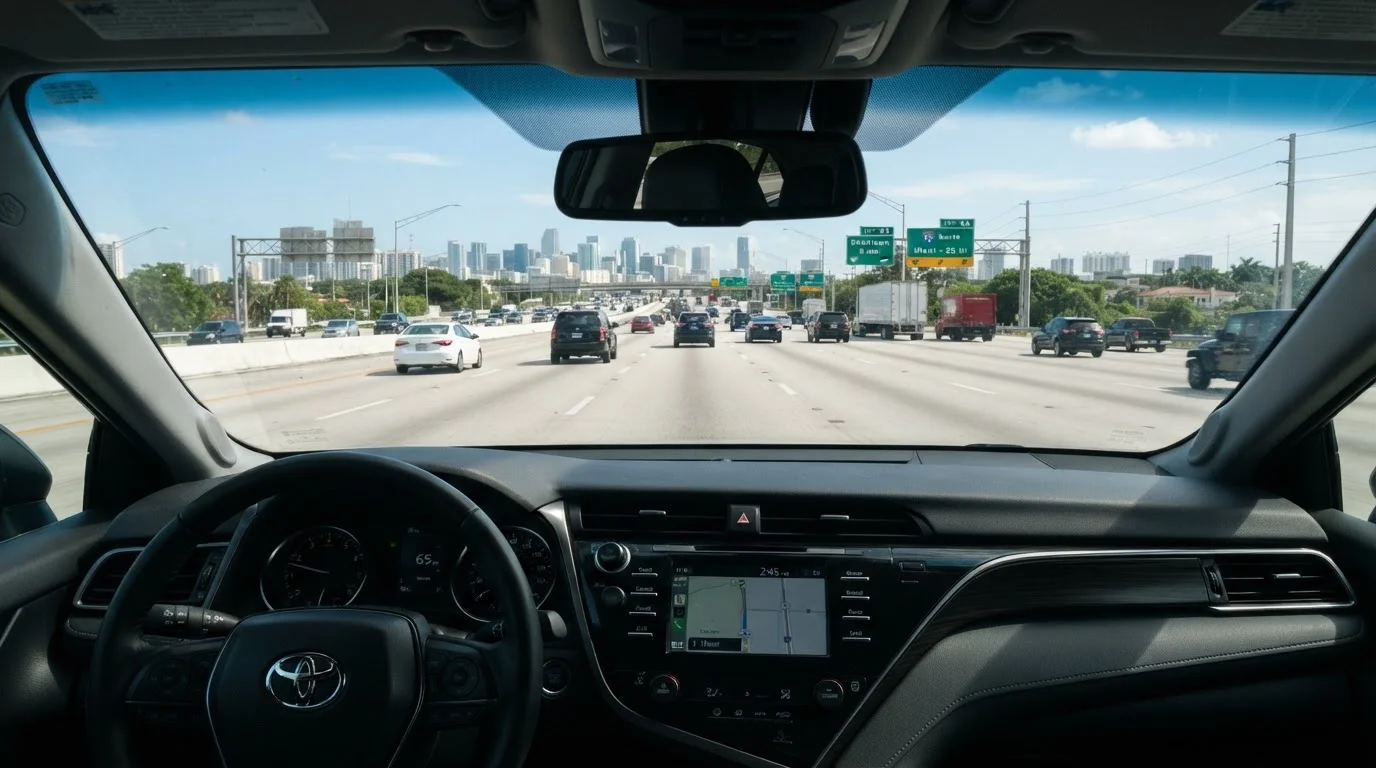
Key Takeaways
Why Eye Movement Is the Foundation of Safe Driving
Most new drivers focus their eyes on the bumper of the car in front of them. It feels logical - that's the nearest threat. But experienced drivers look much farther down the road, and that single habit accounts for a large part of what separates calm, controlled driving from last-second reactions.
Where your eyes point determines what information your brain receives. If you're only looking 50 feet ahead at 45 mph, you're giving yourself roughly three-quarters of a second to identify and respond to a hazard. Look 12 seconds ahead - roughly 800 feet at highway speed - and you have time to plan, not just react.
Driver training programs like those based on the Smith System and the SIPDE process (Scan, Identify, Predict, Decide, Execute) were built around this idea. Both treat eye movement as a learnable skill, not a natural talent. This article breaks down the core practices drawn from those frameworks so you can apply them on your next drive. For a full picture of the mental and physical skills that go into competent driving, see our complete driving overview.
The Core Scanning Practices Every Driver Should Know
These practices are drawn from established driver education frameworks used in commercial fleet training and standard licensing programs. They are practical, not theoretical - you can start applying them today.
Look 12-15 seconds ahead on open roads
Looking further down the road gives your brain more processing time before a situation becomes critical. It also reduces unnecessary braking and steering corrections, which smooths out your driving and reduces fatigue for passengers and other road users.
Check your mirrors every 5-8 seconds
Your rear and side mirrors give you a constantly updating picture of the traffic around you, not just in front. Without regular mirror checks, lane changes and braking decisions are made with incomplete information about what's behind and beside you.
Never fix your gaze on one point for more than two seconds
Extended fixation - called 'target fixation' - narrows your awareness and delays your detection of hazards entering your peripheral vision. Commercial driver training programs treat the two-second rule for gaze duration as a core safety threshold.
Scan intersections before you enter them, not as you arrive
Intersections are the most statistically dangerous spots on any road. Checking cross-traffic as you approach - rather than at the stop line - gives you time to react if someone runs a red light or a pedestrian steps off the curb.
Use your peripheral vision actively, not just your central focus
Human peripheral vision detects motion more effectively than central vision. Trained drivers use this by keeping their central focus on the road ahead while staying receptive to movement at the edges - driveways, sidewalks, side streets.
Adjust your scanning distance based on speed and conditions
The faster you travel, the farther ahead you need to be looking to maintain the same reaction time. Wet roads, fog, or heavy traffic all reduce how far you can effectively see - your visual search zone should shrink accordingly.
Keep in mind that scanning habits interact with other driving skills. For example, poor speed perception makes it harder to judge how quickly a hazard is closing in. Our article on why drivers misjudge speed explains the cognitive factors at work there.
Adapting Your Scan to Different Road Environments
No single scanning pattern works perfectly in every situation. City streets, highways, and rural roads each demand a different visual approach.
City driving compresses your reaction space. Intersections appear frequently, pedestrians enter your path unexpectedly, and parked cars can hide cyclists or children. In urban environments, your scan must be more active - checking cross-traffic at every intersection, watching sidewalk edges, and tracking the behavior of vehicles two or three cars ahead. City vs. rural driving strategies covers these differences in detail.
Highway driving allows a longer forward look - 15 to 20 seconds ahead is realistic - but introduces new risks: lane-change conflicts, trucks with larger blind spots, and the danger of fixating on the same point while cruise control holds a steady speed.
Night driving shrinks your effective scan zone because headlights only illuminate so far. Your eyes also take longer to adjust between bright oncoming headlights and dark road sections. Night driving risks explains why many drivers underestimate how much visibility loss affects reaction time.
Scanning Habits Change With Passenger Count
Having passengers - especially in the backseat - can subtly pull your visual attention away from the road. Research on new drivers shows that social interaction inside the vehicle is a meaningful distraction risk. Being aware of this tendency is the first step toward managing it. Keep conversations brief during demanding driving situations like merging, navigating intersections, or driving in low visibility.
Distractions - especially phone use - collapse all of these scanning habits instantly. Even a hands-free call occupies mental bandwidth that your visual system needs to process what your eyes are picking up. See what research says about distracted driving for context on cognitive load while driving.
Start Building the Habit on Your Next Drive
Scanning is a habit, and habits are built through deliberate repetition. The quick wins below give you concrete starting points - each one is small enough to practice in a single trip.
Over time, systematic scanning stops feeling like a checklist and becomes automatic. When that happens, you'll notice you're smoother at intersections, less surprised by sudden lane changes, and more confident in unfamiliar areas - including when driving in a new city without full reliance on GPS.
Every drive is a low-stakes opportunity to practice. Make your eyes work for you.