

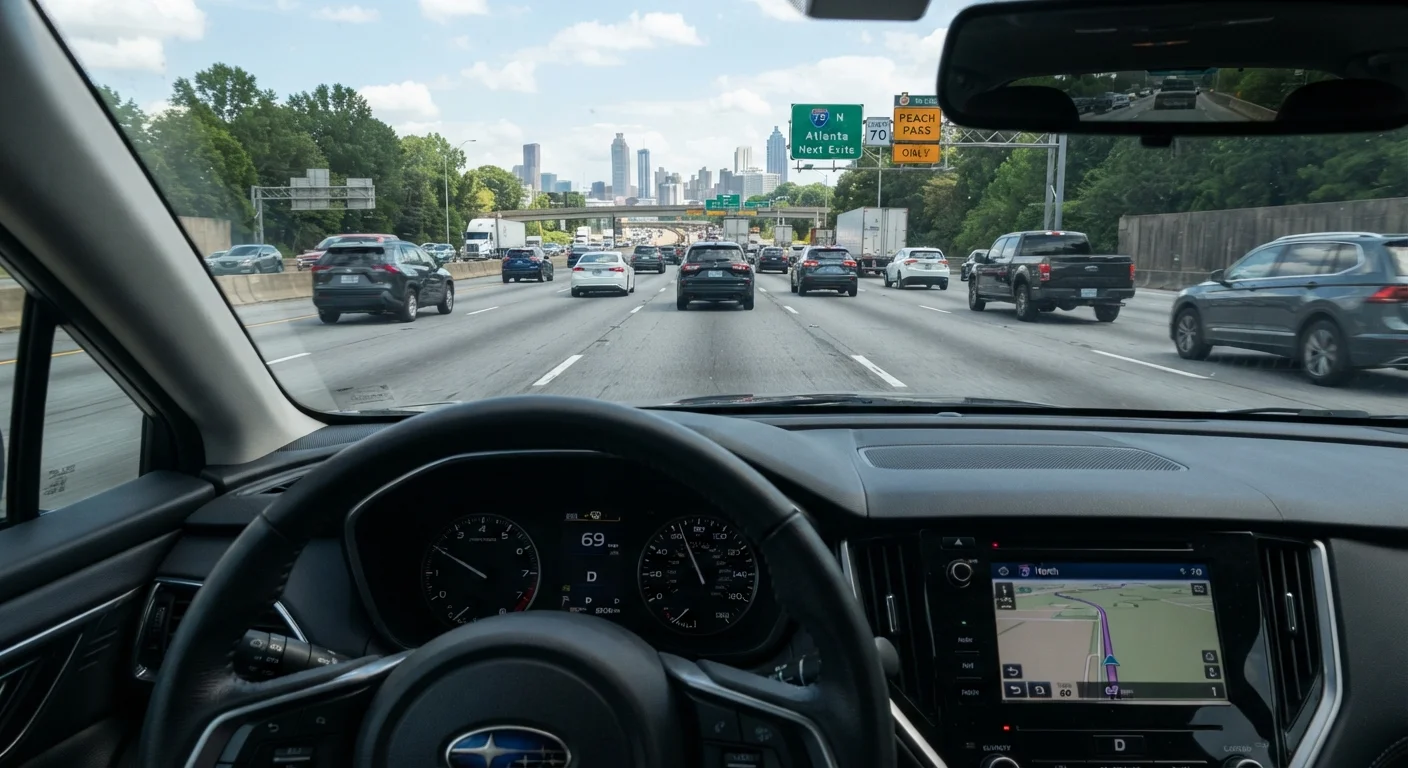
Key Takeaways
Why the Interstate Surprises Even Prepared Drivers
You can read every driving manual cover to cover and still feel your stomach drop the first time a semi-truck blows past you at 75 mph. The interstate operates at a different scale than city streets - faster, louder, and far less forgiving of hesitation. New drivers who've practiced in parking lots and neighborhoods often find that the skills translate, but the pace doesn't.
Most surprises on the interstate aren't about difficulty - they're about unfamiliarity. Once you know what to expect and how to respond, these situations become routine. Our first-time highway driving guide covers the foundational basics; this article goes a step further, focusing on the specific moments that catch new drivers flat-footed.
Before any long trip, run through a pre-trip safety checklist so mechanical issues don't compound the stress of unfamiliar roads.
The on-ramp that feels too short
On-ramps are designed to let you accelerate to highway speed before merging - but many new drivers treat them like a slow approach, arriving at the merge point well below traffic speed. The result is a dangerous gap in flow that forces other drivers to brake suddenly.
Use the full length of the ramp to reach the speed of traffic already on the interstate (typically 60-70 mph). Check your mirrors and blind spot early, signal your intention, and merge smoothly into an opening. If no gap exists, you may need to briefly adjust speed - but never stop on a ramp unless it's physically unavoidable.
Use every foot of the on-ramp to match highway speed before you merge.
A lane suddenly ending with no warning (or so it seems)
Lane drops - where a travel lane disappears ahead - are signed well in advance. The problem is that new drivers often aren't yet in the habit of reading overhead signs proactively. By the time the lane narrows, they're reacting rather than planning.
When you see a sign indicating a lane ends ahead, move over at the earliest safe opportunity rather than riding the lane to its end. Merging early is courteous, predictable, and significantly safer than a last-second squeeze. Note: zipper merging (taking turns at the merge point) is actually encouraged by many transportation agencies in heavy congestion - but it works only when both drivers cooperate calmly.
Read lane-drop signs early and merge before the pressure builds.
Weigh stations: do you have to stop?
First-timers often tense up when they see a weigh station sign, unsure whether they need to pull off. The answer for almost all passenger vehicles is no - weigh stations are intended for commercial trucks and certain oversized vehicles whose weight affects road wear and safety.
Unless a sign specifically directs all vehicles to stop, or a law enforcement officer signals you to pull in, you drive past. If you're towing a heavy trailer, check your state's rules, as some states require certain towing combinations to stop. When in doubt, consult your state's DMV guidance before the trip.
Passenger cars almost never need to stop at weigh stations - keep driving.
Following too close without realizing it
City driving builds habits around shorter following distances because speeds are lower and stops are frequent. On the interstate at 65-70 mph, a car covers roughly 100 feet per second. The commonly cited guideline is the three-second rule: pick a fixed object, and make sure at least three seconds pass between the car ahead passing it and you passing it.
In poor weather or with a heavy load, extend that to four or five seconds. New drivers often feel pressure to close gaps when faster traffic comes up behind them - resist this. Your gap is a safety buffer, not a courtesy gesture to tailgaters.
At highway speed, three seconds of following distance is a minimum, not a suggestion.
Construction zones and the rules that change inside them
Orange signs, shifted lanes, narrowed shoulders, and workers near traffic - construction zones are stressful even for experienced drivers. What new drivers sometimes miss is that posted speed limits inside work zones are legally enforceable and often carry doubled fines.
Slow to the posted speed as soon as you see the advance warning signs, not when the cones appear. Keep a larger following distance than usual because sudden stops are common. If a flagger is directing traffic, treat their signals exactly as you would a traffic light - they have the authority to stop and direct vehicles.
Construction zone speed limits carry real legal consequences - slow down at the first sign.
Handling a breakdown or emergency stop
No one plans to break down, but knowing what to do before it happens removes panic from the equation. If your car develops a problem - flat tire, warning light, overheating - signal and move to the right shoulder as smoothly and quickly as it's safe to do.
Once stopped, turn on your hazard lights immediately. Stay in the vehicle if you can and are away from traffic. If you must exit, do so from the passenger side away from moving lanes. Call for assistance and use road flares or reflective triangles if you have them. Do not attempt repairs near live traffic lanes. If you've never dealt with a breakdown or minor incident before, our guide to handling your first incident walks through the steps calmly.
Move right, turn on hazards, and stay in your vehicle until help arrives.
Passing and being passed by large trucks
Semi-trucks create wind buffeting that can noticeably push a small car sideways when you're alongside them. New drivers are often startled by this and overcorrect. When passing a large truck, maintain a steady grip on the wheel, keep your speed consistent, and complete the pass without lingering next to the trailer.
Trucks also have large blind spots - roughly the length of a car - on all four sides. If you can't see the truck driver's mirrors, they likely can't see you. Pass decisively and move back into the right lane with enough clearance that the full truck is visible in your rearview mirror before you complete the move.
Pass trucks quickly and decisively - don't linger beside the trailer.
Building Confidence One Scenario at a Time
Every driver on the interstate was once a first-timer. The goal isn't to eliminate nerves - it's to replace uncertainty with preparation. Practicing systematic road-scanning habits gives you more processing time at speed, which is the single biggest confidence booster available to new drivers.
Practice During Low-Traffic Hours First
If you have a choice, make your first interstate trips during off-peak hours - mid-morning on a weekday, for example. Lower traffic density gives you more time and space to process each situation. Once these scenarios feel familiar, adding rush-hour traffic becomes a manageable next step rather than an overwhelming leap.
If conditions ever deteriorate while you're on the interstate, knowing how to adjust is critical - our guide to driving in rain, snow, and fog explains exactly how the rules shift. And for a broader look at every skill that shapes safe driving, see our complete driving skills overview.