

Key Takeaways
Owner's Manual
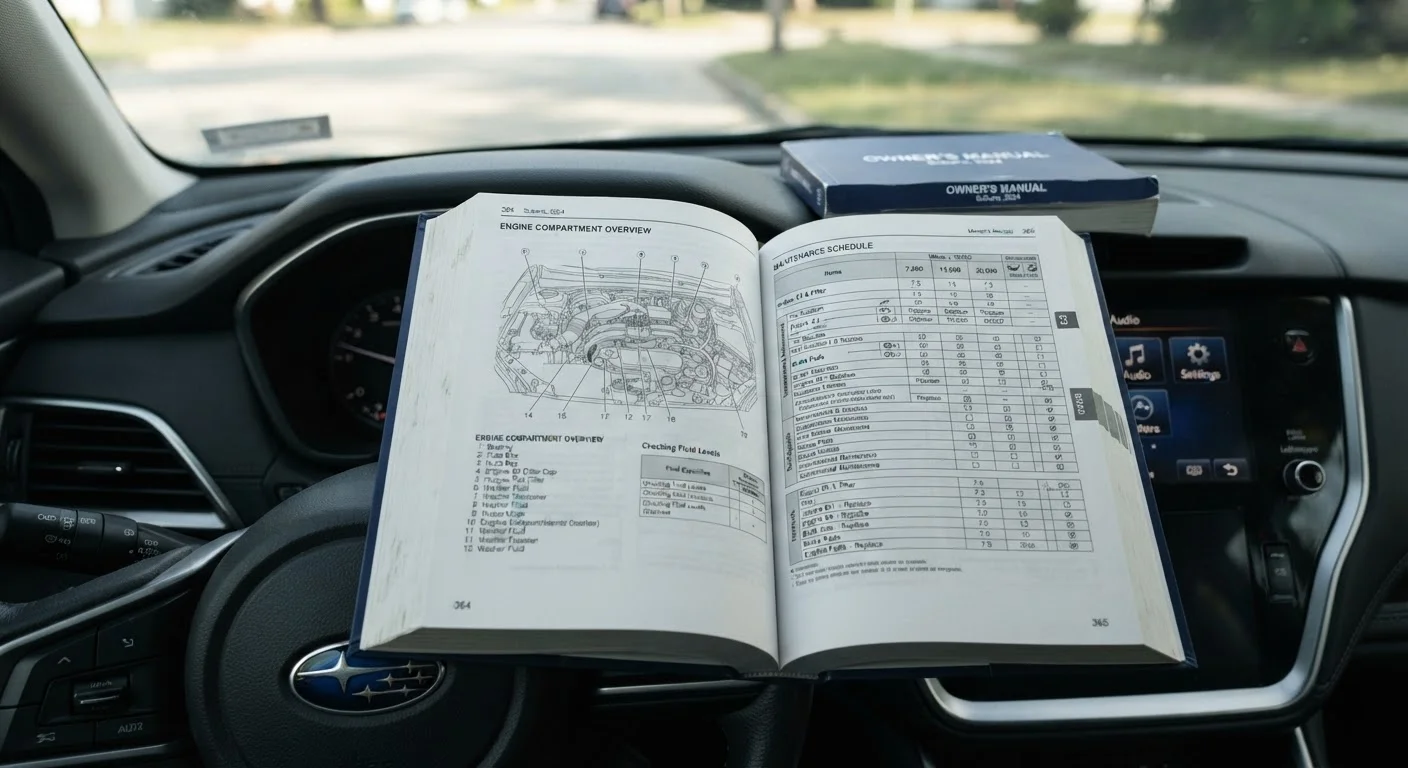
An owner's manual is the printed or digital guide that comes with every new vehicle. It contains instructions, specifications, and maintenance schedules written specifically for that make, model, and model year. Think of it as the rulebook your car's engineers wrote so you'd know exactly how to care for it.
Manufacturer-specified intervals and fluid grades in your manual take precedence over generic advice because they reflect your engine's exact tolerances, materials, and design parameters.
What's Actually Inside That Booklet
Most drivers stuff the owner's manual into the glove box and never open it again. That's a missed opportunity. The manual isn't filler - it's a dense, vehicle-specific reference written by the engineers who designed your car.
Inside, you'll typically find:
- Maintenance schedule - exact mileage and time intervals for oil changes, filter replacements, spark plugs, brake inspections, and more
- Fluid specifications - the correct oil grade, coolant type, transmission fluid, and brake fluid for your engine
- Tire information - recommended tire size and inflation pressure
- Dashboard warning lights - what each symbol means and how urgently you should respond
- Towing and payload capacity - critical if you ever haul a trailer or carry heavy loads
- Feature explanations - how your infotainment, safety systems, and driver-assist features actually work
You don't need to read it cover to cover. Learn to use the index - it turns a 400-page book into a quick lookup tool.
Digital Manuals Are an Option Too
Many newer vehicles come with a QR code or in-dash access to a digital version of the manual. Some manufacturers also offer official apps. A digital copy is easier to search and harder to lose than a printed booklet, so it's worth setting one up if your vehicle supports it.
Why Generic Advice Isn't Good Enough
You've probably heard that you should change your oil every 3,000 miles. That figure is outdated for most modern vehicles, and it's a good example of why generic advice can lead you astray. Depending on your engine and the oil your manufacturer specifies, your actual interval could be 5,000, 7,500, or even 10,000 miles.
Following an interval that's too short wastes money. Following one that's too long risks engine wear. Your manual gives you the number that's right for your car.
The same logic applies to fluids. Using the wrong viscosity motor oil - say, 5W-30 when your engine calls for 0W-20 - can affect fuel economy and, in some cases, engine protection. Your manual lists the exact specification. See our guide to engine oil grades for help decoding those numbers.
Tire pressure is another common misread. Many drivers inflate to the number printed on the tire sidewall - but that's the tire's maximum pressure, not the recommended pressure for your vehicle. Your manual (and the sticker on your driver's door jamb) has the right figure. For a full breakdown, see tire pressure basics.
Check Your Manual Before Every Service Appointment
Before you take your car in for maintenance, quickly review what the manual says is due at your current mileage. This helps you ask informed questions and ensures you're not talked into services that aren't yet necessary. It takes about two minutes and can save you real money.
How to Use It Without Getting Overwhelmed
Treat the manual like a reference book, not a novel. Here's a practical approach for new owners:
- Find the maintenance schedule first. It's usually its own section and may be labeled "Scheduled Maintenance" or "Service Intervals." Note the mileage milestones and what's due at each one. Our first car maintenance schedule guide walks you through this in more detail.
- Write down your fluid specs. Jot the recommended oil grade and coolant type somewhere easy to find - a note in your phone works fine. You'll need this information at every oil change.
- Bookmark the warning lights section. When a light appears on your dashboard, you'll want to check it fast. Knowing which lights indicate stop-immediately emergencies versus schedule-a-service-soon situations can save you from a breakdown or costly repair. You can also cross-reference our dashboard warning lights guide.
- Check capacity limits before towing. Exceeding tow or payload ratings can damage your transmission and suspension - your manual lists the safe limits.
If you have a used car without a manual, search the manufacturer's website by year and model. Most offer free PDF downloads. For more on keeping your vehicle documents organized, see which car documents to keep accessible.
~40%
Drivers who report never reading their owner's manual
Industry surveys consistently find a large share of drivers rely on word-of-mouth or habit rather than manufacturer guidance for basic maintenance decisions.
3x
Potential cost difference from wrong oil change intervals
Changing oil far more frequently than your manufacturer specifies - or far less - can mean unnecessary expense or accelerated engine wear over a vehicle's life.
Building the Habit Early
The drivers who get the most life out of their vehicles tend to share one habit: they follow the manufacturer's guidance rather than guessing. That guidance lives in your owner's manual. Combined with good ownership routines, using your manual as a regular reference is one of the simplest ways to prevent avoidable breakdowns and avoid unnecessary repair bills.
You don't need to become a mechanic. You just need to know where to look when a question comes up - and now you do.