

| Documents required while driving | Driver's license, proof of insurance, vehicle registration (Standard US state DMV requirements) |
| Where to keep your vehicle title | Secure location at home - never in the vehicle |
| Digital insurance cards | Accepted in most US states (Verify with your state DMV) |
| Registration renewal frequency | Annually or biennially, varies by state |
| Penalty for missing documents | Fines vary by state; can occur even if paperwork exists elsewhere |
Why Document Organization Matters Behind the Wheel
Getting pulled over or involved in a fender-bender is stressful enough without scrambling through a cluttered glove box to find your insurance card. In the US, law requires drivers to carry certain documents at all times, and failing to produce them can result in fines - even if your paperwork is technically up to date somewhere at home.
The good news is that organizing your car documents takes less than an hour. Once set up, it protects you legally and makes routine tasks - like renewing registration or filing an insurance claim - much simpler. This guide breaks down exactly which documents belong in the car, which should stay safely at home, and how to manage both.
| Documents required while driving | Driver's license, proof of insurance, vehicle registration (Standard US state DMV requirements) |
| Where to keep your vehicle title | Secure location at home - never in the vehicle |
| Digital insurance cards | Accepted in most US states (Verify with your state DMV) |
| Registration renewal frequency | Annually or biennially, varies by state |
| Penalty for missing documents | Fines vary by state; can occur even if paperwork exists elsewhere |
Documents to Keep in Your Vehicle at All Times
Three documents should always be within arm's reach when you're driving:
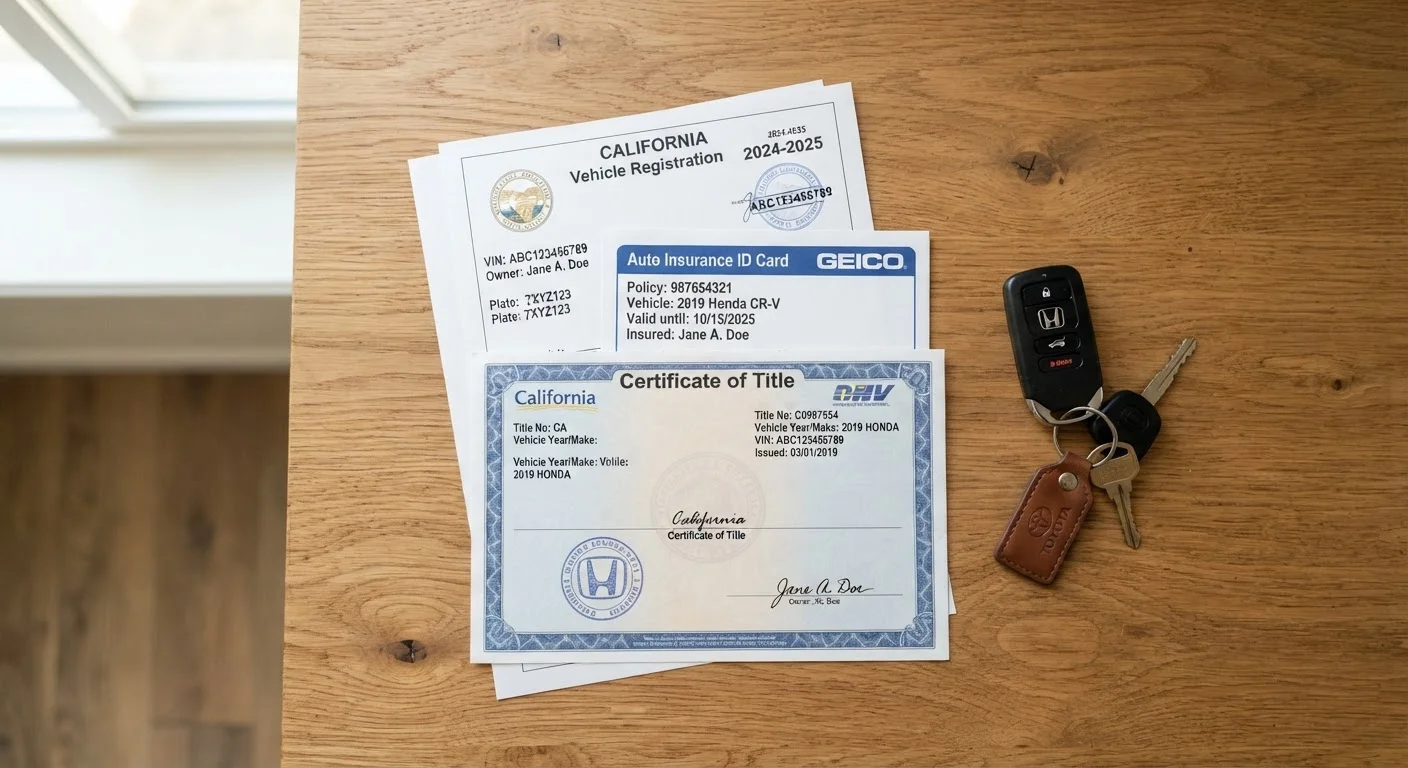
- Proof of insurance: Your insurer provides an insurance card - either paper or digital - that shows your policy number, coverage dates, and the insured vehicle. Most states accept a digital version on your phone, but check your state's DMV website to confirm. Keep a physical backup in the glove box regardless.
- Vehicle registration: This document proves the car is legally registered in your state. It's issued annually (or every two years, depending on your state) and typically arrives by mail after you pay your registration fee. It shows the license plate number, vehicle identification number (VIN), and registered owner. Tuck it behind your insurance card in a document sleeve.
- Your driver's license: Technically carried on your person, not the car - but worth mentioning. Never leave it at home.
Some drivers also keep a copy of their owner's manual in the glove box. It's not a legal requirement, but it can be invaluable during a roadside situation.
Digital Insurance Cards: Check Your State First
Many states now allow drivers to show proof of insurance on a smartphone screen during a traffic stop. However, rules vary - a handful of states still require a physical card. Before going paperless, confirm your state's current policy on the DMV website. Keeping one printed backup in the glove box is a simple safeguard regardless.
Documents to Store Safely at Home
Your vehicle title is the single most important ownership document - and it should not live in your car. A title is the legal proof that you own the vehicle. If the car is stolen while the title is inside it, that document becomes a tool for fraud.
Vehicle Title
A legal document issued by your state that identifies the official owner of a vehicle. When you sell a car, you sign the title over to the buyer.
Vehicle Registration
A document showing that your vehicle is officially registered with your state for the current period. You must carry it in your car and display the matching registration sticker on your license plate.
Proof of Insurance
A card or document from your insurer confirming that your vehicle has active auto insurance coverage meeting your state's minimum requirements.
Lien Release
A document from your lender confirming that an auto loan has been fully paid off and the lender no longer has a legal claim on the vehicle.
VIN (Vehicle Identification Number)
A unique 17-character code assigned to every vehicle. It appears on the dashboard, inside the driver's door, and on key documents like the title and registration.
Keep your title in a fireproof home safe or a secure filing system. The same applies to any lien release documents (paperwork from a lender confirming your loan is paid off) and your purchase agreement from when you bought the car.
For a broader approach to managing household paperwork, see our related guide on managing household documents without losing your mind. The principles translate directly to automotive records.
Maintenance records - oil change receipts, inspection reports, tire rotation logs - are also best stored at home. They're not legally required on your person, but they matter for resale value and warranty disputes. A simple accordion folder labeled by year works well.
Setting Up a Simple System That Actually Works
A two-part system covers most car owners' needs:
- In-car document sleeve: A slim, waterproof plastic sleeve kept in the glove box. It holds your current registration and insurance card - nothing else. Replace documents immediately when renewals arrive so the sleeve never has outdated papers.
- Home folder or binder: Stores the title, purchase agreement, lien release, warranty documents, and a running log of maintenance. Label it clearly and tell a trusted household member where it is.
If you're new to car ownership, the first-month checklist for new car owners walks through setting up both insurance and registration from scratch - a useful companion to this guide.
Consider photographing your title, registration, and insurance card and storing the images in a secure cloud folder or password-protected app. This won't substitute for physical documents in all situations, but it's a useful backup if originals are lost or damaged.
Review your in-car sleeve once a year - ideally when you renew registration - to confirm everything is current. Building it into your routine is one of the ownership habits that prevent bigger headaches down the road.