

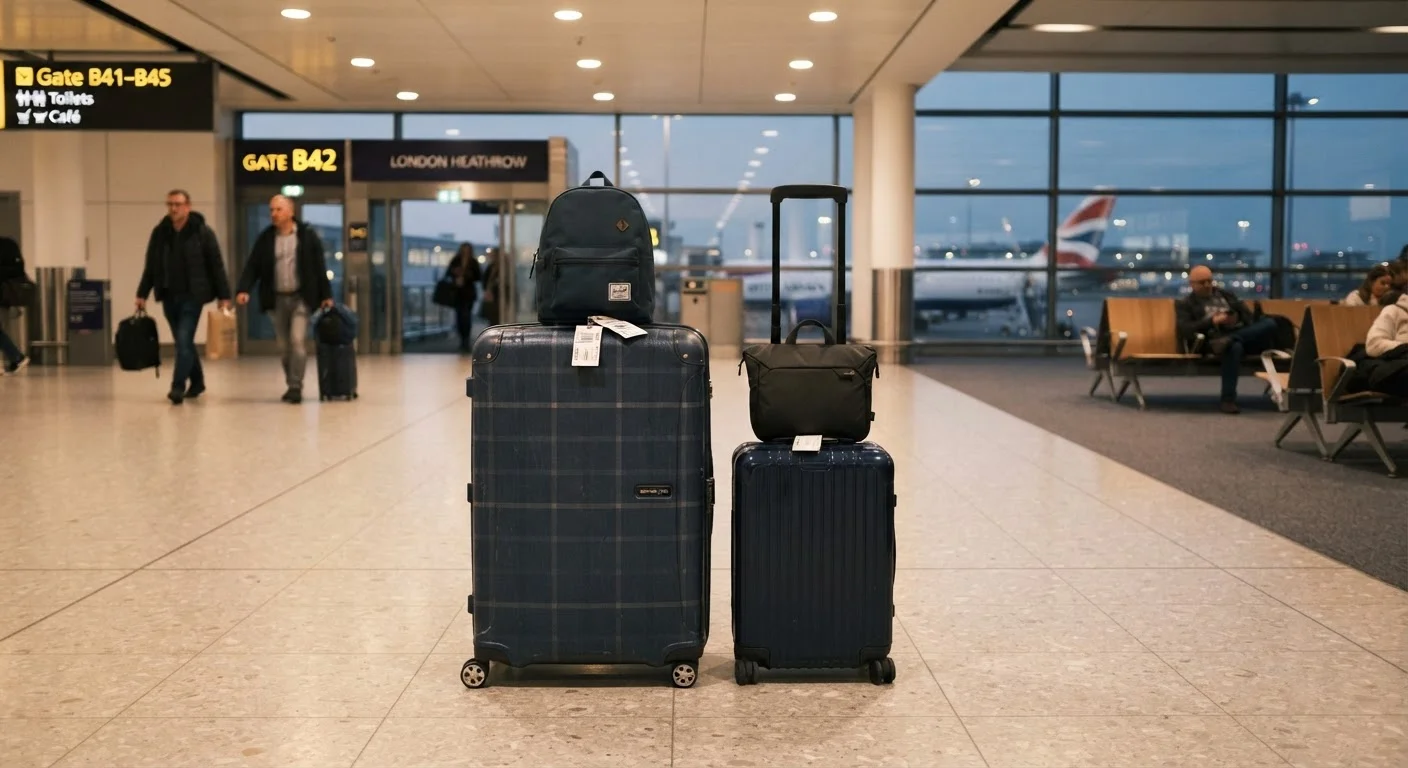
Key Takeaways
Option A
Checked Luggage
The roomy, pack-everything option for longer or more complex trips.
Best for: Travelers heading away for a week or more, those packing for multiple climates, or anyone bringing items restricted from carry-on.
Option B
Carry-On Bag
The streamlined, fee-free choice for short trips and light packers.
Best for: Weekend travelers, frequent flyers, and anyone who wants to skip the baggage claim carousel entirely.
If you're traveling for more than a week
Checked Luggage
Longer trips typically require more clothing, shoes, and gear than a carry-on can hold comfortably. A checked bag gives you the space to pack thoroughly without compression stress.
If you're taking a short weekend trip
Carry-On Bag
Three to four days of clothing fits easily in a standard carry-on. You'll skip baggage fees, avoid the wait at baggage claim, and move through the airport faster.
If you're traveling with liquids, gels, or specialty items
Checked Luggage
Full-size toiletries, sporting equipment, and certain sharp tools are restricted from carry-ons. A checked bag removes those TSA restrictions from the equation.
If you're flying budget airlines or connecting through multiple airports
Carry-On Bag
Budget carriers often charge significant fees for checked bags. On connecting flights, carry-ons also eliminate the risk of your bag being misrouted or delayed.
What's Actually the Difference?
When you fly, you generally have two options for how to bring your belongings: a checked bag - which goes into the aircraft's cargo hold - or a carry-on bag, which travels with you in the overhead compartment above your seat.
Checked luggage is typically larger (often 25-30 inches tall) and is handed off at the check-in counter before your flight. You won't see it again until you arrive at baggage claim. Carry-on bags are smaller - usually limited to around 22 x 14 x 9 inches, though this varies by airline - and stay within your reach throughout the journey.
For a full breakdown of how bag dimensions and airline policies work, see our plain-language overview of luggage sizes and airline restrictions.
| Criterion | Checked Luggage | Carry-On Bag |
|---|---|---|
| Typical size | 25-30 inches, up to 50 lbs | ~22 x 14 x 9 inches, ~15-25 lbs |
| Fee on most US airlines | $30-$40+ per bag, each way | Usually free (varies by airline) |
| TSA liquid restrictions | No restrictions on liquids | 3.4 oz containers only, one quart bag |
| Risk of delay or loss | Small but present risk | No risk - bag stays with you |
| Accessibility during flight | Not accessible in-flight | Overhead bin, easy access |
| Best for trip length | 1 week or longer | 1-4 nights |
| Airport experience | Check-in queue + baggage claim wait | Faster through airport |
Key Trade-Offs Every First-Timer Should Know
Neither option is universally better - the right choice depends on your specific trip. Here's what each one actually costs you in convenience, money, and flexibility.
Cost
Most US airlines charge fees for checked bags, which can range from around $30 to $40 or more per bag, per direction. Carry-ons are free on most full-service carriers, though some budget airlines charge for those too. Fees change frequently, so always check directly with your airline before booking.
Security and TSA Rules
Carry-ons are subject to TSA screening rules, including the 3-1-1 liquids rule: containers must be 3.4 oz (100ml) or smaller, all fitting in one quart-sized clear bag. Full-size shampoos, sunscreen, and similar products must go in a checked bag. Our guide to TSA liquid rules and toiletries walks through exactly what's allowed and what isn't.
Risk of Loss or Delay
Checked bags are occasionally delayed, misrouted, or - rarely - lost. This risk is small but real. A carry-on stays with you, which means your essentials are always accessible. If you do check a bag, pack a change of clothes and any medications in your carry-on as a backup.
~2.9 million
Bags mishandled by US airlines annually
According to the US Department of Transportation's Air Travel Consumer Report, mishandled bag reports number in the millions annually, though rates have improved significantly over the past decade.
$30-$40+
Typical checked bag fee, each way
Major US carriers generally charge between $30 and $40 for a first checked bag each direction, though fees vary by airline, route, and fare class.
How to Decide: A Simple Framework
If you're unsure which option fits your trip, use these questions as a guide:
- How many nights are you traveling? One to four nights usually fits in a carry-on. Five or more nights often benefit from a checked bag.
- Are you checking any restricted items? Liquids over 3.4 oz, sharp objects, or sporting equipment typically need to be checked.
- Are you connecting through multiple airports? Carry-ons reduce the risk of your bag missing a tight connection.
- Are you willing to do laundry mid-trip? If yes, carry-on travel becomes much more viable even for longer trips.
Some travelers find that a hybrid approach works well - a carry-on for daily essentials, medications, and valuables, paired with a checked bag for the bulk of their clothing. For a deeper look at building a complete packing strategy, see our First-Time Traveler's Complete Packing Playbook.
If you're curious whether carry-on-only travel is genuinely realistic for your needs, our carry-on only travel guide lays out exactly what it takes - including what you'll need to leave behind.
Airline Rules Vary - Always Verify
Carry-on size limits, weight restrictions, and baggage fees differ from one airline to the next - and even between fare types on the same airline. A bag that's accepted on one carrier may be flagged on another. Always check the specific baggage policy on your airline's website before you pack. Rules can also change, so verify close to your travel date rather than relying on information from a previous trip.