

Key Takeaways
Why the Two-Month Wall Exists
Most people who try budgeting for the first time don't quit because they're bad with money. They quit because their first budget was built on guesses, had no room for error, and no plan for what to do when something went wrong. Those are design problems, not character flaws.
The good news is that first-budget failures follow very predictable patterns. Understanding them before you start - rather than after the budget collapses - is what separates people who eventually build a lasting system from those who give up and conclude that budgeting "just isn't for them."
If you haven't built your first budget yet, the five-step walkthrough is a good place to start with real numbers. If you've tried before and it didn't hold, the mistakes below are likely what happened.
Using idealized numbers instead of real spending history.
Why it happens: Beginners often estimate what they think they should spend rather than what they actually spend. Without past bank statements or receipts, those estimates tend to skew optimistic.
Forgetting irregular expenses that don't show up every month.
Why it happens: Because costs like car registration, annual subscriptions, vet bills, or holiday gifts don't appear on a typical monthly statement, they're easy to overlook when building a first budget.
Setting spending limits so tight there's no room for normal life.
Why it happens: New budgeters often see the process as deprivation - cutting everything that isn't strictly necessary. The result is a plan that works on paper but is impossible to live with.
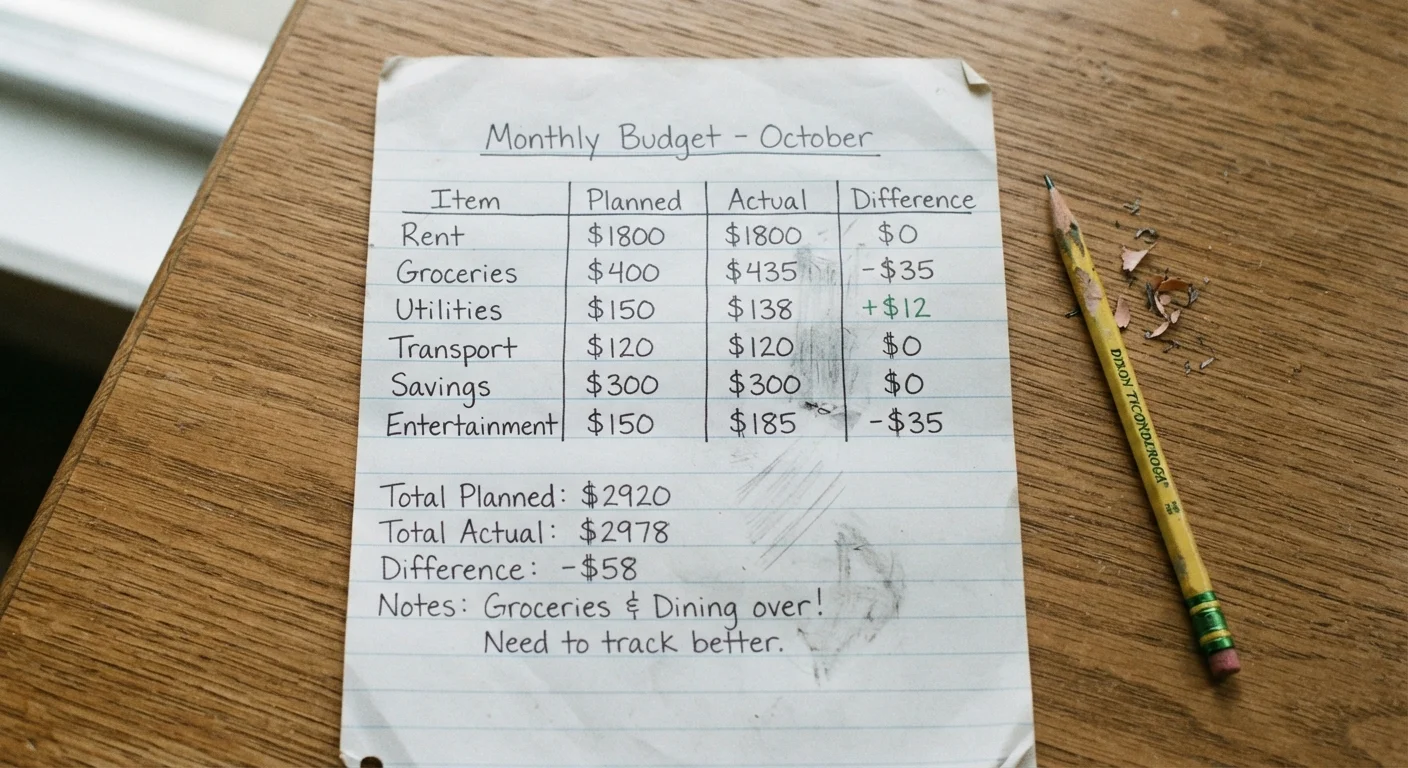
Treating the first overspent category as total failure.
Why it happens: All-or-nothing thinking is common among beginners. One bad week feels like proof the whole system doesn't work, which leads to abandoning the budget entirely.
Never revisiting or updating the budget after setting it up.
Why it happens: Building a budget feels like the finish line. But income changes, expenses shift, and a budget written in January can be completely misaligned with reality by March.
Building a Budget That Actually Lasts
The common thread running through every mistake above is the same: unrealistic expectations meeting real life, with no system in place to absorb the impact. A durable budget isn't a stricter budget - it's a more honest one.
Your Budget Is a Draft, Not a Contract
No first budget is accurate. Real spending data only comes from actually tracking your money over several weeks. Treat month one as information-gathering, not a pass/fail test. Adjust the numbers as you learn - that's the process working correctly, not failing.
Once your budget reflects your actual spending and includes a buffer for irregular costs, the next challenge is reviewing it consistently. That monthly check-in is where most of the learning happens. You'll notice patterns - categories that always run over, others where you consistently have money left - and you can adjust accordingly over time.
Skipping a Review Makes Things Worse
When a budget month goes badly, the instinct is often to avoid looking at it. That avoidance is one of the most reliable predictors of quitting entirely. A short, honest review - even just 15 minutes - keeps the habit alive and gives you something to improve next month.
This is also worth knowing: the same mental habits that undermine a budget tend to undermine other new systems too. The common budgeting myths article covers several beliefs that stop people before they even begin. And if you're ready to move beyond the basics, a full end-to-end budgeting guide covers everything from tracking your first paycheck to building a system that largely runs itself.
Once your budget is stable, saving consistently becomes much more straightforward. A month-by-month savings starter plan can help you build that habit gradually without feeling like you're starting from zero all over again.
~2 months
Typical lifespan of a first budget attempt
Financial educators commonly observe that most beginners abandon their first budget within the first two months, often after a single difficult week.
60%+
Americans without a detailed monthly budget
Surveys by Gallup and similar organizations have consistently found that fewer than half of U.S. adults maintain a detailed household budget.
This article is for general informational and educational purposes only and does not constitute personalized financial advice. For guidance specific to your situation, consider speaking with a qualified financial professional.