

Key Takeaways
Macronutrients
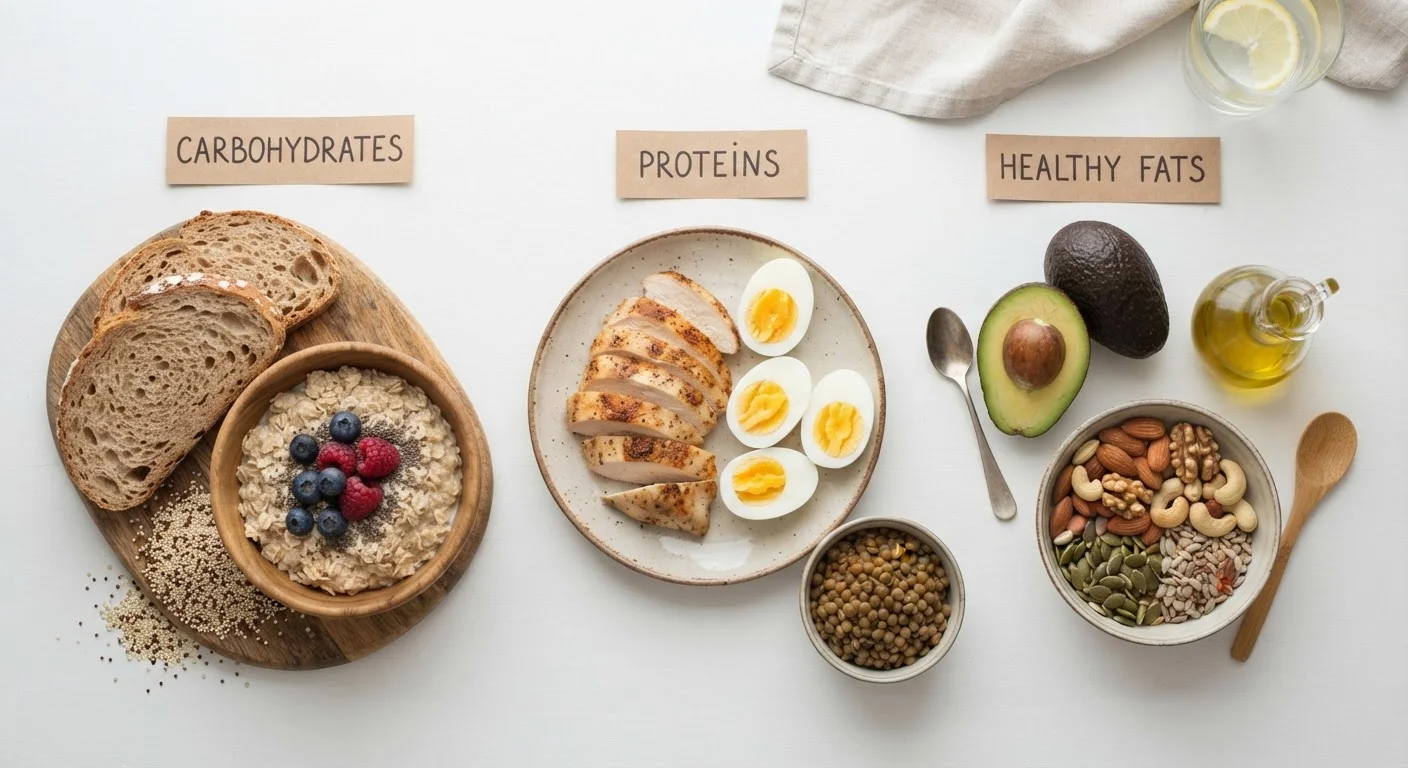
Macronutrients - often called "macros" - are the three main categories of nutrients your body needs in relatively large amounts every day: carbohydrates, proteins, and fats. Each one provides energy (measured in calories) and performs specific jobs that keep your body working. Unlike vitamins and minerals, which are needed in tiny quantities, macros form the foundation of everything you eat.
Carbohydrates and proteins each provide 4 calories per gram; fats provide 9 calories per gram. This difference in energy density explains why fat-rich foods are more calorie-dense by weight.
Why Macronutrients Matter
If you've ever felt confused by nutrition labels, diet advice, or the word "macros" floating around online, you're not alone. Nutrition can feel like a maze of conflicting rules, but the foundation is actually straightforward: your body runs on three main fuel types, and understanding what each one does makes every other nutrition decision easier.
Think of macronutrients less as diet categories and more as departments in a company - each one handles a specific set of responsibilities, and the whole operation works best when all three are present. Cutting one out entirely doesn't simplify things; it creates gaps your body has to compensate for.
This article walks through what carbohydrates, proteins, and fats each do, where you find them, and why balance - rather than restriction - is generally the goal. For a fuller picture of nutrition beyond macros, see our guide to vitamins and minerals.
Macros vs. Calories: What's the Difference?
Calories measure the total energy a food provides, while macronutrients tell you where that energy comes from. Two meals can have identical calorie counts but very different macronutrient profiles - and those differences affect how your body digests the food, how full you feel, and which biological processes are supported. Both pieces of information are useful, but neither tells the whole story on its own.
Carbohydrates: Your Body's First Choice for Fuel
Carbohydrates are broken down into glucose - a simple sugar your cells use for energy. Your brain alone relies heavily on glucose to function, which is part of why very low-carb diets can initially cause mental fogginess.
Not all carbs behave the same way in the body. Simple carbohydrates (like those in white bread or sugary drinks) digest quickly, causing a faster rise in blood sugar. Complex carbohydrates (found in oats, brown rice, legumes, and vegetables) digest more slowly, providing steadier energy and coming packaged with fiber that supports digestive health.
Fiber - technically a carbohydrate - deserves a special mention. It isn't digested for energy, but it feeds beneficial gut bacteria, helps regulate blood sugar, and supports feelings of fullness. Most Americans fall well short of recommended fiber intake.
If you've heard that "carbs make you fat," our nutrition myths explainer addresses exactly that claim with what the evidence actually shows.
Protein: The Body's Builder and Repair Crew
Protein is made up of smaller units called amino acids. Your body uses these to build and repair muscle tissue, produce enzymes and hormones, support immune function, and maintain skin, hair, and organ health. Nine of the twenty amino acids are "essential" - your body can't make them, so they must come from food.
Animal sources such as meat, poultry, fish, eggs, and dairy are considered complete proteins because they contain all nine essential amino acids. Many plant sources are incomplete - meaning they're missing one or more - but eating a variety of plant foods throughout the day covers all your bases without needing to obsess over combinations at every meal.
Easy Ways to Add Protein to Any Meal
You don't need to overhaul your eating habits to boost protein. Try adding a hard-boiled egg to a salad, stirring Greek yogurt into a smoothie, or swapping white rice for lentils or quinoa. Small swaps across the day add up without requiring precise tracking.
Protein also plays a role in satiety (feeling full after eating), which is why higher-protein meals often keep hunger at bay longer than carbohydrate-heavy ones of similar calorie content.
Fats: Essential, Not the Enemy
Dietary fat has had a complicated reputation, but research consistently shows it's indispensable. Fat supports brain health (the brain is roughly 60% fat by dry weight), helps absorb fat-soluble vitamins A, D, E, and K, produces hormones, and insulates and protects organs.
The type of fat matters. Unsaturated fats - found in olive oil, avocados, nuts, and fatty fish - are widely associated with heart health benefits. Saturated fats - found in red meat and full-fat dairy - are fine in moderation for most people, though current guidance suggests not overdoing them. Trans fats, found in some processed foods, are best minimized. For a deeper look at fat types, see our guide to saturated vs. unsaturated fat.
10-35%
Recommended daily calorie range from protein
According to the Dietary Reference Intakes established by the National Academies of Sciences, Engineering, and Medicine.
45-65%
Recommended daily calorie range from carbohydrates
Per the Acceptable Macronutrient Distribution Ranges (AMDRs) set by the National Academies of Sciences, Engineering, and Medicine.
20-35%
Recommended daily calorie range from fat
Per the Acceptable Macronutrient Distribution Ranges (AMDRs) set by the National Academies of Sciences, Engineering, and Medicine.
Fat takes longer to digest than carbs or protein, which contributes to lasting fullness and helps stabilize energy between meals.
Putting It All Together Without Overthinking It
You don't need a nutrition degree or a tracking app to eat well. A practical starting point: build meals around a source of complex carbohydrates, a quality protein, and a small amount of healthy fat - then add plenty of vegetables. This loose framework naturally covers your macronutrient bases without requiring precise measurement.
Because bodies vary considerably - shaped by genetics, gut bacteria, activity level, and health history - what works well for one person may not be ideal for another. Our explainer on individual food responses goes into why one-size-fits-all nutrition advice often falls short. If you'd rather skip the framework entirely, this guide for nutrition-averse readers offers an even simpler approach.
This article is for general informational purposes only and is not a substitute for personalized nutrition or medical advice. For guidance specific to your health needs, please consult a registered dietitian or qualified healthcare professional.