

Key Takeaways
Vehicle Title
A vehicle title is the official legal document that proves who owns a car, truck, or other motor vehicle. It is issued by your state's Department of Motor Vehicles (or equivalent agency) and includes key information such as the owner's name, the vehicle identification number (VIN), and any lienholder (such as a lender) if money is owed on the vehicle. Without a valid title, you cannot legally sell, transfer, or in many cases register a vehicle.
Titles can carry different designations - such as 'clean,' 'salvage,' or 'rebuilt' - that reflect the vehicle's history and can significantly affect its insurability and resale value.
What the Title Actually Proves
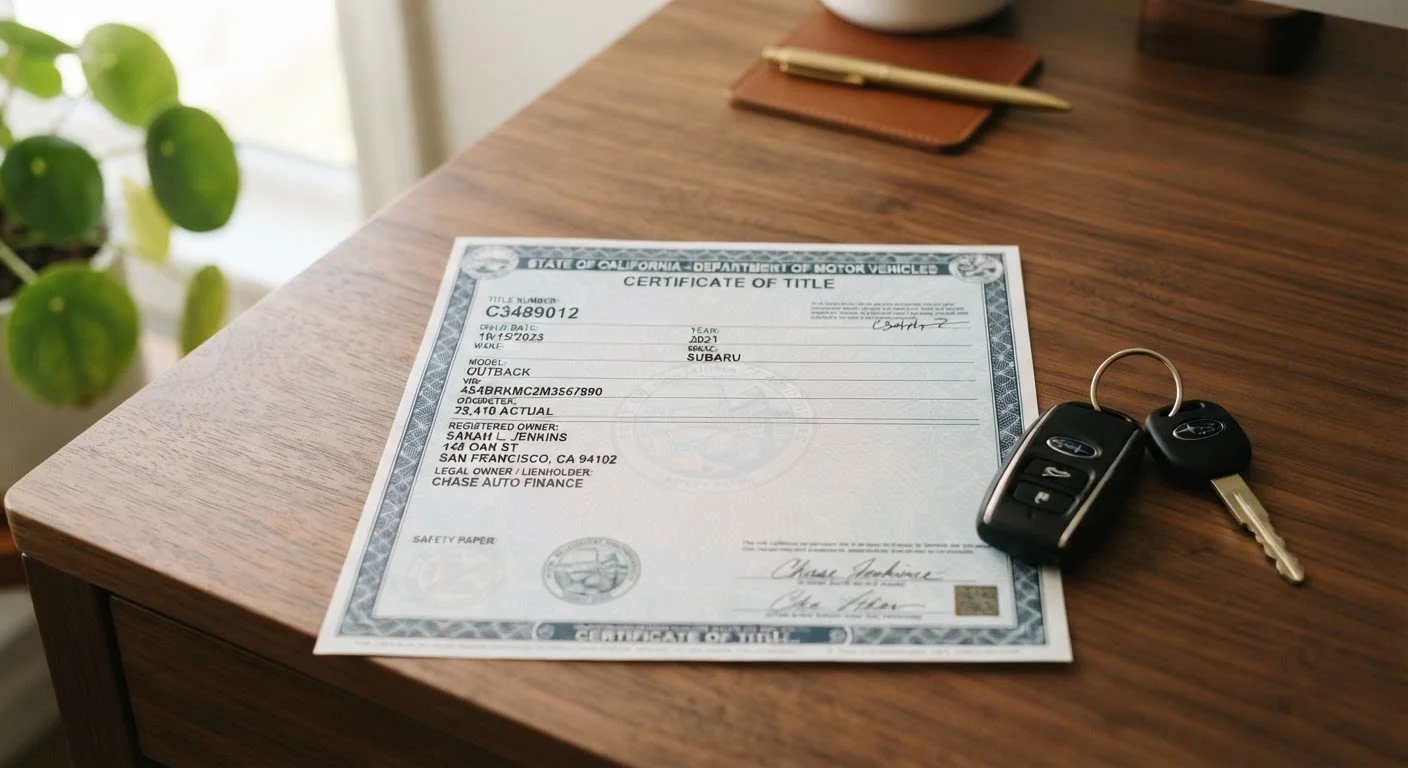
Think of your vehicle title the way you'd think of a deed to a house. It's the government-issued document that says, in plain legal terms, this person owns this vehicle. Every title includes the registered owner's full name and address, the vehicle identification number (VIN), the make, model, and year of the car, and the odometer reading at the time of transfer.
If you borrowed money to buy the vehicle, the lender's name also appears on the title as a lienholder. That lien is the lender's legal claim on the vehicle until the loan is paid in full. Once the loan is cleared, the lienholder releases its claim and you receive what's called a clear title - meaning you own the vehicle outright with no encumbrances.
This document matters far beyond a simple piece of paper. It determines who has legal authority to sell the vehicle, who is responsible for it, and what its history includes. When you're buying a used car, reviewing the title carefully - including its designation - is one of the most important steps you can take. See our guide to pre-purchase inspections for more on what to check before any used car purchase.
50 states
All require title transfer to complete a legal vehicle sale
While procedures vary, every U.S. state requires a properly signed title to legally transfer vehicle ownership between private parties or dealers.
~20%
Estimated value reduction for rebuilt-title vehicles
Industry observers generally estimate that a rebuilt or salvage-history title reduces a vehicle's resale value by roughly 20-40% compared to a comparable clean-title vehicle, though this varies by market.
Title Designations: Clean, Salvage, and Rebuilt
Not all titles are created equal. The designation printed on your title tells the story of what the vehicle has been through, and that history has real consequences for insurance and value.
- Clean title: The vehicle has no history of major damage or total-loss declaration. This is the standard and most desirable status.
- Salvage title: An insurance company declared the vehicle a total loss - typically because repair costs exceeded a threshold percentage of the car's value. A salvage vehicle may be unsafe to drive and difficult to insure until properly inspected and repaired.
- Rebuilt or reconstructed title: The vehicle was previously salvaged, has been repaired, and passed a state inspection. These vehicles are legally drivable but often carry restrictions on the type of insurance coverage available.
If you're considering purchasing a vehicle with a salvage or rebuilt title, understand the limitations before committing. Our car insurance overview explains how title status can affect what coverage you're able to get.
Title Rules Vary by State
While the basic function of a vehicle title is consistent across the U.S., specific rules - including what triggers a salvage designation, how duplicate titles are issued, and what documentation is required for transfers - differ from state to state. Always verify the exact requirements with your state's DMV before acting, especially for out-of-state purchases or title transfers across state lines.
When You'll Need It - and How to Protect It
Most drivers go years without needing to produce their title - but when the moment comes, not having it creates serious problems. Here are the situations where your title becomes essential:
- Selling or transferring the vehicle: You must sign the title over to the buyer. No title, no legal sale.
- Registering a newly purchased vehicle: Most states require the title to complete registration in your name.
- Refinancing or taking out a loan: Lenders need the title to record a lien.
- Settling an estate: If a vehicle owner passes away, the title is needed to transfer ownership to heirs.
Because you don't need it daily, store your title somewhere secure at home - a fireproof safe or a locked filing cabinet works well. The glove box might seem convenient, but it's one of the first places a car thief looks. For a full breakdown of which documents stay home and which belong in the car, see our guide to car ownership documents.
Make a Copy Before You File It Away
After you receive your title, make a photocopy or take a clear photo of both sides and store it separately from the original. This won't substitute for the real title in a legal transaction, but it gives you all the key details - VIN, owner information, lien release - if you ever need to apply for a duplicate. It can speed up the replacement process considerably.
How to Replace a Lost Title
Lost or damaged titles happen. The good news is that replacing one is straightforward - just not instant. The process runs through your state's DMV and generally involves:
- Completing a duplicate title application form (available on your state DMV's website or in person)
- Providing a valid government-issued ID
- Paying a replacement fee, which varies by state
- Verifying ownership details such as your VIN and license plate number
If there's still a lien on the vehicle, the lender may need to be involved in the duplicate title process. Processing times range from a few days to several weeks depending on your state, so don't wait if you know you'll need it - for example, if a sale is pending.
Understanding the title is just one piece of responsible vehicle ownership. The more familiar you are with your ownership documents and responsibilities, the less likely you are to run into costly or time-consuming surprises. For a broader look at what it means to own a car, the differences between private party and dealership purchases are worth understanding before your next transaction.