

Key Takeaways
Our Verdict
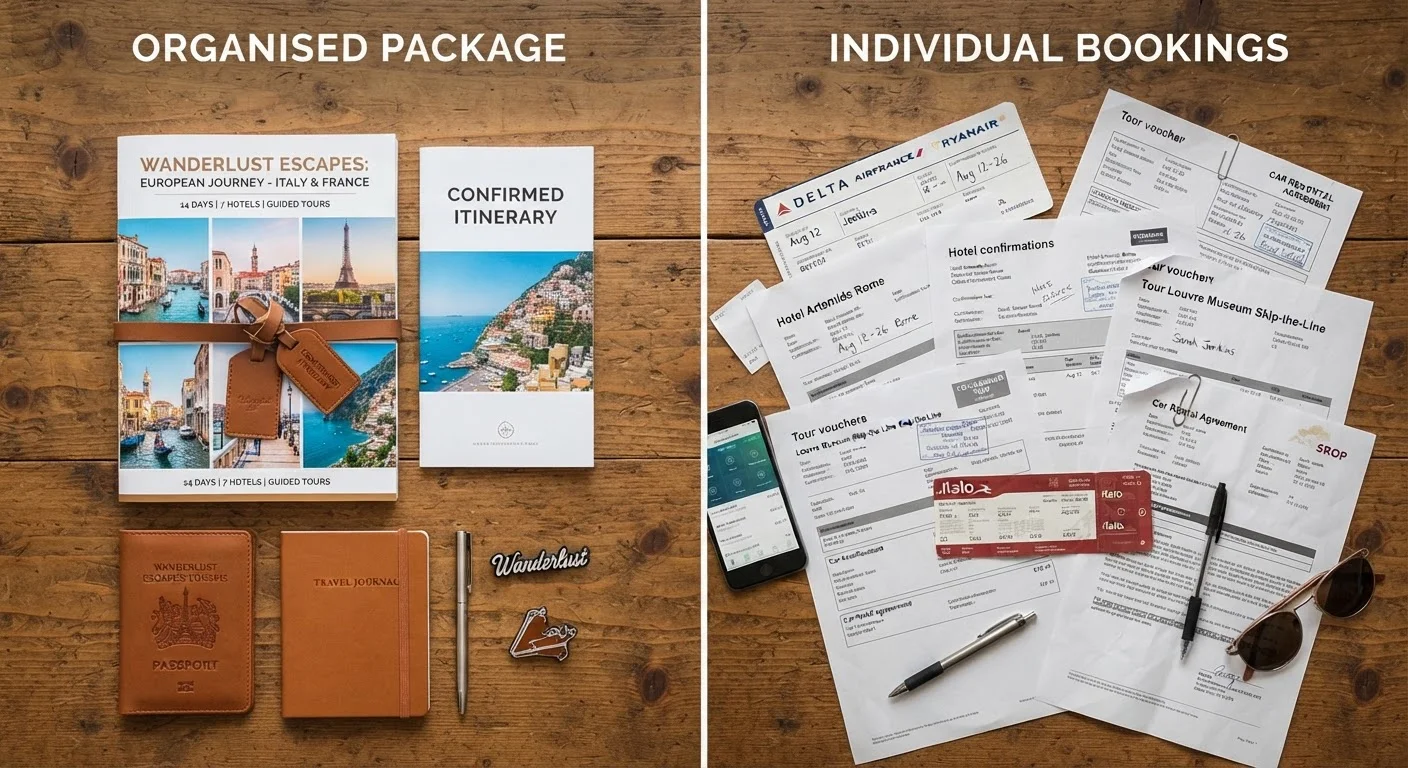
Neither approach wins outright - the savings depend on your destination, travel style, and how much flexibility you want. Package deals genuinely cut costs for resort holidays, cruises, and destinations where bundled pricing is standard. Separate bookings tend to come out ahead for city breaks, mixed itineraries, and travellers comfortable doing a little research. In both cases, the only way to know for certain is to price both options side by side before committing.
| Best for | Recommended |
|---|---|
| Resort holidays, cruises, and all-inclusive getaways | Package deals |
| City breaks, multi-destination trips, and flexible schedules | Booking separately |
| First-time travellers who want simplicity over savings | Package deals |
| Budget-focused travellers willing to spend time researching | Booking separately |
Why This Question Doesn't Have a Simple Answer
The honest answer is: it depends. Package deals bundle flights, accommodation, and sometimes tours or transfers into a single price. Booking separately means sourcing each component on your own. Both can save you money in the right circumstances - and both can cost you more if you're not paying attention.
Before diving into the comparison, it helps to get clear on your trip's basics. Our guide on questions every traveller should answer before booking walks through exactly that groundwork. Once you know your destination type, travel dates, and how much flexibility you need, the package-vs-separate decision becomes much clearer.
When Package Deals Genuinely Save You Money
Packages work best when the components are naturally tied together - think beach resorts, cruises, and destinations where accommodation dominates the trip cost. Tour operators often negotiate bulk rates with hotels and airlines that individual travellers can't access, and those savings do get passed on.
Packages also shine when:
- You're travelling during peak season, when individual hotel and flight prices spike unpredictably.
- Transfers are included, eliminating a cost that's easy to overlook when budgeting separately.
- You want minimal planning effort - one payment, one confirmation, less coordination.
Price Both Options Before Deciding
Spend 20-30 minutes building a side-by-side cost comparison using the same trip dates, accommodation category, and included extras. This single step removes guesswork and often reveals the answer immediately. Many travellers are surprised to find the gap is smaller - or larger - than they expected.
The convenience factor is real, especially for first-time international travellers. One point of contact for changes or problems can reduce stress significantly, even if the savings aren't dramatic.
When Booking Separately Usually Wins
For city breaks, multi-stop itineraries, and off-peak travel, separate bookings frequently beat packages. You can mix and match: a budget airline, a centrally located apartment, and free walking tours instead of a guided package that bundles in things you don't want.
Separate bookings also give you control over change and cancellation terms. A package cancellation can mean losing the whole amount; booking separately lets you choose which components have flexible policies. Understanding what your booking actually guarantees before paying is essential either way.
Timing matters too. If you're able to lock in flights early and watch accommodation prices, you can often undercut any packaged equivalent. Our article on flight booking timing explains what the data actually shows about when to buy.
| Package Deals | Booking Separately | |
|---|---|---|
| Upfront cost clarity | Single price, easier to see total | Multiple bookings, requires manual totalling |
| Flexibility to change plans | Usually limited, can be costly to alter | Varies by component; more control |
| Best trip type | Resort, cruise, all-inclusive | City break, multi-stop, custom |
| Hidden fee risk | Taxes and surcharges sometimes excluded | Baggage, resort, and transfer fees add up |
| Planning effort required | Low - one booking handles most logistics | Higher - multiple platforms and decisions |
| Cancellation risk | One cancellation may void entire trip | Components can be cancelled independently |
| Peak season value | Often better - bulk rates help | Prices spike; less negotiating power |
The Hidden Costs That Skew the Comparison
Headline prices mislead in both directions. Packages sometimes advertise a low per-person rate that assumes double occupancy, excludes airport taxes, or applies only to specific travel dates. Separate bookings can look cheaper until you add luggage fees, resort fees, airport transfer costs, and travel insurance.
To compare fairly, build a complete cost list for each approach:
- Flights (including all fees and baggage)
- Accommodation (including taxes and any mandatory resort fees)
- Transfers to and from the airport
- Travel insurance
- Any tours or activities included in a package that you'd actually use
If you're working with a fixed amount to spend, our practical guide to budget-based trip planning shows how to structure these comparisons without getting overwhelmed. And before any booking, running through a pre-trip budget checklist can catch the costs that are easy to miss.
Making the Call for Your Trip
If you're leaning toward booking separately, think about the order in which you lock things in. Whether to book flights or accommodation first can affect both price and flexibility. And if accommodation type is a variable, consider the full range of options - our comparison of hostels vs. budget hotels breaks down the real trade-offs beyond just price.
The bottom line: don't assume either option saves more without checking. Price both approaches with a full-cost breakdown, factor in how much flexibility you need, and make the call based on your actual trip - not a general rule.
This article provides general travel planning information only. Prices, availability, and terms vary widely by provider, destination, and travel dates. Always verify costs and conditions directly with suppliers before booking.