

Key Takeaways
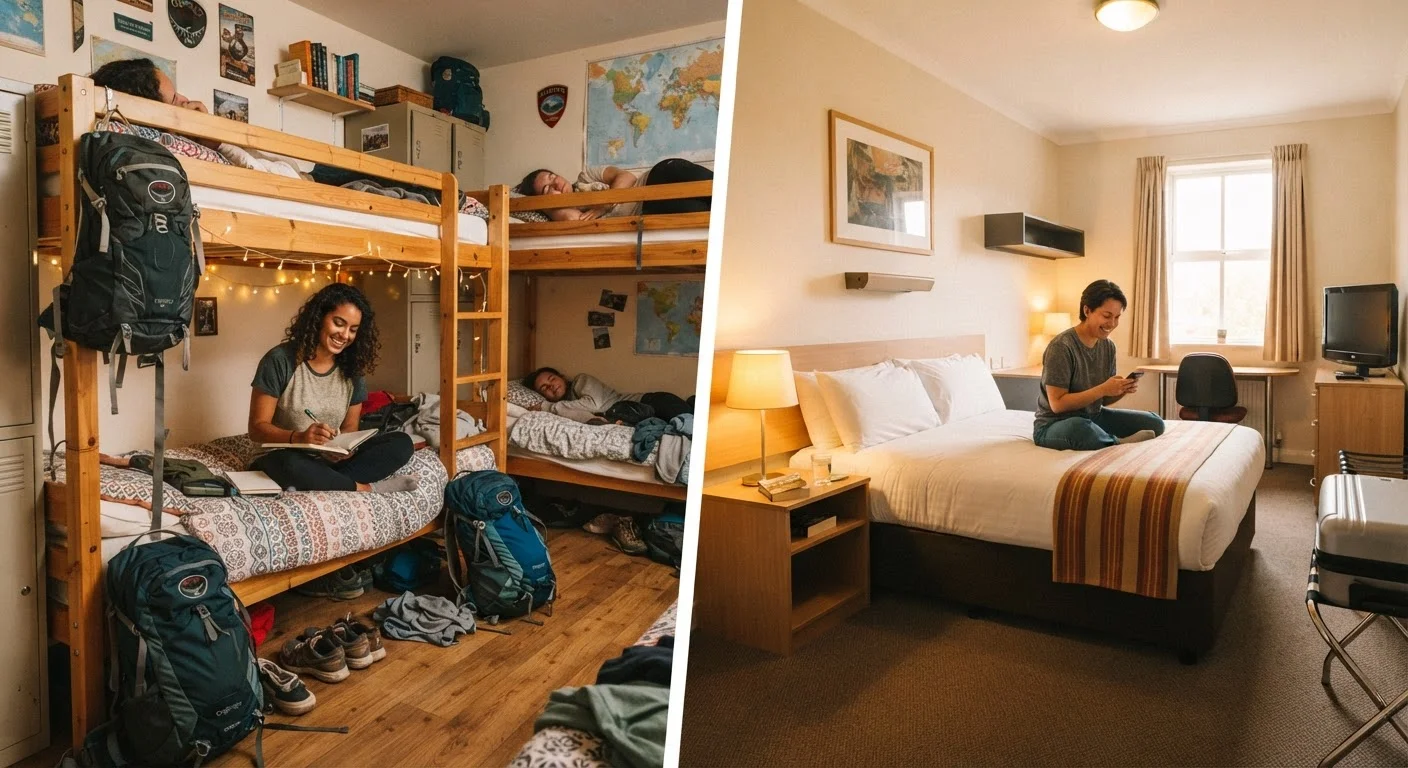
Option A
Hostels
The social, ultra-affordable community option.
Best for: Solo travelers and social adventurers who prioritize low cost and meeting fellow travelers over private space.
Option B
Budget Hotels
The private, predictable entry-level stay.
Best for: Couples, light sleepers, or anyone who needs reliable privacy and quiet without spending on mid-range accommodation.
If you're a solo first-timer on a tight budget
Hostels
Dorm beds can cost a fraction of a private room, and hostel common areas make it easy to meet other travelers who can share local tips and company.
If you're traveling as a couple or with a friend
Budget Hotels
Splitting a private budget hotel room between two people often brings the per-person cost close to a hostel dorm bed - with full privacy included.
If you're a light sleeper or have early wake-ups
Budget Hotels
Shared dorm rooms come with noise, movement, and unpredictable schedules from other guests; a private hotel room eliminates that entirely.
If building a social travel experience matters to you
Hostels
Well-run hostels organize communal events, tours, and shared kitchens that naturally create connections - something a budget hotel rarely offers.
If you need reliable Wi-Fi and a quiet workspace
Budget Hotels
Budget hotels typically provide more consistent, less congested internet than hostels where many guests share the same connection.
The Core Trade-Off: Cost vs. Comfort
When you're trying to stretch a travel budget, accommodation is usually the biggest lever. Hostels and budget hotels both sit at the affordable end of the spectrum, but they offer very different value propositions - and understanding the actual trade-offs will help you choose the right one for each trip.
A hostel dorm bed is almost always cheaper per night than a private budget hotel room. In popular backpacker destinations across Europe, Southeast Asia, and Latin America, dorm beds can run anywhere from $10 to $35 per night, depending on the city and season. Budget hotel rooms in the same cities often start at $40 to $80 per night. That gap matters enormously over a multi-week trip.
But cost isn't the whole story. What you're actually trading when you choose a hostel dorm is privacy, personal space, and sleep consistency. You share a room - often with 6 to 12 strangers - along with bathrooms, common areas, and kitchen facilities. A budget hotel gives you a room to yourself, a private bathroom, and the ability to set your own rhythm without coordinating around anyone else.
Before you commit to either, it's worth doing the groundwork. See our pre-trip budget planning checklist to map out how accommodation costs fit into your overall travel budget.
| Criterion | Hostels | Budget Hotels |
|---|---|---|
| Typical nightly cost (solo) | $10-$35 (dorm bed) | $40-$80 (private room) |
| Privacy | Shared room and bathroom | Private room, usually private bath |
| Social atmosphere | High - communal by design | Low - independent stays |
| Sleep quality | Variable; noise common | Generally quieter and controlled |
| Kitchen access | Usually shared kitchen available | Rarely included |
| Ideal group size | Solo travelers | Couples or pairs |
| Security | Lockers; varies by property | Keyed room; varies by property |
Social Life, Safety, and What Reviews Actually Tell You
One underappreciated advantage of hostels is their built-in social infrastructure. Common rooms, shared kitchens, and organized activities mean solo travelers often arrive alone and leave with a group of new connections. If you're nervous about traveling independently, a lively hostel can make the experience feel far less isolating.
Budget hotels are quieter by design. You check in, access your room, and largely manage your own experience. That suits travelers who want to decompress after long days of sightseeing or who simply prefer not to share space with strangers.
~40%
Average hostel cost savings vs. budget hotels
Travel industry estimates generally place hostel dorm costs at roughly 40-60% less than comparable budget hotel rooms in the same city, though this varies widely by destination.
70%+
Solo travelers who choose hostels
Hostel booking platforms consistently report that the large majority of hostel guests are traveling alone, reflecting the format's appeal for solo adventurers.
Safety is a common concern for first-timers considering hostels. Modern hostels generally provide lockers for valuables, key-card access, and staff on site. That said, quality varies significantly. The same is true for budget hotels - a low price doesn't automatically mean a well-maintained, secure property. In both cases, your most reliable tool is reading recent guest reviews on booking platforms, paying close attention to comments about cleanliness, security, and staff responsiveness.
If unfamiliar budget travel terms are slowing down your research - things like "en-suite," "dormitory," or "private use" - the common budget travel terms guide explains them in plain English. And for a broader view of how accommodation fits into the full picture of budget travel, The Budget Traveler's Complete Playbook is a useful companion resource.
This article provides general travel information for educational purposes. Prices, availability, and conditions vary by location and time - always verify details with official sources before booking.