

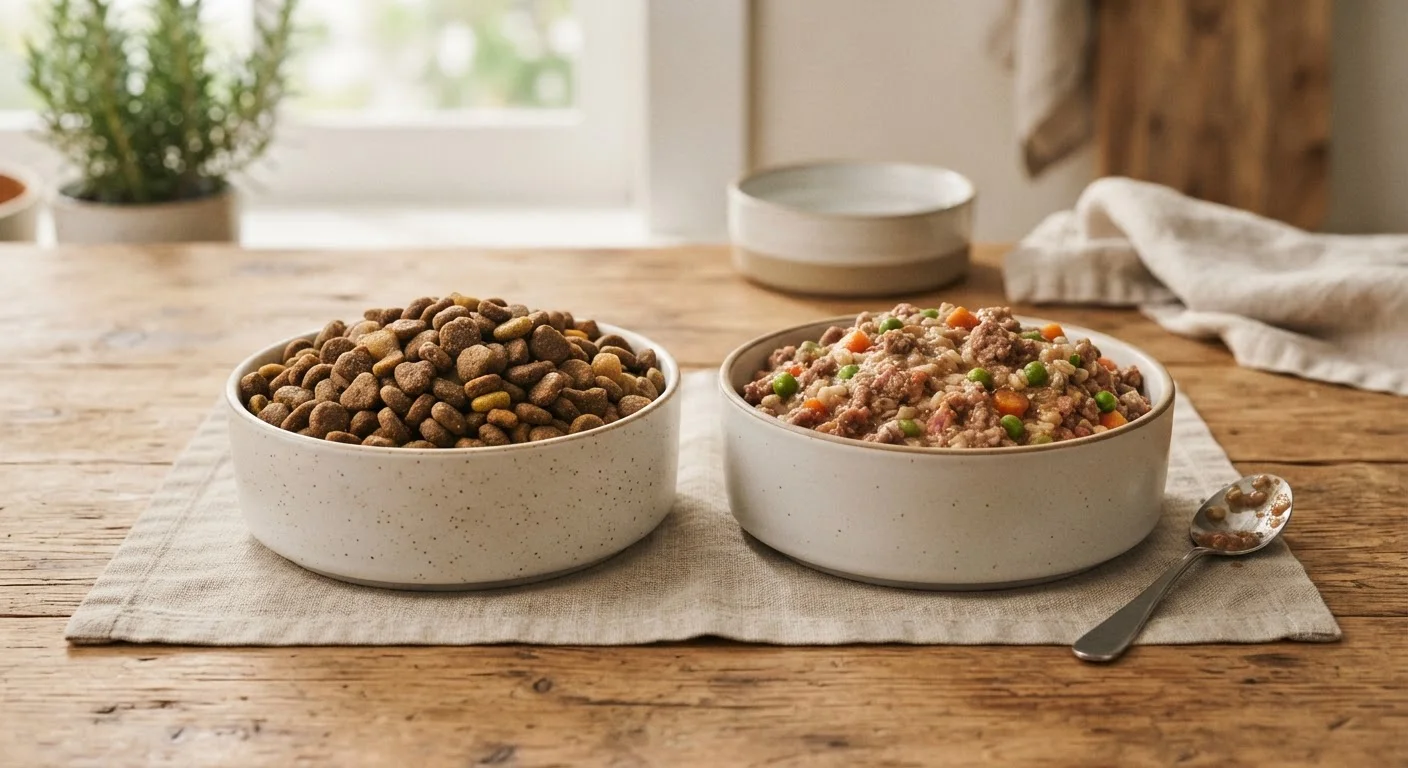
Key Takeaways
Option A
Dry Kibble
The practical, shelf-stable everyday staple.
Best for: Dogs who need a convenient, budget-friendly diet with dental health benefits.
Option B
Wet Food
The moisture-rich, palatable option for picky or sensitive dogs.
Best for: Dogs who need extra hydration, have dental issues, or struggle to maintain a healthy appetite.
If you want an affordable, low-maintenance feeding routine
Dry Kibble
Kibble is cheaper per serving, stores easily without refrigeration, and works well for most healthy adult dogs.
If your dog drinks too little water or has urinary issues
Wet Food
Wet food contains roughly 70-80% moisture, which meaningfully increases daily fluid intake without extra effort.
If your dog is a fussy eater or has a reduced appetite
Wet Food
Wet food's stronger aroma and softer texture tend to be more enticing, especially for older or recovering dogs.
If dental health is a primary concern
Dry Kibble
The mechanical chewing action of kibble may help reduce plaque buildup, though it is not a substitute for regular brushing.
If you want the benefits of both formats without committing to one
Dry Kibble
Start with kibble as the base and add a small amount of wet food as a topper - this is a widely used and vet-accepted approach.
What Actually Separates Kibble from Wet Food
The most fundamental difference between dry kibble and wet food is moisture content. Dry kibble typically contains around 10% water, while wet (canned) food ranges from 70% to 80%. This gap has a downstream effect on everything from calorie density to how you measure portions.
Because kibble has most of its water removed during manufacturing, it packs more calories into a smaller volume. Wet food, by contrast, is heavier and bulkier per serving but delivers fewer calories per ounce. Neither is inherently better - it simply means you need to read labels carefully to understand what your dog is actually getting. See our guide to reading dog food labels for a practical walkthrough of ingredient lists and guaranteed analysis panels.
Both formats can meet a dog's complete nutritional needs when they carry an AAFCO (Association of American Feed Control Officials) nutritional adequacy statement. AAFCO is the body that sets minimum nutrient standards for pet food in the US. Always look for that statement - it indicates the food has been formulated or tested to support a specific life stage.
| Criterion | Dry Kibble | Wet Food |
|---|---|---|
| Moisture content | ~10% | 70-80% |
| Cost per serving | Lower | Higher |
| Storage | Room temperature, months | Refrigerate after opening, 2-3 days |
| Palatability | Moderate | Higher (stronger aroma) |
| Dental health support | Moderate mechanical benefit | Minimal mechanical benefit |
| Calorie density | Higher per ounce | Lower per ounce |
| Portioning ease | Requires measuring | Single-serve options available |
Nutrition, Hydration, and Digestibility
From a pure nutrient standpoint, well-formulated kibble and wet food can be nutritionally equivalent. However, a few practical distinctions are worth understanding.
Hydration: Dogs on a dry food diet rely entirely on their water bowl for fluids. Dogs that tend to drink sparingly - a common trait in some breeds - may benefit from the extra moisture in wet food. This can be especially relevant for dogs with a history of urinary tract issues, though always discuss specific health concerns with your veterinarian.
Protein and fat content: On a dry-matter basis (stripping out moisture to compare apples to apples), kibble and wet food often have similar macronutrient profiles. Wet food can appear higher in protein on the label simply because moisture inflates the raw numbers.
Digestibility: Some research suggests wet food may be slightly more digestible for certain dogs, but the difference is modest for most healthy adults. Dogs with sensitive stomachs or specific conditions may respond better to one format - your vet is the right person to advise here. Nutritional needs also shift as your dog ages; our article on dog nutrition across life stages explains how feeding priorities change from puppyhood through the senior years.
70-80%
Moisture content in wet dog food
Compared to roughly 10% in dry kibble, this difference significantly affects daily fluid intake for dogs who eat wet food.
~3x
Approximate cost difference per calorie
Wet food generally costs considerably more per calorie than dry kibble, though prices vary widely by brand and formula.
Cost, Convenience, and Storage
For most households, cost is a deciding factor. Dry kibble is almost always cheaper per calorie than wet food. A large bag of kibble can feed a medium-sized dog for weeks, while an equivalent caloric intake from canned food would require considerably more spending.
Storage is another practical win for kibble. An unopened bag keeps well at room temperature for months, and leftovers in the bowl don't spoil quickly. Opened cans of wet food must be refrigerated and used within two to three days, which adds a small but real layer of meal planning.
That said, wet food has its own conveniences. Single-serve pouches or small cans eliminate portioning guesswork, and there's no need for a measuring cup if your dog is getting a complete diet from one container. For owners managing multiple pets or variable schedules, this can simplify feeding routines.
Dental Health: Does Kibble Really Clean Teeth?
You've probably heard that crunching on kibble helps keep a dog's teeth clean. There's a kernel of truth here - the mechanical action of chewing hard food can reduce plaque and tartar buildup compared to eating soft food exclusively. Some kibble products are also specifically formulated and tested for dental health claims.
However, it's important not to overstate this benefit. Kibble alone is not a substitute for regular tooth brushing or professional dental cleanings. Dogs on an exclusively wet food diet may accumulate tartar faster, which is worth discussing with your vet if dental disease is a concern for your dog.
The practical takeaway: if your dog tolerates dry food and has no dental pain, kibble can be a modest ally in oral hygiene. But regardless of what you feed, consistent dental care - including toothbrushing with a dog-safe toothpaste - remains the most effective approach.
Mixing Formats Is a Valid Option
Many dog owners and veterinarians find that combining dry kibble with a small amount of wet food offers a practical middle ground. This approach can boost palatability and hydration while keeping costs manageable. If you're considering a mixed diet, introduce the wet food gradually to avoid digestive upset, and check with your vet about appropriate portion adjustments to avoid overfeeding.