

Key Takeaways
Why Cats Reject Litter Boxes
Cats are highly particular about where and how they eliminate, and a litter box that doesn't meet their standards will simply get ignored. Understanding why rejection happens is the first step to preventing it. The most common reasons include a box that is too small, litter that smells too strongly of fragrance, a location that feels exposed or noisy, and - most often - a box that isn't scooped frequently enough.
Unlike dogs, cats cannot be easily coaxed into tolerating a subpar setup. Their avoidance is instinctive, not defiant. If your cat is eliminating outside the box, the box itself is usually the problem, not the cat. If you're setting up a home for a cat for the first time, the new cat owner readiness checklist covers litter box needs alongside all the other essentials to have in place before your cat arrives.
Sudden Changes in Litter Box Habits
If a cat that was previously consistent suddenly starts eliminating outside the box, this can signal a health issue such as a urinary tract infection, bladder stones, or constipation. Do not assume it is purely a behavior problem. Contact your veterinarian promptly to rule out a medical cause before making any changes to the box setup.
What You'll Need
Before you begin, gather the following supplies. Choosing quality basics upfront makes the entire setup process straightforward.
What you will need
Litter box
The primary container where your cat eliminates - should be large enough for the cat to turn around freely.
Unscented cat litter
Provides the substrate cats prefer for digging and covering waste; unscented varieties are better tolerated by most cats.
Litter scoop
Used to remove clumps and solid waste during daily spot-cleaning.
Litter mat
Placed outside the box to catch litter tracked on your cat's paws and reduce floor mess.
Mild unscented dish soap
Used to wash the box thoroughly during weekly or biweekly deep cleans.
How to Set Up the Litter Box
Follow these steps in order for the best chance of your cat accepting the box right away. Each detail - size, litter depth, location, and cleaning schedule - plays a role. Skipping any one of them is often what leads to problems down the line.
Choose the right size and style of box
The box should be at least 1.5 times the length of your cat from nose to tail base. A common mistake new owners make is buying a box that looks reasonably sized on the shelf but turns out cramped once the cat is inside. When in doubt, go larger. Open-top boxes are generally preferred by cats because they provide an unobstructed escape route and good ventilation. Covered boxes can trap odors - which bothers cats far more than it bothers humans - and may make some cats feel cornered.
Pick the right location
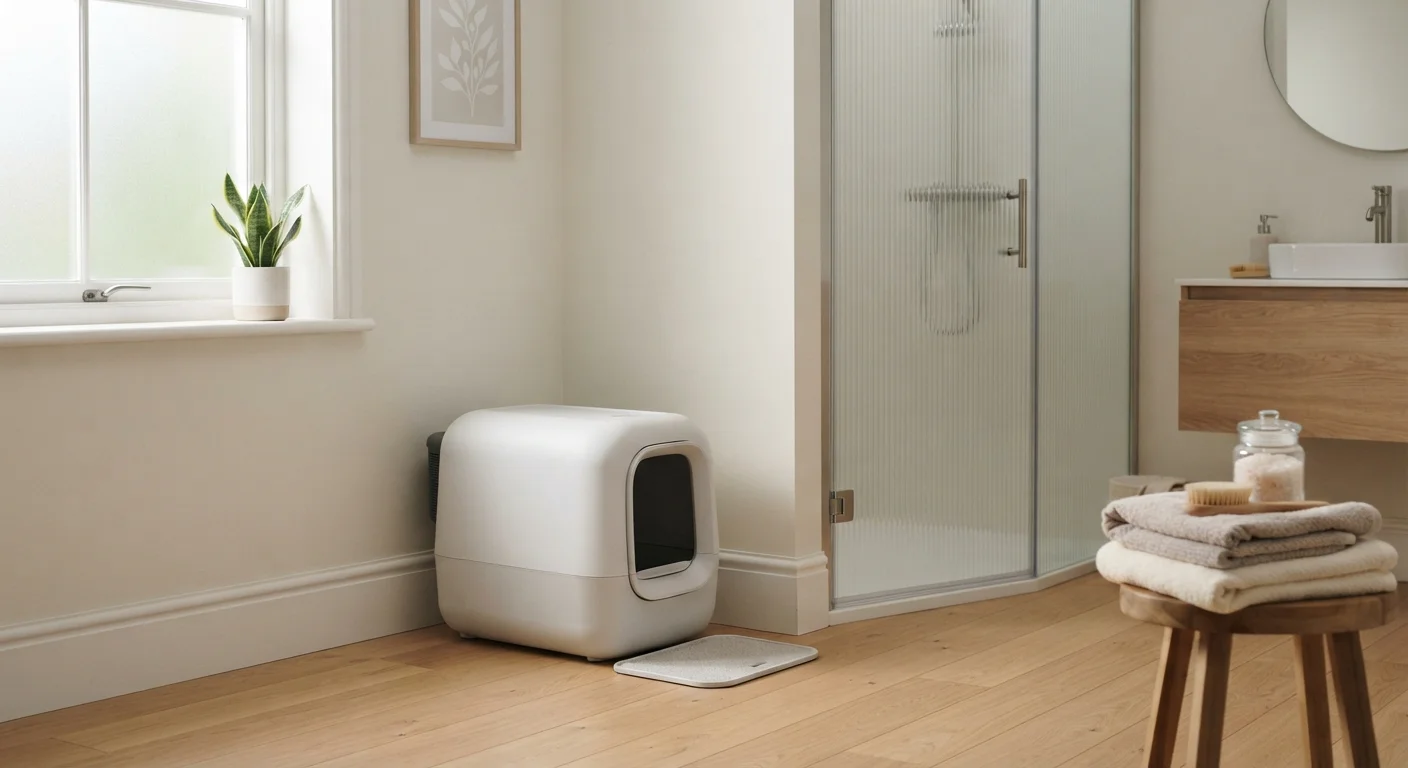
Place the box in a quiet, low-traffic area where your cat can eliminate without being startled. Avoid spots next to washing machines, dryers, or loud appliances. Equally important: keep the box well away from your cat's food and water bowls. Cats instinctively avoid eliminating near their feeding area. A spare bathroom, a laundry room corner, or a quiet hallway alcove are all good options. Make sure the location is always accessible - never shut the cat out of the room.
Add litter to the correct depth
Pour litter to a depth of approximately two inches. This gives most cats enough material to dig and cover their waste - behaviors that are instinctive and important for their comfort. Going much shallower leaves cats scratching at bare plastic, which they tend to dislike. Going much deeper can cause litter to spill over the sides excessively and may not suit all cats. Find the depth your individual cat prefers through observation.
Scoop daily and clean thoroughly each week
Remove clumps and solid waste every day - this single habit has the greatest impact on whether your cat continues to use the box. Cats are fastidious animals and will begin avoiding a dirty box quickly. Once a week (or every two weeks for non-clumping litter), empty the box completely, wash it with mild unscented dish soap and warm water, dry it thoroughly, and refill with fresh litter. Avoid bleach or strong-smelling cleaners, which can leave residues that deter cats.
Introduce your cat to the box correctly
When your cat first arrives home, gently place them in the litter box so they can sniff and explore it. Do not force them to stay or simulate digging motions with their paws - simply let them investigate. Most cats will naturally use the box within the first few hours. If your cat was previously litter-trained in another home, they will typically transfer that behavior quickly. Kittens under 4-5 weeks may need extra guidance, but most cats rehomed at typical adoption ages need only a calm introduction.
One Box Per Cat, Plus One More
If you have multiple cats, the general guideline from veterinary behaviorists is to provide one litter box per cat plus one additional box. So two cats need three boxes. This reduces territorial competition and ensures every cat always has somewhere clean to go. For more on managing a multi-cat home, see our guide on introducing a second cat.
Troubleshooting and Long-Term Maintenance
Even with a well-set-up box, occasional issues can arise. If your cat starts avoiding the box after previously using it reliably, go through this checklist before drawing conclusions:
- Is it clean enough? Scoop again, even if you scooped recently.
- Has anything changed nearby? A new appliance, a moved piece of furniture, or increased foot traffic can make a once-acceptable spot feel unsafe.
- Did you switch litter brands or types? Cats can be sensitive to texture and scent changes. Transition slowly by mixing old and new litter over several days.
- Is the box still the right size? Kittens grow quickly - a box that fit them at 8 weeks may feel tight by 6 months.
Litter Box Setup Affects Long-Term Habits
Getting the setup right from day one is far easier than retraining a cat that has developed a preference for another spot. Cats that consistently avoid the litter box are one of the most common reasons pets are surrendered to shelters. A correctly placed, properly maintained box is one of the most important things you can provide for your cat's wellbeing.
For broader context on keeping an indoor cat healthy and comfortable, our article on indoor vs. outdoor cats discusses how environment shapes long-term wellbeing. And if you're still in the early days of cat ownership, bringing a cat home for the first time walks through everything from safe spaces to first-night routines.