

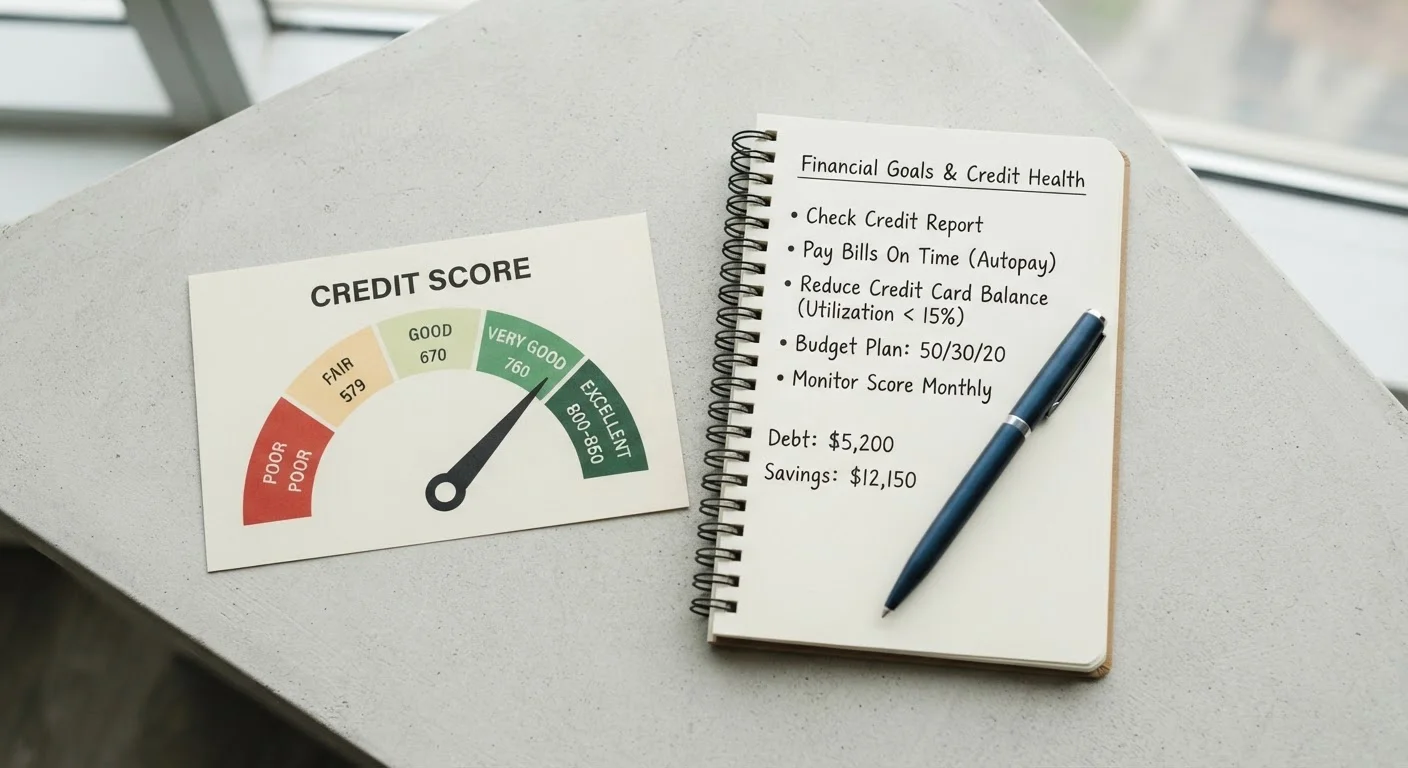
Why Your Credit Score Is Built the Way It Is
Your credit score isn't a mystery or a judgment call - it's a calculated number based on specific, documented behaviors from your financial history. The most widely used scoring model, FICO, weighs five distinct factors. Each carries a different amount of influence. If you're starting from scratch or trying to improve a low score, knowing which factors matter most is the fastest way to focus your effort.
Credit scores explained covers what the number itself means. This article goes one layer deeper - breaking down exactly what feeds into that number and how much each piece counts.
The Five Factors, Ranked by Weight
1. Payment History - 35%
This is the single biggest factor. Lenders want to know: do you pay your bills on time? Every on-time payment works in your favor. Every missed or late payment - especially those 30 or more days overdue - can pull your score down significantly. Collections, charge-offs, and bankruptcies also live here and carry serious weight. The takeaway: even if you can only make the minimum payment, make it on time.
2. Amounts Owed (Credit Utilization) - 30%
This measures how much of your available credit you're currently using. If you have a $1,000 credit limit and carry a $700 balance, your utilization is 70% - which looks risky to lenders. Most financial educators suggest keeping utilization below 30%, and lower is generally better. This factor responds quickly: paying down balances can raise your score within a billing cycle or two.
3. Length of Credit History - 15%
Older accounts help your score. This factor looks at the age of your oldest account, your newest account, and the average age of all accounts. There's not much you can do to speed this up - time is the only fix. One implication: think carefully before closing old credit cards you no longer use, since doing so can shorten your average account age.
4. Credit Mix - 10%
Having different types of credit - such as a credit card, an auto loan, and a student loan - can modestly help your score. Lenders like to see that you can manage various kinds of debt responsibly. That said, this factor carries the least weight alongside new credit, and you should never open an account you don't need just to diversify your mix.
5. New Credit (Recent Inquiries) - 10%
Applying for new credit triggers a hard inquiry on your report, which can temporarily lower your score by a few points. Multiple applications in a short period can compound that effect. Rate-shopping for mortgages or auto loans is treated differently - most scoring models group those inquiries made within a short window into a single event. See common credit score myths for more on how hard inquiries actually work in practice.
Credit Utilization
The percentage of your available revolving credit that you're currently using. For example, a $300 balance on a $1,000 limit equals 30% utilization. Lower is generally better for your score.
Hard Inquiry
A check of your credit report triggered by a new credit application. Hard inquiries can temporarily lower your score by a small amount and remain on your report for two years.
Payment History
A record of whether you've paid your bills on time. It is the most heavily weighted factor in most credit scoring models, including FICO.
Credit Mix
The variety of credit account types you hold, such as credit cards, auto loans, and student loans. A diverse mix can modestly benefit your score, but it's the least influential factor.
Revolving Credit
A type of credit with a reusable limit, like a credit card. Unlike an installment loan, you can borrow, repay, and borrow again up to the limit.
What This Means for You Day to Day
Because payment history and credit utilization together account for roughly 65% of your score, those are the two areas worth your immediate attention. Automating at least the minimum payment on every account removes the risk of accidental late payments. Paying down revolving balances - credit cards especially - directly reduces your utilization ratio.
The remaining three factors matter, but they tend to improve naturally over time as you build good habits with the first two. If you're just getting started, reading your credit report is a practical next step - your report is the raw data that drives every factor listed here.
This article provides general financial education and is not personalized financial advice. For guidance specific to your situation, consider speaking with a licensed financial professional.