

Key Takeaways
Option A
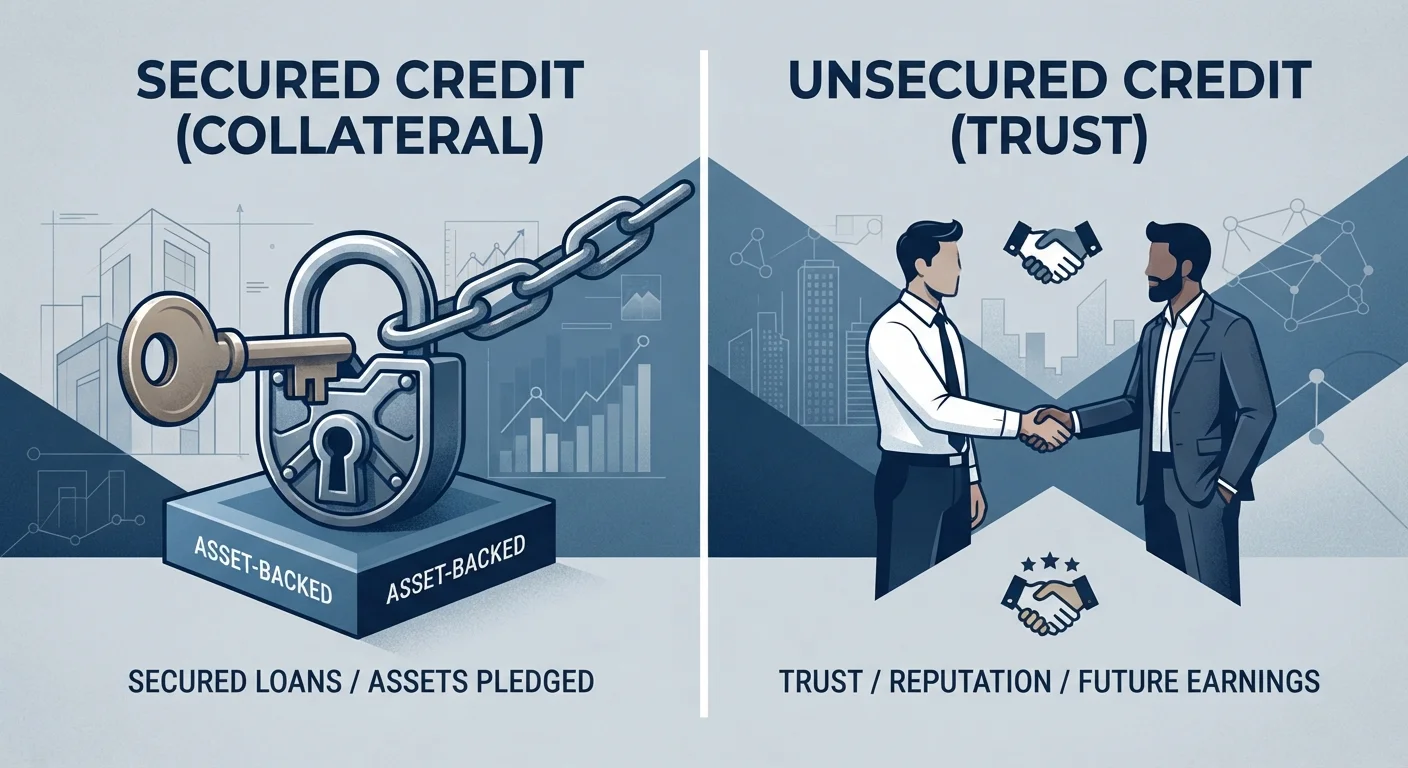
Secured Credit
Borrowing backed by something you own.
Best for: People building or rebuilding credit who can put up collateral like a deposit or a vehicle.
Option B
Unsecured Credit
Borrowing based on your creditworthiness alone.
Best for: Borrowers with established credit histories who don't want to risk a specific asset.
If you're starting out with little or no credit history
Secured Credit
A secured credit card or credit-builder loan lets you demonstrate responsible borrowing with minimal approval barriers, helping establish a track record.
If you have solid credit and don't want to risk an asset
Unsecured Credit
With good credit, you can typically access unsecured cards or personal loans without pledging anything - keeping your assets free from lender claims.
If you want the lowest possible interest rate on a large purchase
Secured Credit
Collateral reduces lender risk, which often translates into lower rates on mortgages and auto loans compared to unsecured alternatives of similar size.
If you need flexible borrowing for everyday expenses
Unsecured Credit
Unsecured credit cards offer convenience and consumer protections without requiring a deposit or tying an asset to each purchase.
The Core Difference: Collateral
The single biggest distinction between secured and unsecured credit is collateral - an asset you pledge to the lender as a guarantee. With secured credit, the lender has a legal claim on something specific if you default. With unsecured credit, no specific asset is on the line.
Common secured products include mortgages (backed by your home), auto loans (backed by your vehicle), and secured credit cards (backed by a cash deposit you make upfront). If you stop making payments, the lender can repossess the car, foreclose on the home, or keep the deposit - depending on the product.
Unsecured products - standard credit cards, personal loans, student loans - don't attach to a specific asset. If you default, the lender's options are more limited: reporting the delinquency to credit bureaus, hiring collectors, or suing for repayment. That's still serious, but your home and car aren't directly at risk in the same immediate way.
Before diving deeper into either type, it helps to be familiar with key borrowing terminology. Our glossary of common credit terms explains APR, principal, and other essentials in plain language.
| Criterion | Secured Credit | Unsecured Credit |
|---|---|---|
| Collateral required | Yes - asset pledged to lender | No - no specific asset attached |
| Typical interest rates | Generally lower | Generally higher |
| Risk if you default | Lender can seize pledged asset | Collections, credit damage, possible lawsuit |
| Common examples | Mortgage, auto loan, secured card | Credit card, personal loan, student loan |
| Credit score impact | Same as unsecured - payment history matters | Same as secured - payment history matters |
| Good for building credit | Yes, especially secured cards | Yes, once approved |
| Approval ease (thin credit file) | Often easier - collateral reduces lender risk | Often harder - relies on credit history |
What Stays the Same: Credit Impact and Lender Expectations
Despite the collateral difference, both types of credit work the same way once the account is open. Your payment history, how much of your credit limit you use (called credit utilization), and the age of your accounts all affect your credit score equally - regardless of whether the account is secured or unsecured.
Pay on time, every time, and both types will help build your credit profile. Miss payments on either, and your credit score will drop. The credit bureaus don't treat a missed mortgage payment more gently than a missed credit card payment just because one is secured.
35%
Weight of payment history in FICO score
According to FICO, payment history is the single largest factor in your credit score, applying equally to secured and unsecured accounts.
~1 in 5
Americans with no or thin credit file
The Consumer Financial Protection Bureau has estimated roughly 45 million adults in the US are credit invisible or have unscorable credit files.
Lenders for both types will also look at similar factors when deciding whether to approve you: your income, existing debts, credit history, and sometimes your employment situation. The presence or absence of collateral shifts the lender's risk, not the underwriting process entirely.
Understanding how debt - secured or otherwise - fits into your overall financial picture is worth thinking through. Our article on good debt vs. bad debt explores how different borrowing purposes affect long-term outcomes.
Interest Rates, Risk, and the Trade-Off You're Making
Because secured lenders can recover an asset if you default, they take on less financial risk. That typically means lower interest rates for borrowers. Mortgages and auto loans usually carry lower rates than unsecured personal loans for the same reason - the lender has a safety net.
Unsecured credit is riskier for the lender, so rates tend to be higher. Credit card APRs, for instance, are generally well above what you'd see on a mortgage. You pay for that lack of collateral in the form of interest costs over time.
The flip side is that with secured credit, you're putting something real on the line. Falling behind on an auto loan doesn't just hurt your credit - you could lose your vehicle. That's a meaningful consequence, especially if the car is how you get to work.
If you're considering secured borrowing for a vehicle specifically, it's worth understanding the full picture. See our comparison of financing versus paying cash for a car for a clear-eyed look at how auto loans actually work.
This article is for general informational and educational purposes only and does not constitute personalized financial or legal advice. Consult a qualified financial professional before making borrowing decisions based on your specific circumstances.