

Key Takeaways
Why the Emergency Fund Can't Wait
Most people plan to start saving for emergencies once things settle down financially. The problem is, things rarely settle down on their own. A car repair, a medical bill, or a sudden job gap hits before the cushion exists-and without savings, the only option is often high-interest debt that takes months or years to pay off.
Building an emergency fund from day one reframes saving as a non-negotiable expense rather than a reward for good budgeting. It sits alongside rent and groceries-not below them on the priority list. If you're new to budgeting, see our step-by-step guide to building your first budget for a solid starting framework.
What Counts as an Emergency Fund?
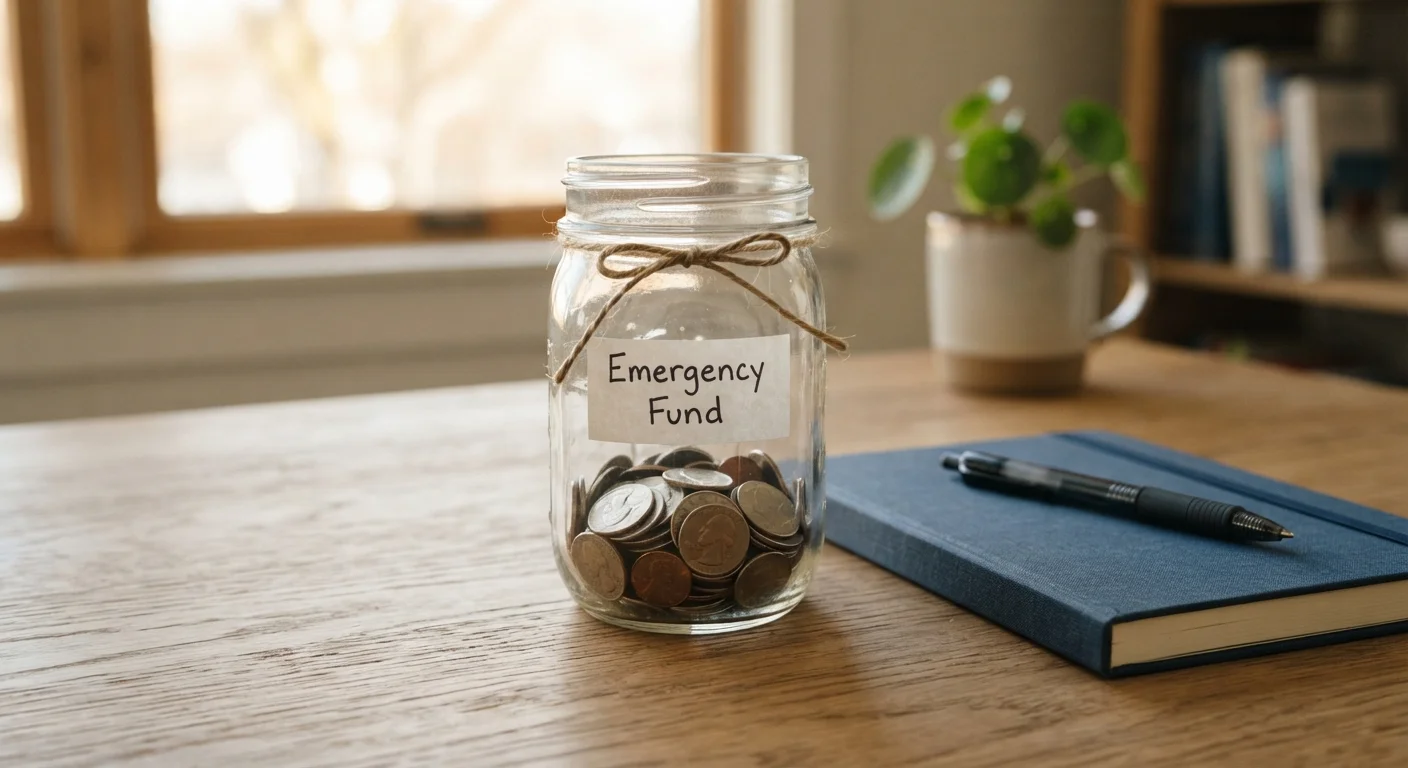
An emergency fund is liquid cash set aside specifically for unplanned, necessary expenses-not investments, not retirement savings, and not a vacation fund. It should be easily accessible but not so easy that you spend it casually. A basic savings account at a bank or credit union is the most common and practical place to keep it. For a broader look at how this fits into a complete budgeting system, see the end-to-end budgeting guide.
How Much to Save (and When to Stop Worrying About the Full Amount)
Financial guidance often cites three to six months of living expenses as the target for an emergency fund. That number is real and worth working toward-but it can also feel impossibly large for someone starting from zero. A more useful first milestone is one month of your essential expenses: rent or mortgage, utilities, groceries, transportation, and minimum debt payments.
Once you reach that level, the fund is doing meaningful work. It covers most common emergencies-a busted appliance, an urgent car repair, a short gap in income. You can continue building toward three months at a slower pace once the foundation exists.
37%
Americans who couldn't cover a $400 emergency with cash
According to the Federal Reserve's Report on the Economic Well-Being of U.S. Households, a significant share of adults would struggle to handle a modest unexpected expense without borrowing.
$780
Saved in one year at $30 per biweekly paycheck
Consistent small contributions compound meaningfully over time-$30 per paycheck on a biweekly schedule adds up to $780 without any single large sacrifice.
The Practices That Actually Make It Happen
Knowing you should save and knowing how to fit it into a tight budget are two different things. These approaches are practical for beginners, even when every dollar feels spoken for.
Treat your emergency contribution as a fixed budget line, not a leftover.
When savings are optional, they get cut first. Assigning a specific dollar amount-even a small one-and listing it alongside your bills makes it a commitment rather than a wish. This single shift is what separates people who build savings from those who intend to.
Start with a percentage of each paycheck, not a fixed dollar target.
Percentages flex with your income, making them more sustainable across good months and tight months. Even 1-2% of your paycheck is a real start. It also removes the guilt of not hitting an arbitrary dollar goal when an unexpected expense shrinks your surplus.
Automate the transfer so you never have to decide in the moment.
Willpower is unreliable when rent is due and the fridge needs restocking. An automatic transfer scheduled for payday removes the decision entirely. You adapt to what's left rather than deciding whether to save after spending.
Keep emergency savings physically separate from your spending account.
Money sitting in your checking account is visible, accessible, and psychologically available to spend. A separate savings account-ideally one without a linked debit card-adds just enough friction to prevent casual dipping. It also helps you clearly see your fund's balance grow.
Define what counts as an emergency before one happens.
Without a clear definition, it's easy to rationalize tapping the fund for concert tickets or a clothing sale. Setting personal rules in advance-in writing-makes it easier to protect the fund when temptation arrives. Genuine emergencies are typically unplanned, necessary, and urgent.
If your income isn't steady, the percentage approach below adapts especially well. Our guide on saving on an irregular income covers this in more detail.
Quick Actions to Start Today
You don't need a perfect budget in place to begin. These steps work even if you're still figuring out the basics. For a month-by-month breakdown of building the habit gradually, see the savings starter plan for beginners.
This article is for general informational and educational purposes only. It is not personalized financial advice. For guidance specific to your financial situation, consider consulting a qualified financial professional.