

Key Takeaways
Credit Score
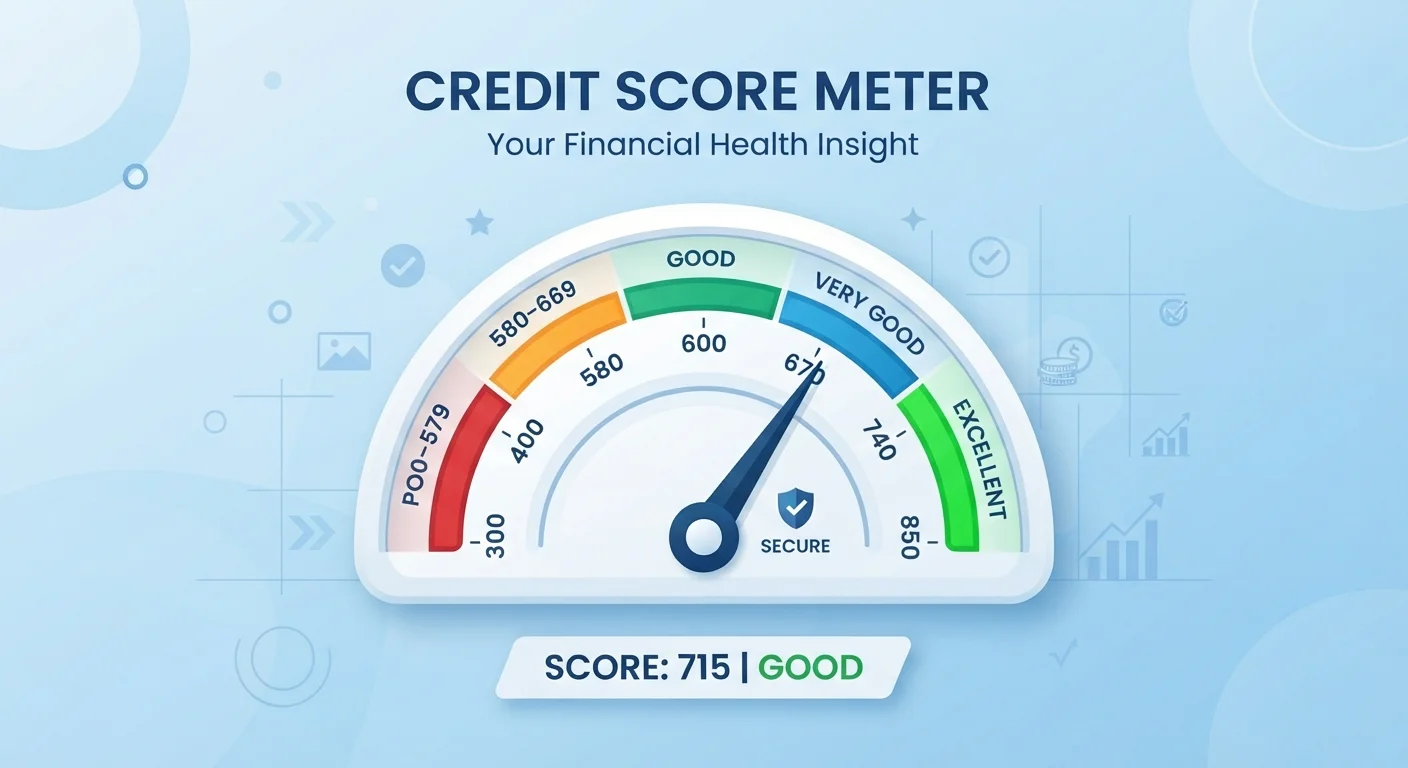
A credit score is a three-digit number, typically ranging from 300 to 850, that summarizes how reliably you've managed borrowed money in the past. Lenders, landlords, and sometimes employers use it to gauge how likely you are to repay what you owe. The higher the number, the more financially trustworthy you appear to those making decisions about lending or renting to you.
In the US, the FICO Score and VantageScore are the two most widely used scoring models, both using the 300-850 scale, though lenders may apply industry-specific variations with different ranges.
Why Your Credit Score Matters
If you've ever wondered why a three-digit number can determine whether you qualify for an apartment, a car loan, or even a cell phone plan, you're not alone. Credit scores can feel like a black box - something powerful that operates entirely behind the scenes. But the mechanics are actually straightforward once you know what to look for.
Your credit score is essentially your financial reputation, translated into a number. It tells lenders how you've behaved with borrowed money in the past, which they use to predict how you'll behave in the future. A higher score signals lower risk, which typically translates to better loan terms, lower interest rates, and more options. For a deeper dive into how credit and borrowing work together, see the complete beginner's guide to credit and debt.
35%
Weight of payment history in FICO Score
According to FICO, on-time payment history is the single largest factor in your credit score calculation.
300-850
Standard credit score range in the US
Both the FICO Score and VantageScore use this scale, with higher numbers representing lower lending risk.
3
Major credit bureaus tracking your history
Equifax, Experian, and TransUnion each maintain independent credit files; scores may vary slightly between them.
The Five Factors That Build Your Score
Credit scoring models look at five key areas of your credit history, each carrying a different weight. Understanding these factors puts you in control of your score rather than at its mercy.
- Payment History (≈35%): Whether you pay your bills on time. A single missed payment can cause a noticeable drop, especially on an otherwise clean record.
- Credit Utilization (≈30%): How much of your available credit you're using. Keeping balances well below your credit limits - generally under 30% - signals responsible use.
- Length of Credit History (≈15%): How long your accounts have been open. Older accounts generally help your score, which is one reason to keep an old card active even if you rarely use it.
- Credit Mix (≈10%): The variety of credit types you manage, such as credit cards, installment loans, and auto loans. A healthy mix can benefit your score, but you should never open accounts you don't need just to diversify.
- New Credit (≈10%): Recent applications for credit. Each hard inquiry can cause a small, temporary dip, so applying for multiple new accounts in a short window can add up.
Set Up Automatic Payments for Peace of Mind
Since payment history carries the most weight, the simplest protection is automating at least the minimum payment on every account. This prevents accidental late payments from derailing your score during a busy or stressful period. You can always pay more manually - the automatic payment is just your safety net.
How to Read and Improve Your Score
Score ranges differ slightly between models, but as a general guide: scores below 580 are considered poor, 580-669 is fair, 670-739 is good, 740-799 is very good, and 800 and above is exceptional. Most lenders reserve their best rates for borrowers in the very good to exceptional range.
Improving your score doesn't require any special tricks - it requires consistency. Pay every bill on time, keep credit card balances low, and avoid opening several new accounts at once. If you're starting from scratch with no credit history at all, a secured credit card (where you deposit money as collateral) or a credit-builder loan through a credit union can help establish your first record.
You can monitor your progress without cost. Visit AnnualCreditReport.com to access your official credit reports from Equifax, Experian, and TransUnion. Review them for errors - mistakes on your report can unfairly drag down your score, and you have the right to dispute them. For more context on what your specific score means in practice, see Credit Scores Explained: What the Number Actually Means.
Score Ranges Vary by Lender and Model
The 300-850 scale is standard for FICO and VantageScore, but some industry-specific models (such as those used for auto loans or mortgages) use different ranges. A lender may also have its own internal cutoffs for what counts as 'good enough.' Always ask the lender what score range they require rather than assuming a general benchmark applies.
This article is for general informational and educational purposes only and does not constitute personalized financial or legal advice. Consult a qualified financial professional for guidance specific to your situation.