

Key Takeaways
Exercise Doesn't Have to Be Punishing
If you've ever felt put off by fitness culture - the heavy weights, the relentless pace, the "no pain, no gain" mantra - you're not alone. Many beginners assume that exercise only counts if it's intense. That simply isn't true, and it can actually stop people from getting started. (You can read more about this kind of thinking in our piece on common fitness myths that hold beginners back.)
Low-impact exercise is movement that keeps at least one foot on the ground - or is performed in water - reducing stress on your joints while still raising your heart rate, building muscle endurance, and supporting your overall health. It's an excellent starting point for almost anyone, and for many people it remains the smartest long-term approach throughout their lives.
Below are seven well-supported low-impact options, each with honest context so you can choose what genuinely fits your life.
Walking
Walking is genuinely underrated. Research consistently links regular brisk walking to reduced risk of cardiovascular disease, improved mood, and better blood sugar management - without placing significant stress on your joints. It requires no equipment beyond supportive footwear, and you can start at whatever pace suits you today and build from there.
Aim for a pace where you can talk but wouldn't want to sing - that's a reasonable gauge of moderate intensity. Even 10-minute walks are worthwhile, especially if you're just starting out.
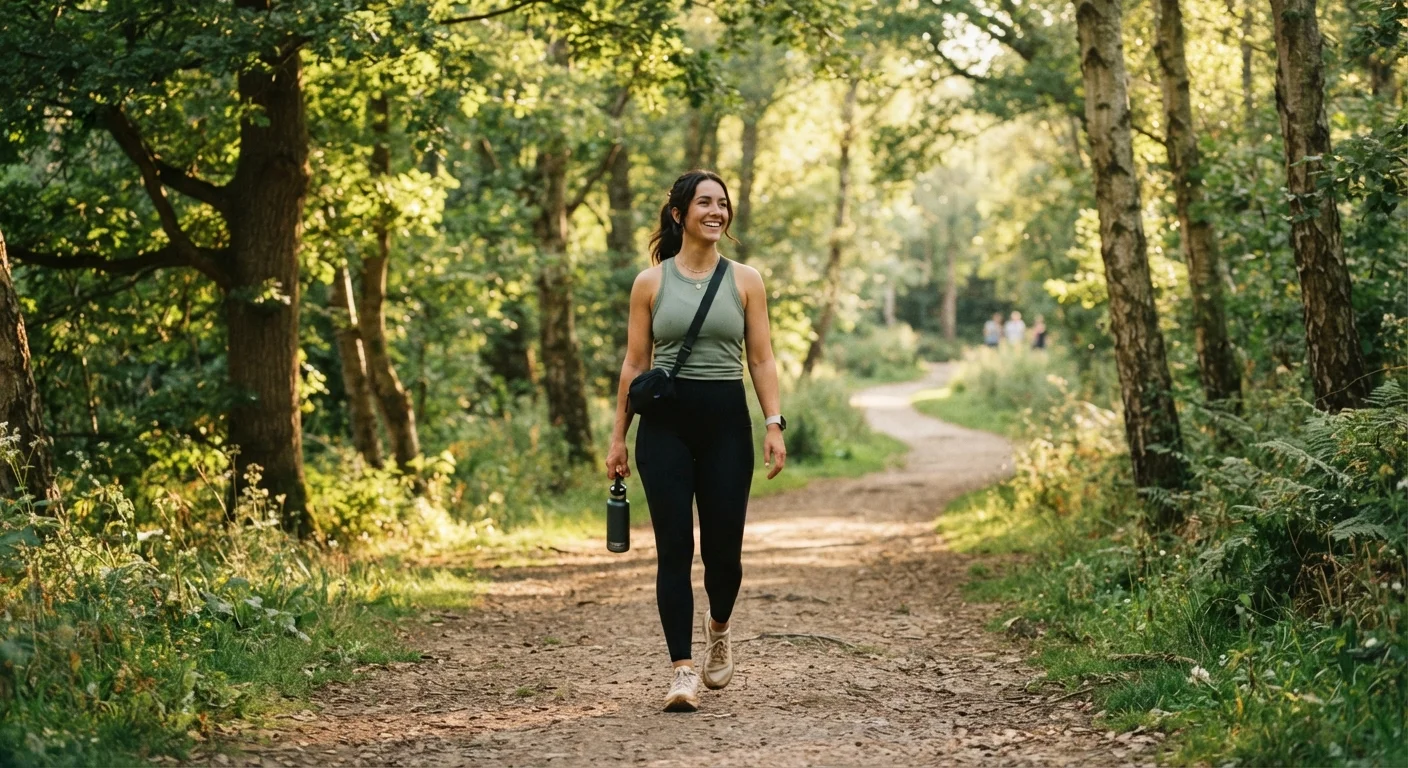
Regular brisk walking supports heart health and mood without placing stress on your joints.
Swimming
Water supports your body weight, which makes swimming one of the most joint-friendly forms of exercise available. It works your cardiovascular system, builds muscular endurance across your whole body, and is often recommended for people managing arthritis, back pain, or recovery from injury.
You don't have to be a strong swimmer to benefit. Pool walking, gentle laps, or water aerobics classes all deliver meaningful results. If access to a pool is limited, many community recreation centers offer affordable memberships.
Water supports your body weight, making swimming ideal for anyone with joint pain or mobility concerns.
Cycling (Stationary or Outdoors)
Cycling - whether on a stationary bike or outdoors - builds leg strength and cardiovascular endurance with minimal impact on the knees and hips. Stationary bikes are especially useful because they let you control resistance precisely and don't carry the balance or traffic considerations of road cycling.
A well-fitted seat height makes a meaningful difference in comfort and safety. If you're using a gym bike and aren't sure about setup, most gym staff can help you adjust it correctly.
Cycling builds cardiovascular endurance and leg strength while keeping knee and hip stress low.
Yoga
Yoga combines gentle movement, flexibility work, and breath awareness in a way that supports both physical and mental well-being. Evidence suggests regular practice can improve balance, reduce lower back discomfort, and help manage everyday stress - all valuable for beginners.
There are many styles of yoga, ranging from very slow and restorative to more active flows. For beginners, a gentle or hatha-style class is a comfortable starting point. Many free beginner sessions are available through libraries and community centers, as well as online.
Yoga supports flexibility, balance, and stress management - benefits that go well beyond the mat.
Tai Chi
Tai chi is a slow, flowing movement practice with roots in Chinese martial arts. It's particularly well-studied for its benefits in older adults, with evidence supporting improvements in balance, fall prevention, and joint comfort. That said, people of all ages find value in it.
Classes are widely available in community centers and parks, and the slow pace makes it genuinely accessible to complete beginners. It also has a meditative quality that many people find calming alongside its physical benefits.
Tai chi's slow, deliberate movements have strong evidence behind improving balance and reducing fall risk.
Elliptical Training
Elliptical machines simulate a walking or running stride without the impact on your joints that treadmill running involves. They're a practical option if you enjoy the feeling of steady-state cardio but find jogging uncomfortable on your knees or hips.
Most ellipticals also have moveable handlebars that engage your upper body, making it a more comprehensive workout than it might look. If you're new to one, start at a low resistance setting and focus on smooth, controlled movement rather than speed.
Elliptical training mimics running's cardiovascular benefits while dramatically reducing joint impact.
Pilates
Pilates focuses on core stability, controlled movement, and body awareness. It's used in physical rehabilitation and by general fitness beginners alike because its emphasis on form - rather than force - makes it both safe and effective for people starting from a low fitness base.
Mat-based Pilates requires little to no equipment and can be done at home once you've learned the basics. A few beginner classes with an instructor first is worthwhile so you understand proper alignment before practicing independently. See also our overview of balancing strength and cardio if you want to understand how Pilates fits a broader routine.
Pilates builds core strength through controlled movement - safe and effective even for complete beginners.
Finding Your Starting Point
There's no single low-impact activity that's right for everyone - your best choice depends on what you enjoy, what's accessible to you, and how your body feels day to day. If you're juggling a busy schedule and can't carve out dedicated workout time, even short bursts of movement woven into your day add up. Our guide on fitting movement into a packed day offers practical ideas for exactly that.
Start Small and Build Gradually
If you're new to exercise or returning after a long break, two or three 15-minute sessions per week is a perfectly reasonable starting point. Consistency over weeks and months matters far more than how hard you push in any single session. Small, repeated efforts build real, lasting fitness - and they're much less likely to lead to burnout or injury.
Whatever you choose, starting gradually is wise. A proper warm-up and cool-down takes only a few minutes and meaningfully reduces your risk of soreness or strain. And remember - low-impact doesn't mean low-reward. Many of these activities also support emotional well-being, which you can explore further through our mental well-being resources.
This article provides general health information for educational purposes only and is not a substitute for personalised medical advice. Please consult a qualified healthcare professional before beginning any new exercise program, particularly if you have an existing health condition, injury, or concern.