

Key Takeaways
Summary
18 items · 20-40 minutes
Why a Readiness Check Matters Before Day One
Starting a new fitness routine is genuinely exciting - and it's completely normal to want to jump straight in. But skipping a few simple preparation steps is one of the most common reasons beginners feel sore, discouraged, or burnt out within the first two weeks. This checklist slows you down just enough to set yourself up for a lasting, enjoyable habit rather than a short-lived attempt.
Think of this as a pre-flight check, not a barrier. Working through it once - before your first session - can save you from unnecessary setbacks and help you feel confident every time you lace up your shoes. When you're ready to take your first real steps, our beginner's guide to building an exercise habit gives you a practical, pressure-free path forward.
Health & Medical Readiness
Goal & Schedule Planning
Equipment & Environment
Session Preparation
What You'll Need to Get Started
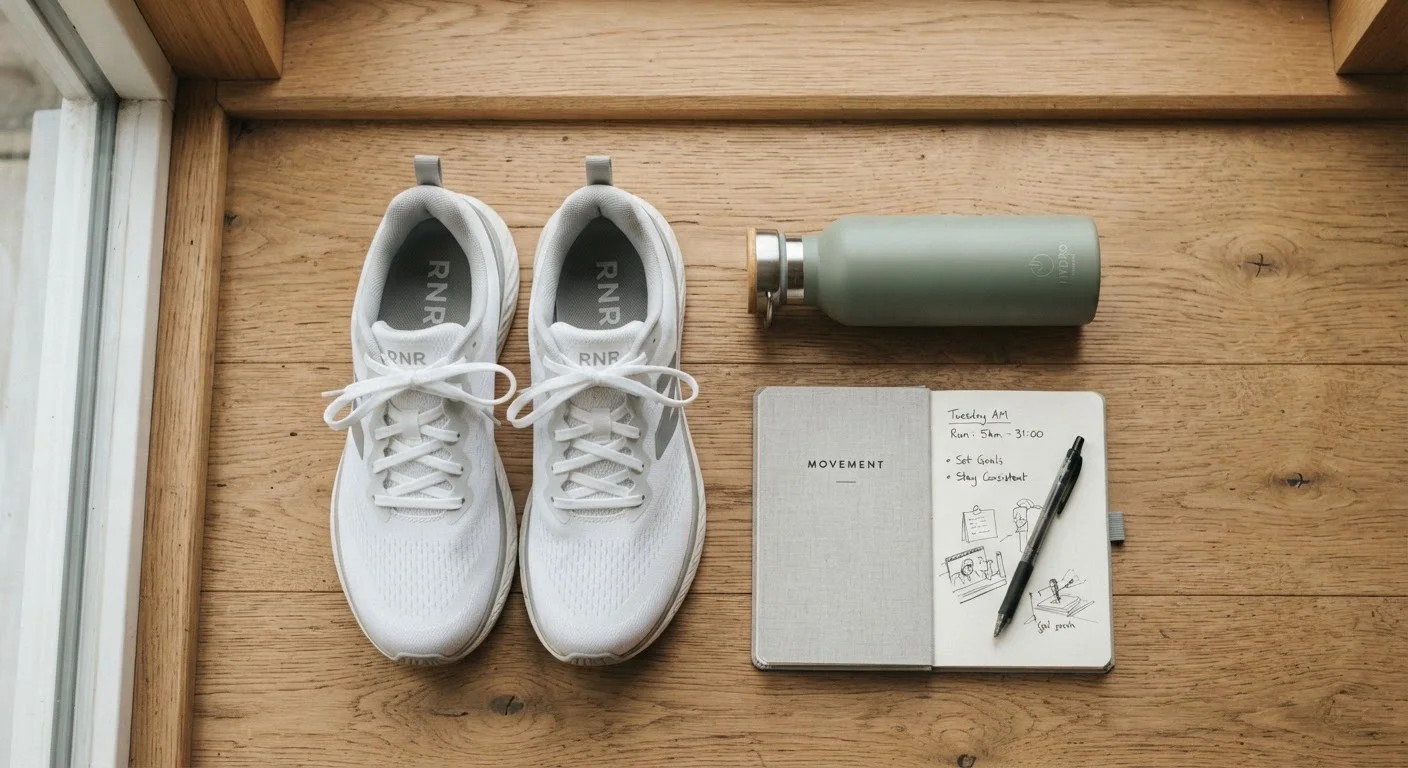
You don't need a gym membership or expensive gear to begin moving safely. The tools listed below are simple, accessible, and genuinely useful - most you may already have at home.
Supportive athletic shoes
Proper footwear reduces impact on joints and lowers your risk of foot, ankle, and knee discomfort during exercise.
Water bottle
Keeping water within arm's reach during sessions helps you stay hydrated and maintain energy.
Notebook or notes app
A simple log lets you track sessions, notice improvements, and stay motivated over time.
PAR-Q form
This short self-screening questionnaire helps identify any health factors you should discuss with a provider before exercising.
Fitness timer or stopwatch
Helps you pace sessions, time warm-ups and cool-downs, and avoid overexerting yourself early on.
Nutrition also plays a quiet but important role in how your body responds to new activity. Even basic habits - like eating something light before exercise and staying hydrated - can noticeably affect your energy and recovery. Our nutrition basics hub offers beginner-friendly guidance on eating well every day without overcomplicating it.
Common Pitfalls to Watch For
Even well-intentioned beginners run into avoidable problems. Being aware of them now makes it far less likely you'll face them later.
Starting Too Hard, Too Fast
One of the most frequent beginner mistakes is doing too much in the first week because motivation is high. This often leads to excessive soreness, fatigue, or minor injury - and then stopping altogether. Begin at a level that feels almost too easy, then gradually increase duration or intensity each week. Your body needs time to adapt to new physical demands.
Ignoring Pain During Exercise
Mild muscle fatigue during exercise is normal, but sharp, stabbing, or joint pain is a signal to stop immediately. Do not push through pain - it can indicate an injury that worsens with continued activity. Rest, and consult a healthcare provider if pain persists or is severe.
One of the most reliable predictors of a routine falling apart is an unrealistic schedule. Before your first session, look honestly at your week and identify two or three time slots you can genuinely protect. It's far better to commit to three 20-minute sessions than to plan for six and complete one. For a deeper look at why routines collapse - and exactly how to prevent it - see our article on why new workout routines fall apart by week two.
See a Provider if You're Unsure
If you answered 'yes' to any questions on a PAR-Q, or if you have a known heart condition, high blood pressure, diabetes, or recent surgery, get medical clearance before starting any exercise program. This is not about gatekeeping movement - it's about making sure your plan is tailored to your actual health situation so you can exercise safely and effectively.
This article provides general health and wellness information for educational purposes only and is not a substitute for professional medical advice. Always consult a qualified healthcare provider before beginning a new exercise program, particularly if you have any health conditions, injuries, or concerns.