

Key Takeaways
Option A
Liability-Only Coverage
The legally required minimum - covers others, not your car.
Best for: Owners of older, lower-value vehicles who can absorb repair or replacement costs out of pocket.
Option B
Full Coverage
Broader protection - covers your car in addition to others.
Best for: Drivers with newer, financed, or high-value vehicles who need protection against physical damage to their own car.
If you own an older car outright with a low market value
Liability-Only Coverage
If your car is worth less than a few thousand dollars, comprehensive and collision premiums may cost more annually than the vehicle is worth replacing.
If you are still making payments on a financed or leased vehicle
Full Coverage
Lenders require full coverage to protect their financial interest in the vehicle. Dropping to liability-only on a financed car violates most loan agreements.
If you could not easily afford to replace or repair your car after an accident
Full Coverage
Full coverage limits your financial exposure to your deductible, rather than the full cost of repairs or a replacement vehicle.
If you want the lowest possible monthly premium and accept the financial risk
Liability-Only Coverage
Liability-only carries significantly lower premiums, which can make sense if your emergency savings could cover a total loss on an inexpensive vehicle.
What Each Coverage Type Actually Includes
Auto insurance can feel like a maze of terms, but the core distinction between liability-only and full coverage is straightforward once you understand what each protects.
Liability-only coverage pays for property damage and bodily injuries that you cause to someone else in an at-fault accident. It does not pay for damage to your own vehicle, your own medical bills, or theft. Every U.S. state except New Hampshire requires drivers to carry at least a minimum level of liability coverage. However, state minimums are often low - sometimes not enough to cover a serious multi-vehicle accident - so many insurance professionals suggest carrying limits well above the legal floor.
Full coverage is an informal term, not a single product. It generally refers to a policy that combines three types of protection:
- Liability - the same third-party coverage described above.
- Collision - pays for damage to your own vehicle after a crash, regardless of fault.
- Comprehensive - covers non-collision events like theft, weather damage, fire, falling objects, and animal strikes.
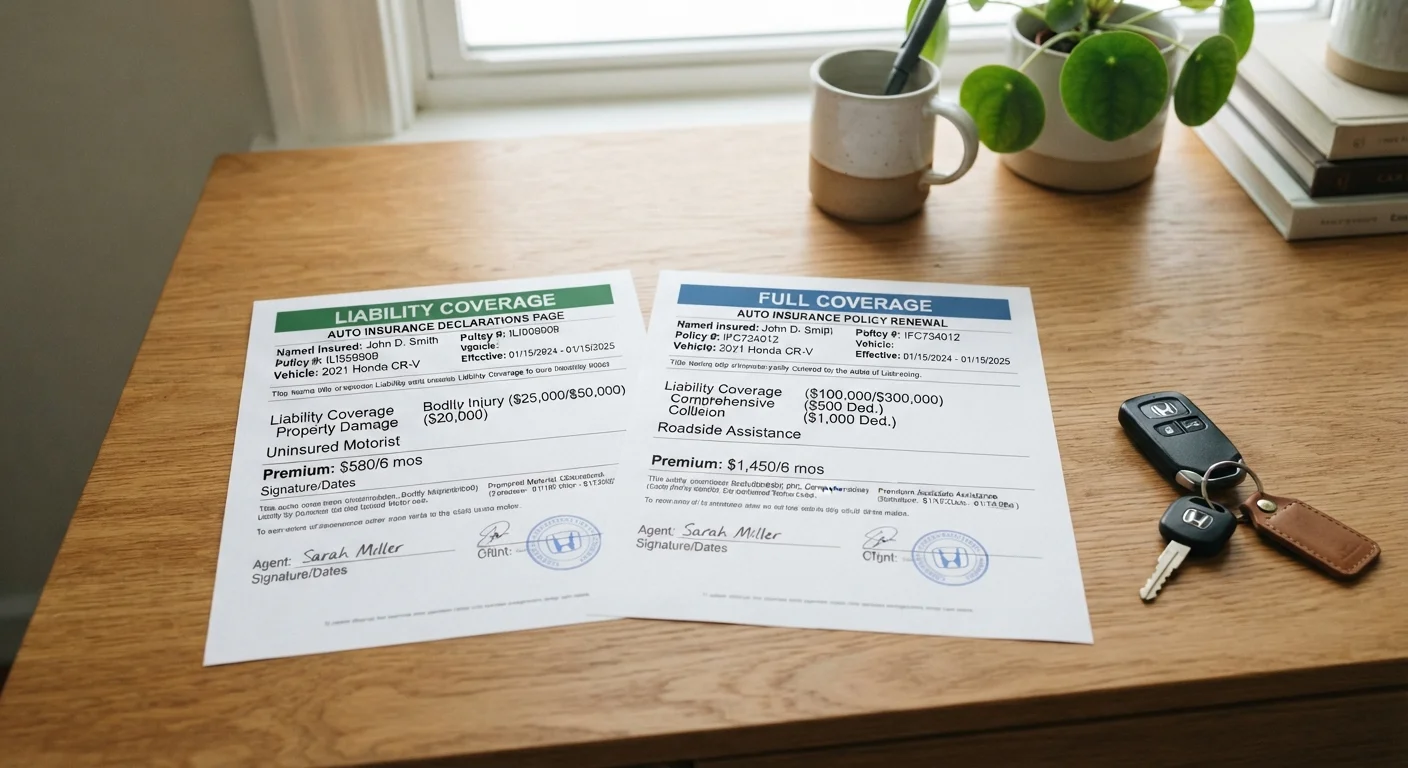
Some policies also include additional options such as uninsured/underinsured motorist coverage, medical payments coverage, or gap insurance. To understand exactly what your own policy covers, read your declarations page carefully - it spells out every coverage type, limit, and deductible.
| Criterion | Liability-Only | Full Coverage |
|---|---|---|
| Covers damage you cause to others | Yes | Yes |
| Covers your own vehicle after a crash | No | Yes (collision) |
| Covers theft or weather damage | No | Yes (comprehensive) |
| Required by state law | Minimum required | Not state-mandated |
| Required by lenders/lessors | No | Almost always |
| Typical monthly premium | Lower | Higher |
| Best suited for | Older, paid-off, lower-value cars | Newer, financed, or high-value cars |
How to Decide What Makes Sense for Your Situation
There is no universal right answer. The appropriate coverage level depends on three practical factors: your car's current market value, whether you have a loan or lease, and your personal financial cushion.
Your Car's Value
A common rule of thumb is to compare your annual collision and comprehensive premium against roughly 10% of your car's market value. If the premiums approach or exceed that threshold and your vehicle is older, you may be paying more than you'd ever recover from a claim. You can look up a vehicle's approximate market value through sources like Kelley Blue Book or the National Automobile Dealers Association (NADA) guides.
Whether You Have a Loan or Lease
If a lender or leasing company has a financial interest in your vehicle, full coverage is almost certainly required by contract - not optional. Dropping to liability-only without lender approval typically violates your loan agreement and can trigger what's called "forced-placed insurance," which is expensive coverage the lender buys on your behalf. Financing a car carries real responsibilities beyond the monthly payment, and insurance requirements are one of them.
Your Financial Safety Net
Liability-only is a calculated risk. If your car were totaled tomorrow, could you cover a replacement without financial hardship? If the answer is no, full coverage provides a meaningful safety net - even for a modestly priced vehicle. Underinsuring is one of the most common and costly mistakes new car owners make.
Gap Insurance: A Coverage Many Drivers Overlook
If you recently financed a new or near-new vehicle, standard full coverage may not be enough on its own. Gap insurance covers the difference between what your insurer pays out (the car's current market value) and what you still owe on your loan - amounts that can differ significantly in the first years of ownership. Ask your lender or insurer whether gap coverage applies to your situation.
This article is for general informational purposes only and does not constitute personalized insurance or financial advice. Speak with a licensed insurance professional about your specific situation before making coverage decisions.