

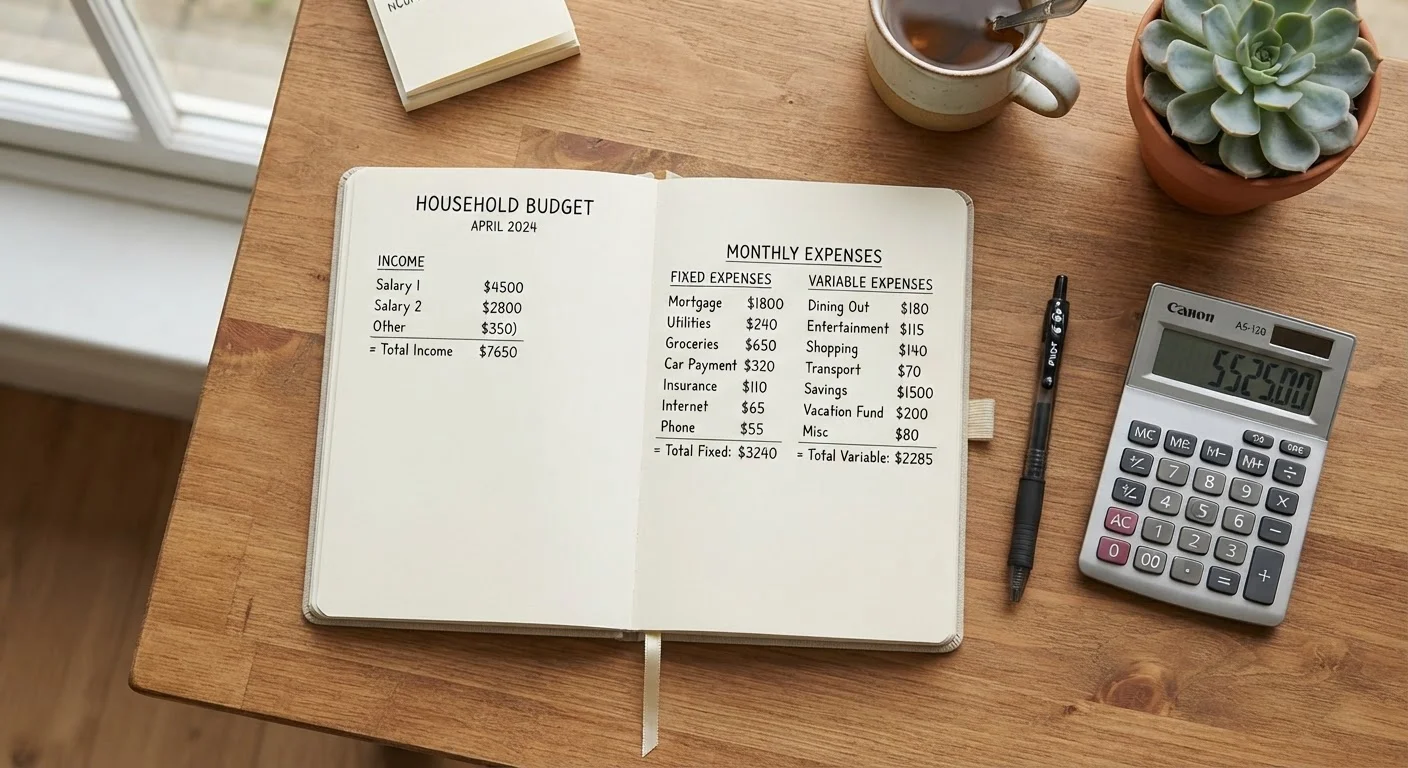
Key Takeaways
Option A
Fixed Expenses
The predictable, same-amount-every-month costs.
Best for: Anchoring your budget - these are the baseline numbers you can count on and plan around every single month.
Option B
Variable Expenses
The flexible costs that shift from month to month.
Best for: Identifying where you have real spending flexibility and where small adjustments can free up extra cash.
If you're building your very first budget
Fixed Expenses
Start by listing every fixed expense so you know the non-negotiable floor of your monthly costs before making any other decisions.
If you want to find room to save more money
Variable Expenses
Variable expenses are where real flexibility lives - cutting back on groceries, dining out, or subscriptions can free up meaningful cash quickly.
If your budget keeps falling apart mid-month
Variable Expenses
Unpredictable variable spending is the most common reason budgets fail; tracking these carefully for a few months often solves the problem.
What Makes an Expense Fixed or Variable?
A fixed expense is any cost that stays the same every billing cycle - you know the amount before the month begins. Rent or mortgage payments, car loan payments, and most insurance premiums are classic examples. Because the number doesn't change, fixed expenses are straightforward to plug into a budget.
A variable expense is any cost that fluctuates. Groceries, gas, utility bills, dining out, and clothing all fall into this category. The total changes depending on your behavior, the season, or circumstances outside your control. That variability makes them trickier to plan for - but also easier to adjust.
Understanding this difference matters because it tells you where you have control. Fixed expenses are largely set; you'd have to make a significant life change - moving to a cheaper apartment, refinancing a loan - to alter them. Variable expenses respond almost immediately to the choices you make day to day.
| Criterion | Fixed Expenses | Variable Expenses |
|---|---|---|
| Amount each month | Stays the same | Changes month to month |
| Examples | Rent, car payment, insurance | Groceries, gas, dining out |
| Ease of budgeting | Very easy - exact figure known | Requires estimation and tracking |
| Room to reduce quickly | Limited without major life changes | High - adjustable with daily choices |
| Budget priority | Plan these first | Allocate from what remains |
How to Use This Distinction in a Real Budget
The most practical approach is to handle fixed expenses first. Add up every fixed cost you pay monthly - rent, insurance, loan minimums, subscriptions that never change. Subtract that total from your take-home pay. The number left over is what you actually have to work with for everything else.
Next, estimate your variable expenses. If you're not sure what you spend on groceries or gas, look at two or three months of bank or credit card statements and average them out. That average becomes your starting target. This is the step most beginners skip, and it's why their budgets don't reflect reality. For more on sorting your spending into the right buckets, see Needs, Wants, and Savings: Sorting Your Spending Into Categories.
Some Expenses Blur the Line
A few costs don't fit neatly into either category. Utility bills like electricity are variable - they shift with usage and season - but they're also recurring and somewhat predictable. A common approach is to average your last 12 months of utility bills and budget that average as if it were fixed. This smooths out seasonal spikes and keeps your budget more stable.
Once you see variable expenses written down, you'll usually spot at least one or two categories where the number surprises you. That surprise is useful - it shows you exactly where small changes could add up. Those savings don't just disappear; redirected consistently, they become the foundation of a saving money habit. Watch out for small recurring charges that don't feel significant in isolation - everyday spending habits that quietly drain your savings cover exactly this pattern.
Putting It Together: Your Next Step
You don't need a complicated system to start. A simple two-column list - fixed on one side, variable on the other - already gives you more clarity than most people have about their own money. Fixed expenses set your floor; variable expenses define your room to maneuver.
Once you're comfortable with this framework, you'll be ready to choose a budgeting method that fits your style. For a clear comparison of two popular approaches, Zero-Based Budgeting vs. the Percentage Method walks through exactly that. And if you're weighing whether strict dollar-by-dollar tracking is worth the effort, The Tradeoffs of Budgeting Every Dollar offers a balanced look at both sides.
~33%
Average share of income spent on housing
The U.S. Bureau of Labor Statistics Consumer Expenditure Survey consistently shows housing is the largest single fixed expense for most American households.
~15%
Average share of income spent on food
Food - a classic variable expense - typically accounts for around 12-15% of household spending, according to USDA Economic Research Service estimates.
This article is for general informational and educational purposes only and does not constitute personalized financial advice. For guidance specific to your situation, consider speaking with a qualified financial professional.