

Key Takeaways
Our Verdict
Envelope budgeting gives you a tactile, impossible-to-ignore constraint on spending - ideal if you tend to lose track of where money goes. Digital tracking is more practical for modern, card-heavy lifestyles, but only works if you actually check in regularly. The best system is whichever one you'll actually stick with.
| Best for | Recommended |
|---|---|
| People who overspend on discretionary categories like groceries or dining out | Envelope Budgeting |
| Those who rarely use cash and want low-friction spending records | Digital Tracking |
| Beginners who want a concrete, tangible way to start budgeting | Envelope Budgeting |
| People managing bills, subscriptions, and multiple spending categories | Digital Tracking |
What Each Method Actually Involves
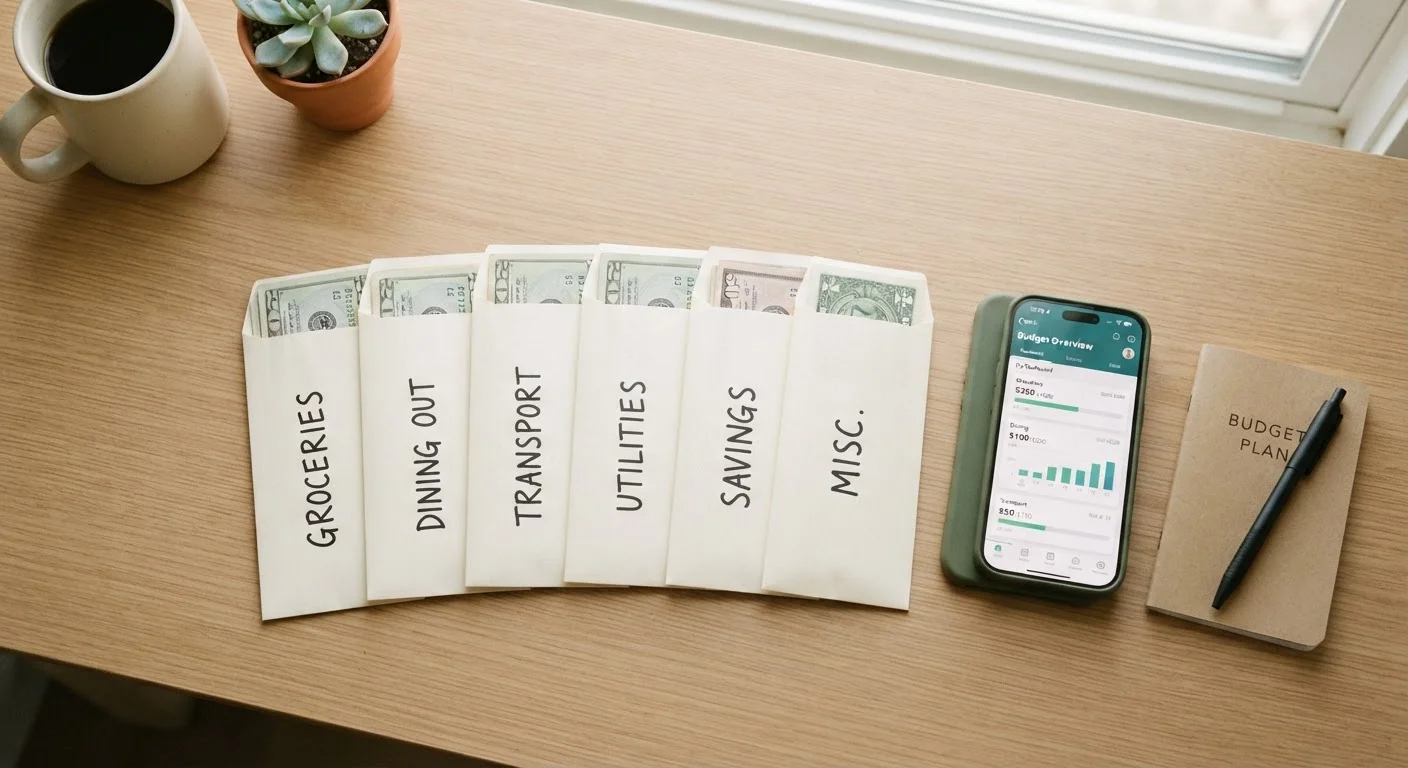
Envelope budgeting is exactly what it sounds like: at the start of each pay period, you withdraw cash and divide it into labeled envelopes - one for groceries, one for gas, one for eating out, and so on. When an envelope is empty, that category is done for the period. No envelope-shuffling, no exceptions. The physical limit is the whole point.
Digital tracking works differently. Instead of cash, you connect a budgeting app (or maintain a spreadsheet) to your bank and card accounts. Every transaction gets categorized, and you can see at any moment how much you've spent versus your plan. The constraint is informational rather than physical - you can always swipe your card, but the app will show you the damage.
Before either method can work, you need to know your spending categories. See our guide to sorting expenses into needs, wants, and savings for a practical starting point.
The Real Differences Between the Two Approaches
The distinction isn't just cash versus card - it's about what kind of friction you're building into your spending.
| Envelope Budgeting | Digital Tracking | |
|---|---|---|
| Core mechanism | Physical cash limits per category | Automated transaction logging and review |
| Works best with | Cash-based spending | Card and online spending |
| Setup effort | Low - envelopes and cash | Moderate - account linking, categories |
| Ongoing maintenance | Weekly cash withdrawals | Regular app check-ins required |
| Overspending prevention | Hard stop when envelope empties | Soft alert - can always keep spending |
| Handles subscriptions/bills | Poorly - cash doesn't auto-pay | Well - transactions captured automatically |
| Learning curve | Very low | Low to moderate |
Envelope budgeting creates pre-commitment: you make the hard decision (how much to spend) before you're standing at a register. Digital tracking creates awareness after the fact, which is only useful if you review it regularly and adjust your behavior in response.
Research in behavioral economics consistently finds that people spend more freely when using cards versus cash - a phenomenon sometimes called the "pain of paying." Handing over physical bills registers differently in the brain than a tap-to-pay transaction. Envelope budgeting exploits that friction deliberately.
Where Each Method Breaks Down
Don't Assume More Features Mean Better Results
Some budgeting apps offer detailed analytics, investment tracking, and credit score monitoring. For a beginner, this can be overwhelming and distracting. Start with the simplest version of whichever method you choose. A plain spreadsheet with five categories beats a sophisticated app you stop opening after two weeks.
Envelope budgeting has practical limits. It doesn't work well for online purchases, automatic bill payments, or situations where carrying cash feels unsafe. It also creates a minor logistical burden - you have to make regular withdrawals and keep envelopes organized, which some people find tedious enough to abandon within weeks.
Digital tracking has a different failure mode: the gap between data and behavior. An app can show you that you overspent on dining out for the fourth consecutive month - but if you don't look at the app, or if you look and don't change anything, the data is decorative. The tool only works if you treat reviewing your numbers as a non-negotiable habit.
For a deeper look at strict dollar-by-dollar control and its tradeoffs, see The Tradeoffs of Budgeting Every Dollar.
Choosing Based on How You Actually Behave
Rather than picking the method that sounds more sophisticated, pick the one that matches how you actually move through the world.
Try a One-Month Test Before Committing
You don't have to pick a method forever on day one. Run envelope budgeting for one month, then try a tracking app the next. Pay attention to which approach you actually followed through on - not which one felt more organized in theory. Consistency matters far more than the tool itself. Once you've found what works, a spending audit checklist can help you refine further.
If you regularly look at your bank balance and feel confused about where money went - envelope budgeting may give you the concrete feedback you're missing. If your life runs mostly on automatic payments, subscriptions, and card swipes, a physical envelope system will have too many gaps to be practical.
A hybrid approach works well for many beginners: use digital tracking for fixed expenses and bills, and a physical envelope (or a dedicated prepaid card) for one or two categories where you know you tend to overspend. This keeps the convenience of digital tools while adding a real ceiling where you need it most.
Both methods fit within broader budgeting frameworks. If you're interested in how to structure your budget before choosing a tracking method, Zero-Based Budgeting vs. the Percentage Method compares two common approaches to organizing your money each month.
This article is for general informational and educational purposes only and does not constitute personalized financial advice. Consider speaking with a qualified financial professional about your specific situation.