

Key Takeaways
Our Verdict
Vinyl plank and laminate flooring each excel in different environments. If moisture is a concern anywhere in your home, vinyl plank is the clear practical choice. For dry living areas where a firmer, more authentic wood feel matters, laminate delivers excellent performance at a competitive price point.
| Best for | Recommended |
|---|---|
| Bathrooms, laundry rooms, and basements | Vinyl Plank |
| Living rooms, dining rooms, and bedrooms | Laminate |
| Homes with pets or young children | Vinyl Plank |
| Budget-conscious DIYers prioritizing scratch resistance | Laminate |
What Each Product Is Actually Made Of
Despite looking similar in showroom displays, laminate and vinyl plank are built from entirely different materials - and that construction is what drives every practical difference between them.
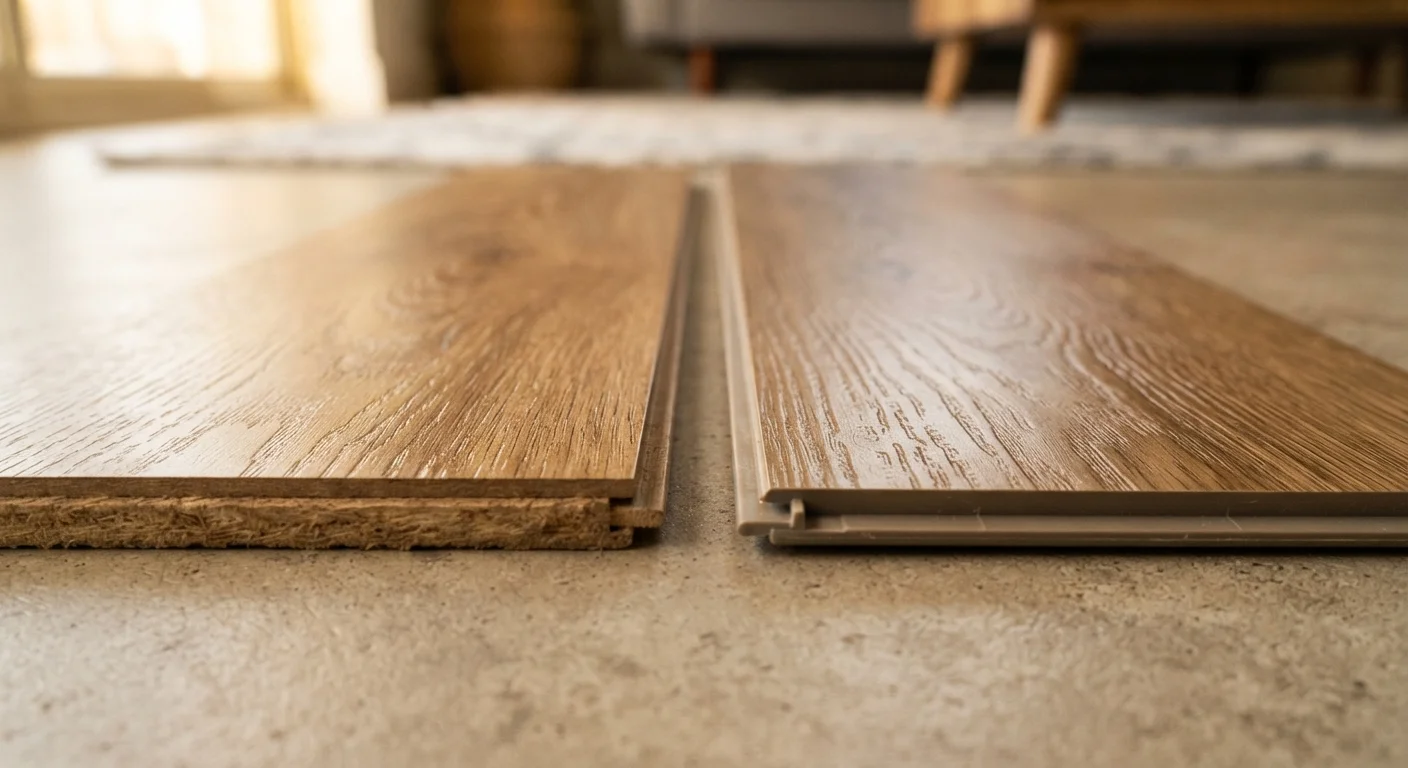
Laminate flooring is a wood-based product. It consists of a high-density fiberboard (HDF) core topped with a photographic image layer and sealed with a protective wear layer. Because that HDF core is made from compressed wood fibers, it swells and warps when exposed to standing water or sustained humidity.
Vinyl plank flooring (also called LVP, or luxury vinyl plank) is made entirely from polyvinyl chloride (PVC) plastic. It has no wood content whatsoever, which means water cannot penetrate or damage its core. Most vinyl plank also includes an attached underlayment pad on the bottom, while laminate usually requires a separate underlayment to be installed first.
| Laminate | Vinyl Plank | |
|---|---|---|
| Core material | Wood-based HDF | 100% PVC plastic |
| Waterproof | No - moisture damages core | Yes - fully waterproof |
| Scratch resistance | Higher - harder wear layer | Moderate - softer surface |
| Feel underfoot | Firm, wood-like | Softer, slight flexibility |
| DIY difficulty | Beginner-friendly, needs acclimation | Beginner-friendly, easier prep |
| Best room types | Dry living areas, bedrooms | Kitchens, baths, basements |
| Typical lifespan | 15-25 years | 15-25 years |
How They Perform in Real-World Conditions
Understanding day-to-day performance helps you match the right floor to the right room.
Moisture Resistance
This is the single biggest differentiator. Vinyl plank is fully waterproof - spills, splashes, and even minor flooding won't damage it structurally. Laminate can handle the occasional light spill if wiped promptly, but prolonged exposure to moisture causes the core to swell and the edges to lift. Never install laminate in a full bathroom or any below-grade space prone to humidity.
Durability and Scratch Resistance
Laminate's wear layer is typically harder than vinyl's, making it more resistant to scratches from pet claws and furniture dragging. Vinyl plank, while still quite durable, can show cuts or gouges from sharp objects more readily. However, vinyl plank is more resistant to denting from heavy furniture because its plastic composition has some flexibility.
Feel and Sound Underfoot
Laminate feels noticeably firmer and more similar to real hardwood. Vinyl plank has a slight give or softness due to its flexible core, which some people find more comfortable for long periods of standing. Both can sound hollow when walked on in areas without proper underlayment - a key reason why choosing the right underlayment matters for either product.
Check the Wear Layer Thickness
For vinyl plank, the wear layer - measured in mils - determines how well it resists scratches and surface damage. A wear layer of 12 mils or more is generally recommended for high-traffic areas or homes with pets. Laminate wear layers are rated by AC (Abrasion Class) score; AC3 is suitable for most residential use, while AC4 handles heavier foot traffic well.
Installation: What a DIYer Should Expect
Both flooring types use a floating click-lock installation method, meaning planks snap together and rest on top of the subfloor without glue or nails - making both genuinely beginner-friendly projects.
Key Installation Differences
- Subfloor prep: Laminate requires a very flat subfloor (within 3/16 inch over 10 feet) and a separate foam or cork underlayment. Many vinyl plank products come with underlayment pre-attached, saving a step.
- Acclimation: Laminate needs 48-72 hours to acclimate to your room's temperature and humidity before installation. Most vinyl plank products require little to no acclimation time.
- Transitions and expansion gaps: Both require a small expansion gap (typically 1/4 inch) along walls to allow for natural expansion. Skipping this step leads to buckling - a common beginner mistake.
For most first-time installers, vinyl plank is slightly more forgiving because its flexibility accommodates minor subfloor imperfections better than rigid laminate does.
Don't Skip the Subfloor Inspection
Installing floating flooring over a damaged, uneven, or damp subfloor is one of the most common - and costly - beginner mistakes. Check for soft spots, squeaks, or visible moisture before you begin. Any subfloor with structural damage, mold, or active moisture intrusion should be assessed and repaired by a qualified professional before new flooring goes down.
Cost Considerations and Longevity
Pricing for both products varies widely based on thickness, wear layer quality, and plank dimensions, so treat any specific figures as general guidance rather than guarantees.
As a general range, laminate often comes in at a lower cost per square foot than vinyl plank at comparable quality tiers, though mid-range and premium vinyl plank can exceed entry-level laminate pricing. Factor in the cost of separate underlayment if required for laminate installation.
Both flooring types, when properly installed and maintained, can last 15-25 years in residential use. Laminate's harder wear layer can help it resist surface dulling in high-traffic areas over time. Vinyl plank may be more resilient in rooms where temperature and humidity fluctuate, since it won't contract or expand as dramatically as wood-based products.
Neither option is a substitute for solid hardwood if long-term resale value is a primary concern, but both represent a practical, cost-effective upgrade over carpet or older vinyl sheet flooring in most homes.