

Key Takeaways
Food-Based Hydration
Food-based hydration refers to the fluid your body absorbs from the foods you eat, not just the beverages you drink. Many fruits, vegetables, and other whole foods contain large amounts of water that count toward your daily hydration needs. In fact, eating patterns play a surprisingly large role in how balanced your body's fluid levels stay throughout the day.
Physiologists refer to total fluid intake as coming from three sources: beverages, food moisture, and a small amount of water produced during metabolism (called metabolic water).
Your Plate Is Part of Your Fluid Balance
Most of us think about hydration as a simple equation: drink enough water, stay hydrated. But the full picture is a bit richer than that. The foods on your plate contribute to your body's fluid balance every single day - often without you noticing.
General nutrition guidance suggests that food accounts for roughly 20% of most people's daily fluid intake. That may sound modest, but across the course of a day, it adds up. A bowl of oatmeal made with water or milk, a side salad, a piece of fruit at lunch - each of these quietly contributes to keeping your cells, tissues, and organs working well.
This doesn't mean you can skip drinking water. It means understanding that hydration is a whole-diet picture, not just a tally of glasses consumed. If your eating patterns are working against your hydration, even diligent water-drinking may not fully compensate.
~20%
Of daily fluid intake comes from food
According to general nutrition guidance from public health bodies, food contributes roughly one-fifth of most people's daily fluid needs.
96%
Water content in cucumber by weight
Cucumber is one of the most water-dense foods available, making it an easy addition to a hydration-supporting diet.
75%
Of Americans may be chronically mildly underhydrated
This commonly cited estimate from nutrition researchers highlights how widespread low-grade fluid shortfalls may be in everyday life.
Foods That Help You Stay Hydrated
Some foods are remarkably rich in water. Whole fruits and vegetables top the list, and incorporating them regularly can give your fluid intake a genuine boost.
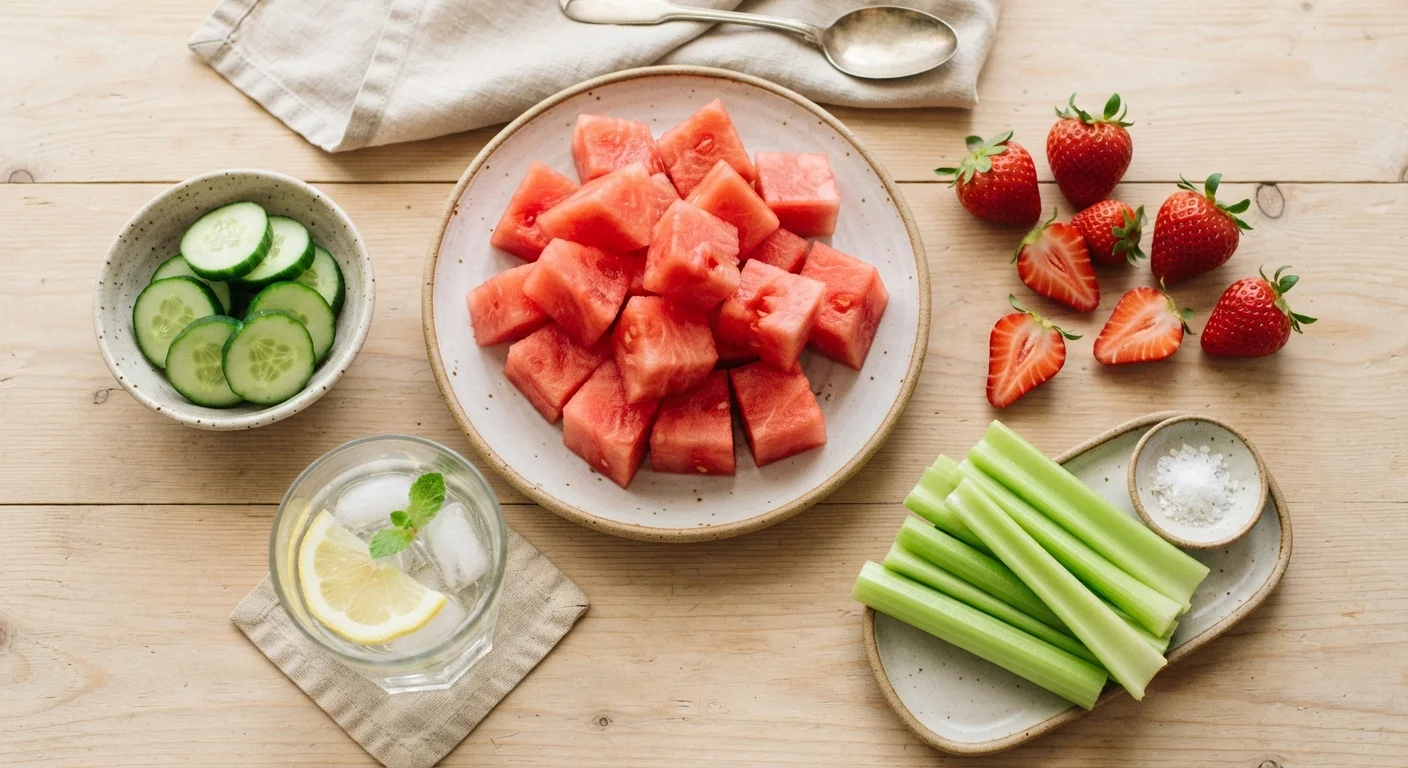
- Cucumber and celery are among the highest, with water content above 95%.
- Watermelon and strawberries sit above 90% water by weight and also provide natural sugars and electrolytes like potassium.
- Leafy greens such as spinach and romaine lettuce are similarly water-dense and easy to add to meals.
- Soups and broths - especially broth-based rather than cream-based - are excellent fluid sources, particularly in cooler months.
- Plain yogurt contains a high proportion of water and also provides electrolytes.
The more whole, minimally processed foods you include in your diet, the more likely those meals are working with your hydration rather than against it. For a broader look at how everyday eating habits quietly affect your nutrition, see our article on eating patterns that undermine an otherwise decent diet.
Foods That Work Against Hydration
Just as some foods support fluid balance, others can tip the scales the other way. Understanding these isn't about eliminating foods - it's about balance.
High-sodium foods - including many packaged snacks, cured meats, fast food, and canned soups - increase the body's demand for water. Your kidneys work harder to filter and excrete excess sodium, which requires more fluid to do so.
Foods high in added sugar can also affect fluid balance. Sugary drinks in particular (sodas, sweetened juices, energy drinks) are not as hydrating as plain water and can sometimes increase thirst rather than relieve it.
Alcohol is a well-known diuretic - meaning it signals the kidneys to release more water than usual, which is one reason people feel thirsty after drinking.
A Simple Habit to Try
On days when you've eaten saltier or more processed foods than usual, make a conscious effort to increase your water intake a little. Pairing a salty snack with a glass of water is a small, easy adjustment that helps your kidneys do their job more comfortably. You don't need to track exact numbers - just be a bit more intentional.
None of these foods need to be completely avoided for good health, but being aware of how they affect fluid balance helps you make adjustments on days when you've eaten more of them.
Recognizing Signs of Under-Hydration
Your body offers quiet signals when it needs more fluid. Learning to recognize them early - before thirst becomes intense - makes it easier to stay ahead of the curve.
- Urine color is one of the most practical indicators. Pale yellow generally suggests adequate hydration; dark yellow or amber often indicates your body needs more fluid.
- Low energy or difficulty concentrating can sometimes be linked to mild fluid shortfalls, though many factors affect energy levels.
- Headaches are another signal some people notice when they haven't had enough fluids.
- Dry mouth or lips are common early physical cues.
These are general educational signals, not diagnostic tools. If you experience persistent, severe, or worsening symptoms, please speak with a qualified healthcare professional rather than self-managing.
This article is for general informational and educational purposes only and is not a substitute for professional medical advice, diagnosis, or treatment. Always consult a qualified healthcare provider with questions about your health or diet.