

Key Takeaways
Option A
Meditation
A dedicated practice you carve out intentional time for.
Best for: People who want a structured, scheduled mental reset built into their daily routine.
Option B
Mindfulness
An awareness quality you can bring to any moment of the day.
Best for: People who want to weave calm, present-moment awareness into everyday activities without a formal routine.
If you want a clear daily ritual that feels like a mental workout
Meditation
Meditation's structured format gives you a defined start and end point, making it easier to track consistency and build a habit.
If a formal sitting practice feels intimidating or unrealistic right now
Mindfulness
Mindfulness can slot into activities you already do - eating, walking, or washing dishes - so there's no schedule barrier to getting started.
If you want the deepest possible mental focus and stress-reduction practice
Meditation
Extended, dedicated meditation sessions allow a depth of sustained attention that brief mindful moments throughout the day rarely replicate.
If you want to carry calm with you all day, not just during one session
Mindfulness
Practicing mindfulness continuously - not only at a set time - means you can access a steadier, more grounded mindset throughout your whole day.
What Each Term Actually Means
If you've ever searched for stress-relief techniques and found the words "meditation" and "mindfulness" used as if they were identical, you're not alone - and you're not missing something obvious. The confusion is understandable. They share the same calm, quiet energy. But they describe genuinely different things.
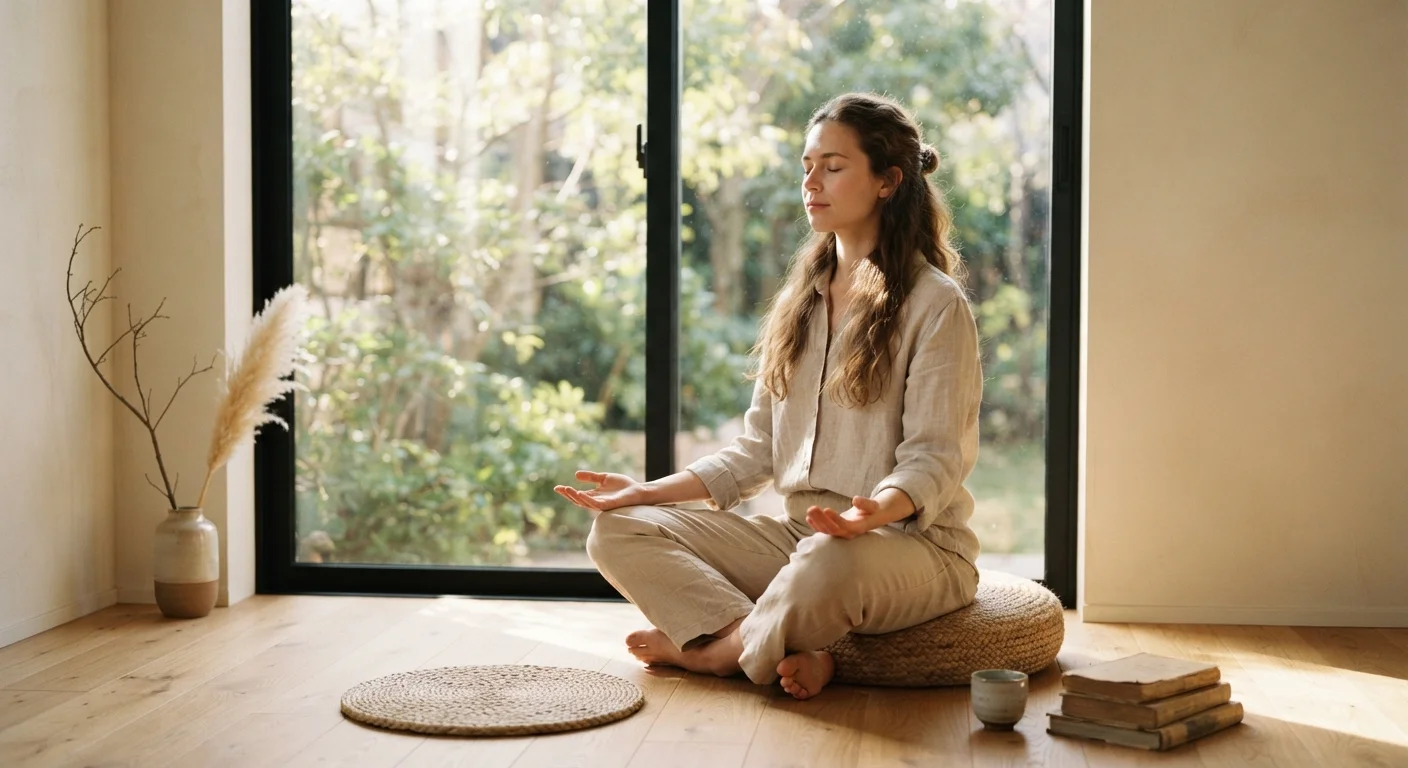
Meditation is a practice - a deliberate activity you set aside time for, much like exercise. You sit (or lie down), focus your attention in a particular way, and do that for a defined period. There are many types: breath-focused meditation, body-scan meditation, loving-kindness meditation, and more. What they all share is intentional structure.
Mindfulness is more like a quality of attention - a way of being present and aware of what's happening right now, without judging it. You can be mindful while meditating, yes. But you can also be mindful while sipping your morning coffee, folding laundry, or walking to your car. It doesn't require a timer or a cushion.
A useful way to hold both ideas at once: meditation is often a vehicle for practicing mindfulness, but mindfulness itself can travel far beyond the meditation session. For a deeper look at how mental wellness concepts connect, see our plain-language guide to mental well-being.
How They Compare Side by Side
Understanding the differences becomes easier when you look at them across a few practical dimensions.
| Criterion | Meditation | Mindfulness |
|---|---|---|
| Format | Structured, time-set practice | Informal, ongoing awareness |
| When you do it | Dedicated session (usually daily) | Any moment throughout the day |
| Time required | Typically 5-30 minutes at once | Seconds to minutes, anytime |
| Learning curve | Moderate - benefits from guidance | Low - can begin immediately |
| Equipment needed | None (timer optional) | None |
| Research backing | Strong body of evidence on stress and focus | Growing evidence, especially for daily stress |
| Can be combined | Yes - meditation often builds mindfulness | Yes - mindfulness enhances meditation quality |
One important nuance: because mindfulness is a quality rather than a technique, it resists neat scoring. Some people find that even five minutes of mindful breathing during a stressful moment shifts their mood more effectively than a longer formal session. Others find the structure of meditation invaluable precisely because life rarely pauses long enough for them to be mindful on their own.
~40%
Adults reporting stress-related sleep issues
The American Psychological Association's Stress in America surveys have consistently found stress is a widespread driver of poor sleep among U.S. adults, underlining why accessible calming practices matter.
8 weeks
Typical duration studied in mindfulness research
Many published studies on mindfulness-based stress reduction (MBSR), a structured program developed at the University of Massachusetts, use an eight-week format as a standard measurement window.
5 min
Minimum meaningful daily meditation time
Researchers and clinicians often note that even brief, consistent sessions - as short as five minutes - may produce measurable shifts in perceived stress when practiced regularly over time.
Starting With Either - Without Overthinking It
If formal meditation appeals to you, a simple starting point is focusing on your breath for a few minutes each day. Breathe naturally, notice the sensation of air moving in and out, and when your mind wanders - which it will, every time - gently bring attention back. That redirect is the practice. No special posture is required.
If mindfulness feels more accessible, try attaching it to something you already do. Choose one daily activity - morning tea, a short walk, washing your face - and commit to doing it with full attention just for its own sake: no phone, no planning the day, just noticing sensations and what's happening around you.
Many people find that starting with one naturally leads to curiosity about the other. That's perfectly fine. They complement each other well, and there's no wrong order. This article is part of a broader look at building sustainable mental wellness habits - our complete mental well-being overview covers more ground if you'd like to explore further.
Neither Practice Is One-Size-Fits-All
Meditation and mindfulness exist on a wide spectrum, and what works well for one person may feel awkward or unhelpful for another. Cultural traditions, personal temperament, and daily schedules all shape which approach fits best. If one style doesn't click, experimenting with a different format - guided audio, mindful movement, or a shorter session length - is entirely reasonable before drawing conclusions about whether the practice works for you.
This article is for general informational and educational purposes only and is not a substitute for professional medical or mental health advice. If you are experiencing significant distress, please speak with a qualified healthcare professional.