

Key Takeaways
Why Batteries Die Before Their Time
A car battery is designed to last several years, but real-world conditions often cut that short. Unlike a flat tire or a check engine light, a failing battery tends to degrade quietly - until the morning it leaves you stranded in a parking lot.
The good news: most of the habits that kill batteries early are easy to change once you know what they are. Understanding the root causes helps you protect the battery you already have, rather than replacing it before you need to.
3-5 years
Average car battery lifespan
Most manufacturers and automotive organizations cite this as the typical range under normal conditions, though climate and usage patterns significantly affect the outcome.
~50%
Capacity loss in extreme cold
According to AAA research, a car battery can lose roughly half its cranking power at 0°F compared to its rating at 80°F, making cold-weather starts far more demanding.
For context on how battery care fits into your broader ownership routine, see our guide to habits that add years to a vehicle's life.
Common Mistakes That Shorten Battery Life
Most premature battery failures trace back to a handful of predictable, avoidable mistakes. Here's what they are and how to stop making them.
Taking frequent short trips without ever letting the battery fully recharge.
Why it happens: Many drivers underestimate how much power a cold start draws. The alternator needs sustained driving - typically 20-30 minutes - to replenish what was used during startup.
Leaving lights, the radio, or other accessories on when the engine is off.
Why it happens: It's easy to forget interior lights or a phone charger plugged into a powered USB port. Even small draws add up quickly when the engine - and alternator - aren't running.
Ignoring how extreme temperatures affect battery performance.
Why it happens: Many drivers assume battery problems only happen in winter. In reality, summer heat accelerates internal corrosion and fluid evaporation inside the battery, doing damage that shows up as a failure months later.
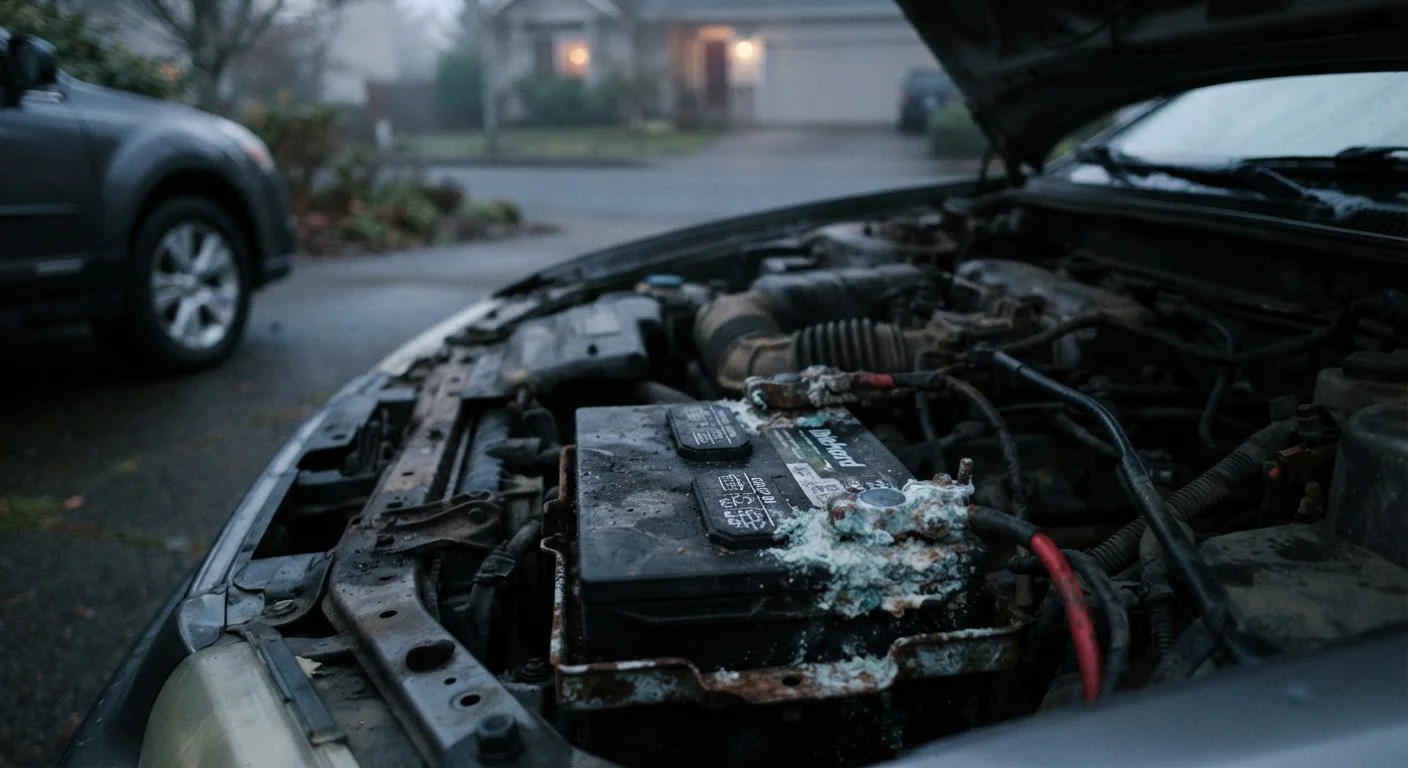
Letting corrosion build up on battery terminals without cleaning it.
Why it happens: The white or bluish crust that forms on terminals is a natural byproduct of battery chemistry. Most drivers don't notice it until the car won't start, because it builds up slowly and isn't obviously connected to starting problems.
Skipping battery checks during regular maintenance visits.
Why it happens: Batteries don't have an obvious service interval the way oil or tires do, so they're easy to overlook - even during scheduled maintenance.
A Failing Battery Can Damage Other Systems
Running a battery in a severely discharged or degraded state can put strain on the alternator and starter motor - two repairs that cost considerably more than a battery replacement. If your battery is struggling, have it tested at a shop or auto parts store before the problem spreads to connected components.
Building awareness of these mistakes is the first step. The second is checking in on your battery's condition before it becomes a crisis - something your long-term car care habits should include as a matter of course.
Don't Ignore Dashboard Warning Lights
A battery or charging system warning light is not something to dismiss for a few more days of driving. It can indicate the alternator is no longer recharging the battery properly, meaning your car could stall without warning. Pull over safely and have the system checked by a qualified mechanic as soon as possible.